
Loading, please wait...
LOT 1626
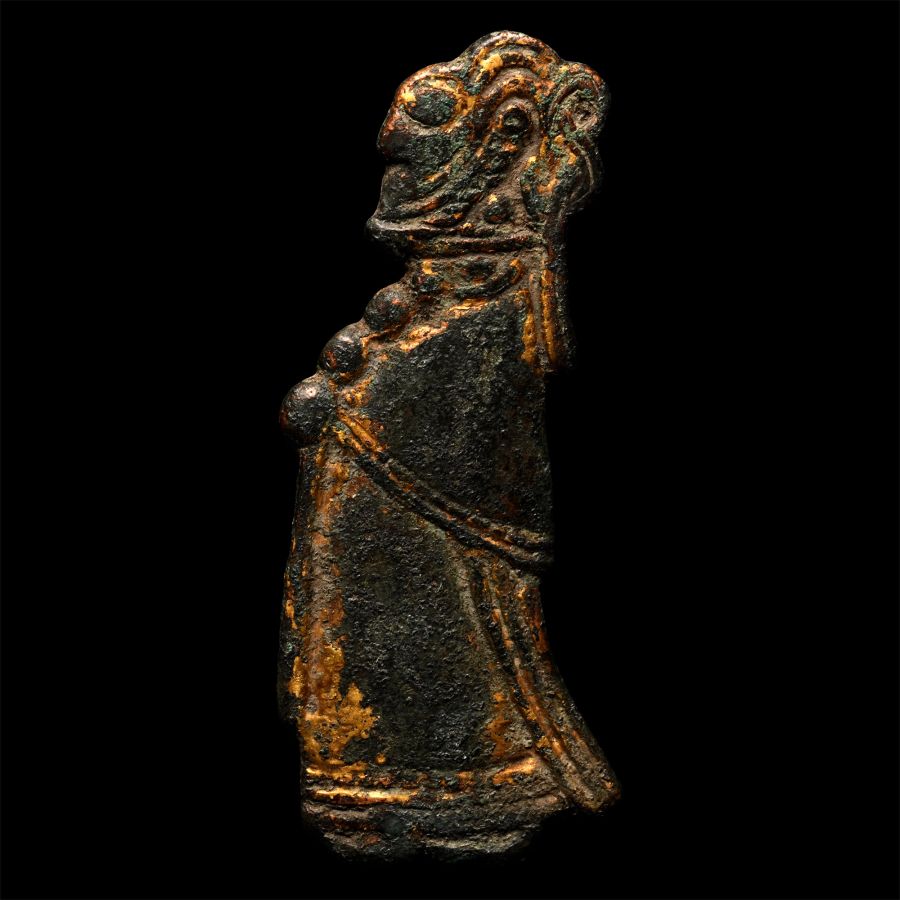
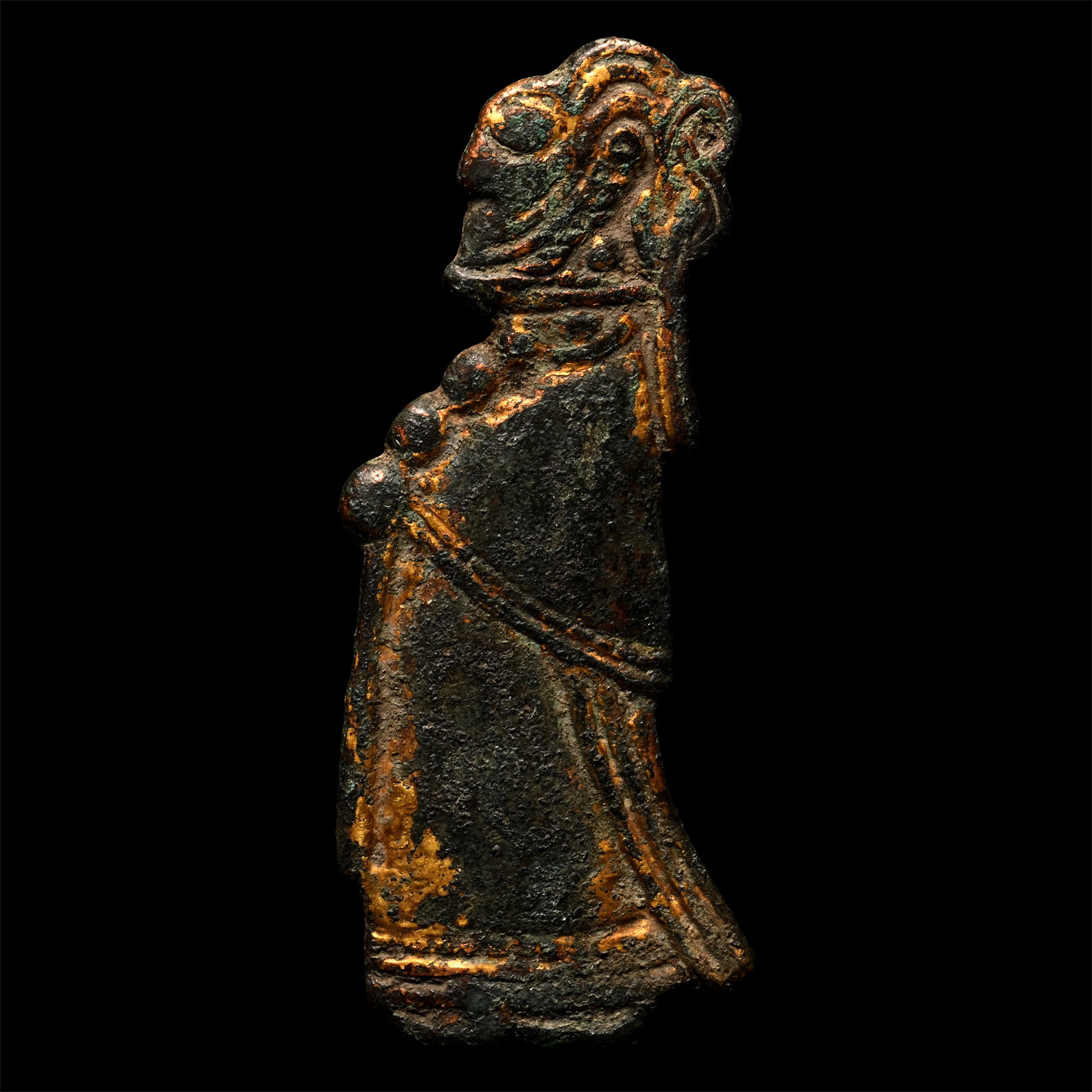
Scandinavian Viking Gilt Bronze 'Valkyrie' Plaque
9TH-11TH CENTURY A.D.
1 7/8 in. (9.16 grams, 48 mm).
Profile image of a female in floor-length robe with shawl to her shoulders, stylised headdress and long plaited band of hair to the rear, shoes at the lower edge; pierced lug to the reverse. [No Reserve]
ProvenancePrivate collection formed in Europe in the 1980s.
Westminster collection, central London, UK.
This lot is accompanied by an illustrated lot declaration signed by the Head of the Antiquities Department, Dr Raffaele D'Amato.
See Vang Petersen, P., Valkyrier og Bersærker. Mytologien i Smykkekunsten in Madsen, P.K. (ed.), Danefæ. Skatte fra den Danske Muld, Copenhagen, 2010.
CONDITIONTimeLine Auctions follows a vetting process to ensure the authenticity and legality of all items, reinforcing our commitment to integrity and responsible trading. Each antiquity, antique, and coin lot undergoes thorough examination by a vetting committee of at least ten external specialists, professional trade association members, scientists, and archaeologists: Our Vetting Process
AUCTIONS:
TimeLine is a leading auction house specialising in antiquities, ancient art, collectables, natural history, coins, medals, and books. Our auctions offer museums, collectors, historians, and enthusiasts the opportunity to acquire unique and historically significant pieces.
-
.jpg)
Viking Age Gold 'Hack Money' Section
Circa 9th-11th century A.D.Sold for (Inc. bp): £286
A hacked irregular piece of gold ingot, probably melted down loot creating a monetised piece of 'Hack' for Viking trade. 3.33 grams, 20 mm
Property of a Cambridgeshire, UK, collector. From his private collection since the 1970s; thence by descent circa 2000. Ex private collection of a Bedfordshire gentleman. This lot is accompanied by an illustrated lot declaration signed by the Head of the Antiquities Department, Dr Raffaele D'Amato. -
.jpg)
Viking Age Bronze Twisted Bracelet with Flattened Terminals
9th-12th century A.D.Sold for (Inc. bp): £156
Two rods tightly twisted and curved into a penannular shape with tapering finials, the bracelet hammered on each side into a square section. 42 grams, 70 mm
From a Sussex, UK, private collection; acquired 1980s-1990s. This lot is accompanied by an illustrated lot declaration signed by the Head of the Antiquities Department, Dr Raffaele D'Amato. -
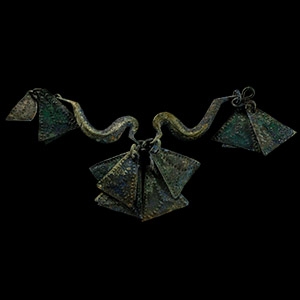
Viking Bronze Pendant Cluster
Early 9th-11th century A.D.Estimate: £400 - 600 (+bp*)
Opening Bid: £200
Comprising two hollow-formed serpentine spacers each with a loop at the outer end and a cluster of sheet bronze triangular dangles, median junction with loop and more triangular dangles. 96 grams, 24 cm
Acquired on the London art market, 1990s. Private collection, London. This lot is accompanied by an illustrated lot declaration signed by the Head of the Antiquities Department, Dr Raffaele D'Amato.
