
Loading, please wait...
LOT 1700
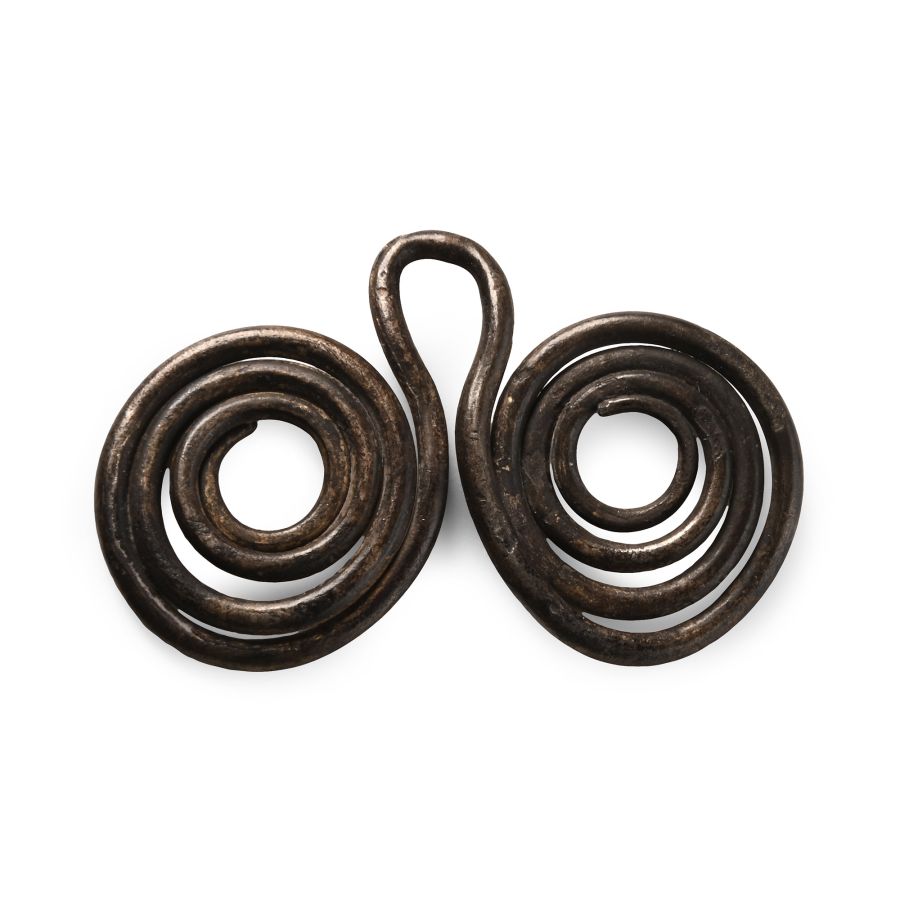
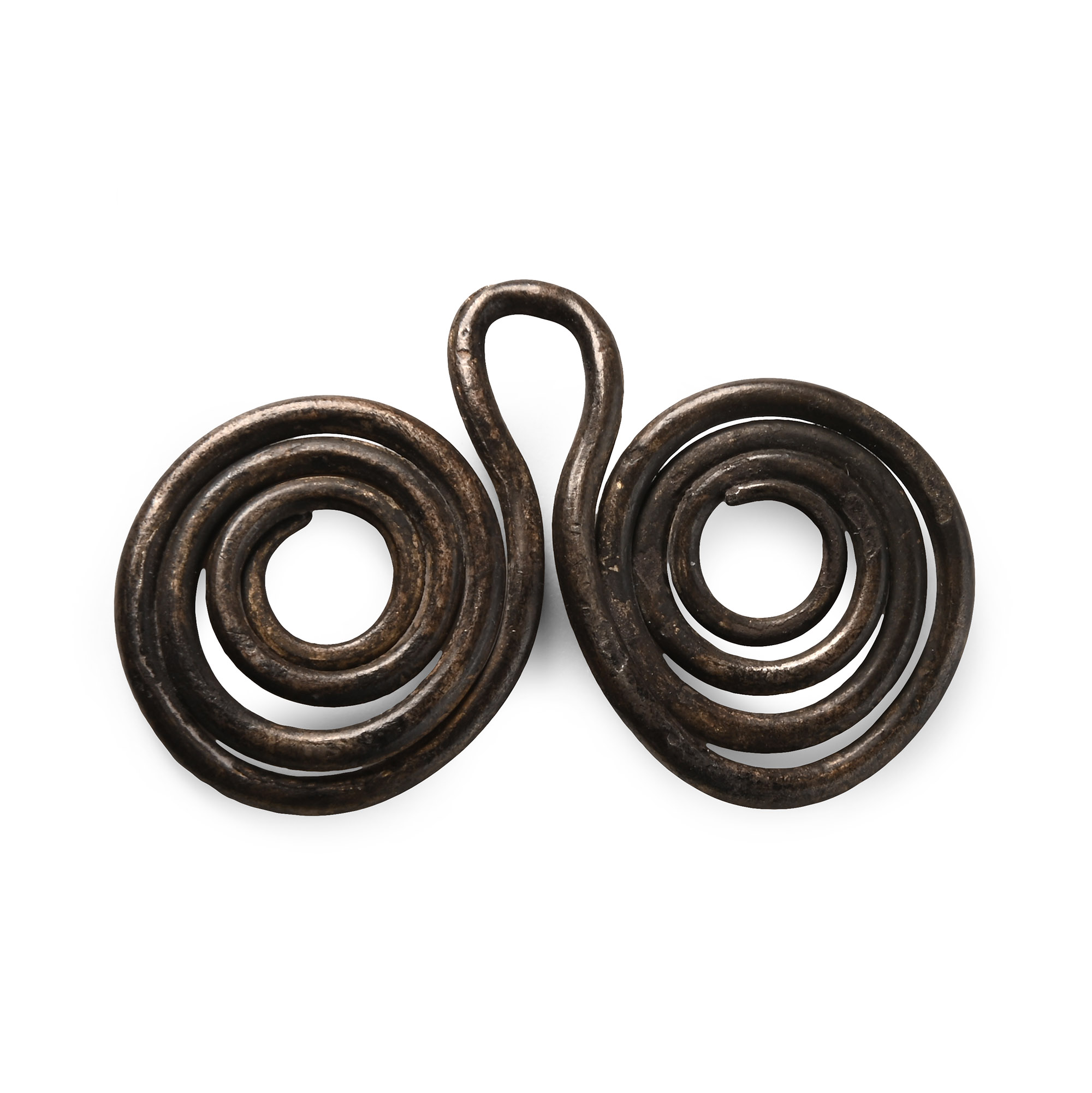
Scandinavian Pre-Viking Silver Wrist Clasp
5TH CENTURY A.D.
1 1/2 in. (5.78 grams, 36 mm).
Spiral-coiled wrist-clasp of Hines's Class A with a broad rounded loop to the centre. [2]
ProvenanceEx property of a gentleman; acquired in the 1970s.
LiteratureCf. Hines, J., Clasps-Hektespenner-Agraffen, Stockholm, 1993, fig.5, for discussion.
FootnotesThe spiral-coil type of wrist clasp is the earliest form of an artefact type which became a very popular costume element in especially Norway and the English East Midlands in the early Anglo-Saxon Period. Grave-finds indicate that they were used to secure the cuffs of robes worn by high-status women.
CONDITIONTimeLine Auctions follows a vetting process to ensure the authenticity and legality of all items, reinforcing our commitment to integrity and responsible trading. Each antiquity, antique, and coin lot undergoes thorough examination by a vetting committee of at least ten external specialists, professional trade association members, scientists, and archaeologists: Our Vetting Process
AUCTIONS:
TimeLine is a leading auction house specialising in antiquities, ancient art, collectables, natural history, coins, medals, and books. Our auctions offer museums, collectors, historians, and enthusiasts the opportunity to acquire unique and historically significant pieces.
-
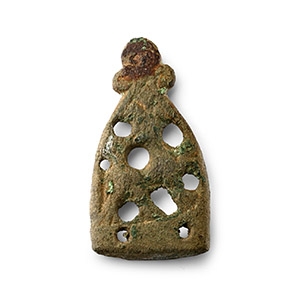
Anglo-Scandinavian Viking Bronze Howling Beast Stirrup Apex Mount
11th century A.D.Sold for (Inc. bp): £111
With mounting hole at the apex and two to the lower edge, vestigial ledge to the reverse, reserved central motif of a wolf in profile with head thrown back; Williams's Class A Type 11. 20.5 grams, 55 mm
Found Norfolk, UK. -
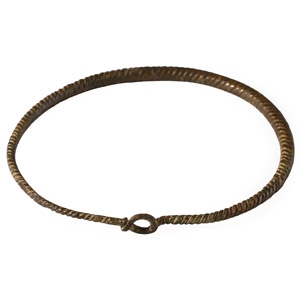
Viking Age Twisted Bronze Bracelet
Circa 9th-11th century A.D.Sold for (Inc. bp): £156
Penannular in form with hook-and-eye closure, twisted shank. 6 grams, 58 mm
Acquired on the UK art market in the late 20th century A.D. From the private collection of the late David King (1940-2024), Hoddesdon, Hertfordshire, UK. -
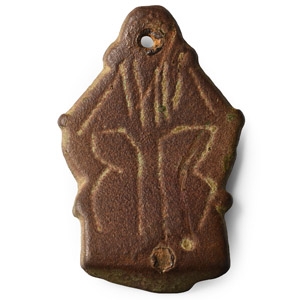
Anglo-Scandinavian Viking Bronze Stirrup Mount with Pseudo-Runes
11th century A.D.Sold for (Inc. bp): £72
Williams's Class A Type 1 with trapezoidal plaque and narrow ledge to the rear; incised geometric design following the outline of the mount with symmetrical panels; to the neck five vertical lines, perhaps pseudo-runes. 19.88 grams, 50 mm
Property of a gentleman; acquired in the 1970s.
The markings on the neck appear to conform to the shapes of four runes, being inverted chevrons to the edges (runic 'U'), a character of two verticals and a sloping cross-bar (runic 'H'), and a simple vertical stroke (runic 'I'). However, the outer chevrons are formed as the junction of the inner border with a vertical while the cross-bar appears to be a later abrasion. The form of 'H' with a single cross-bar is very early (2nd -5th century AD) and is almost unknown in England, while by the 8th century this form had been replaced in Scandinavia by a rune formed as a vertical with a small saltire to the centre (like an asterisk). It is nevertheless possible that these marks were intended as a form of pseudo-runic text.
