
Loading, please wait...
LOT 1731
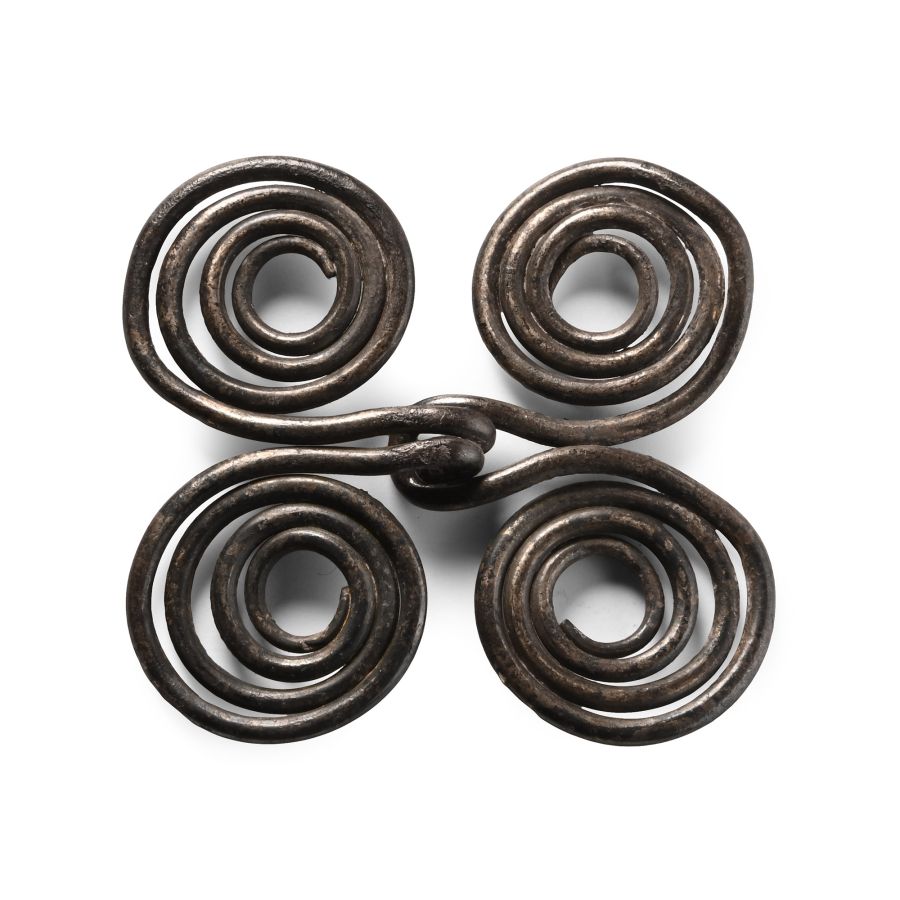
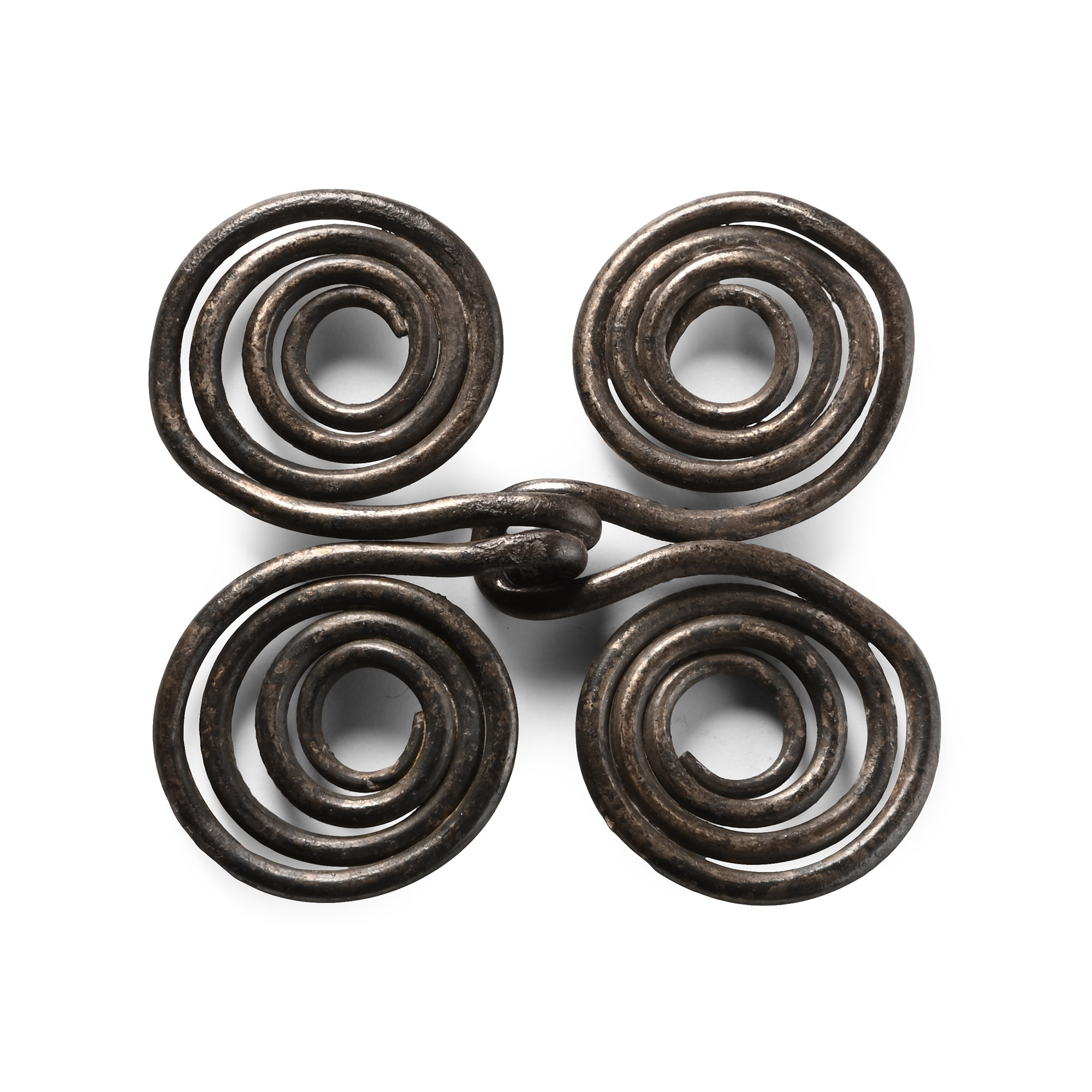
Scandinavian Pre-Viking Silver Wrist Clasp Pair
5TH CENTURY A.D.
1 1/2 in. (11.5 grams total, 36-38 mm).
Spiral-coiled wrist-clasps of Hines's Class A with one broad rounded loop to the centre and one returned hooked loop. [2]
ProvenanceEx property of a gentleman; acquired in the 1970s.
LiteratureCf. Hines, J., Clasps-Hektespenner-Agraffen, Stockholm, 1993, fig.5, for discussion.
FootnotesThe spiral-coil type of wrist clasp is the earliest form of an artefact type which became a very popular costume element in especially Norway and the English East Midlands in the early Anglo-Saxon Period. Grave-finds indicate that they were used to secure the cuffs of robes worn by high-status women.
CONDITIONTimeLine Auctions follows a vetting process to ensure the authenticity and legality of all items, reinforcing our commitment to integrity and responsible trading. Each antiquity, antique, and coin lot undergoes thorough examination by a vetting committee of at least ten external specialists, professional trade association members, scientists, and archaeologists: Our Vetting Process
AUCTIONS:
TimeLine is a leading auction house specialising in antiquities, ancient art, collectables, natural history, coins, medals, and books. Our auctions offer museums, collectors, historians, and enthusiasts the opportunity to acquire unique and historically significant pieces.
LOT 1731
Scandinavian Pre-Viking Silver Wrist Clasp Pair
Estimate £200 - 300€230 - 350 (for guidance only)$270 - 410 (for guidance only)
-
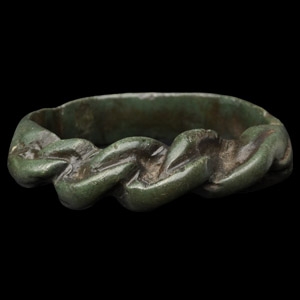
Viking Bronze Pseudo Interlaced Ring
9th-11th century A.D.Sold for (Inc. bp): £111
With thick braided bezel of three wires, flat butted reverse. 4.70 grams, 23.81 mm overall, 19.34 mm internal diameter (approximate size British N, USA 6 1/2, Europe 13.72, Japan 13)
From the private collection of a London gentleman, from his grandfather's collection formed before the early 1970s. -
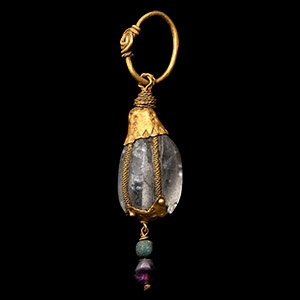
Viking Period Gold and Crystal Pendant with Bead Drop
Circa 10th-12th century A.D.Sold for (Inc. bp): £2,600
Irregular barrel-shaped crystal with lozengiform gold base, braided strip from each arm extending to the bell-shaped cap with punched pellet and triangle motifs; braided filigree collar and loop, thick gold rod suspension loop; underside with short dangle, amethyst and glass beads. 21.69 grams, 79 mm
Private collection formed in Europe in the 1980s. Westminster collection, central London, UK. This lot has been checked against the Interpol Database of stolen works of art and is accompanied by search certificate number no.12932-245386.
In Birka grave 1148B, a similar piece was found in a warrior cremation grave. It was a fragment of a grey slate whetstone, with a rivetted, groove-decorated bronze fitting, which ends in a bronze carrying ring. These items were worn as pendants. -
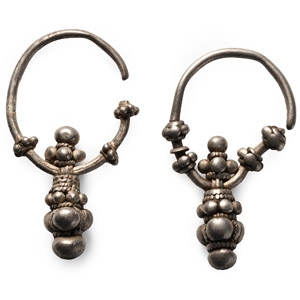
Viking Period Silver Temple Ring Pair
Circa 10th-12th century A.D.Sold for (Inc. bp): £182
Matching pair with crescentic hoops and granule decoration. 19.6 grams total, 45-47 mm
Private collection formed in Europe in the 1980s. Westminster collection, central London, UK.
