
Loading, please wait...
LOT 1536
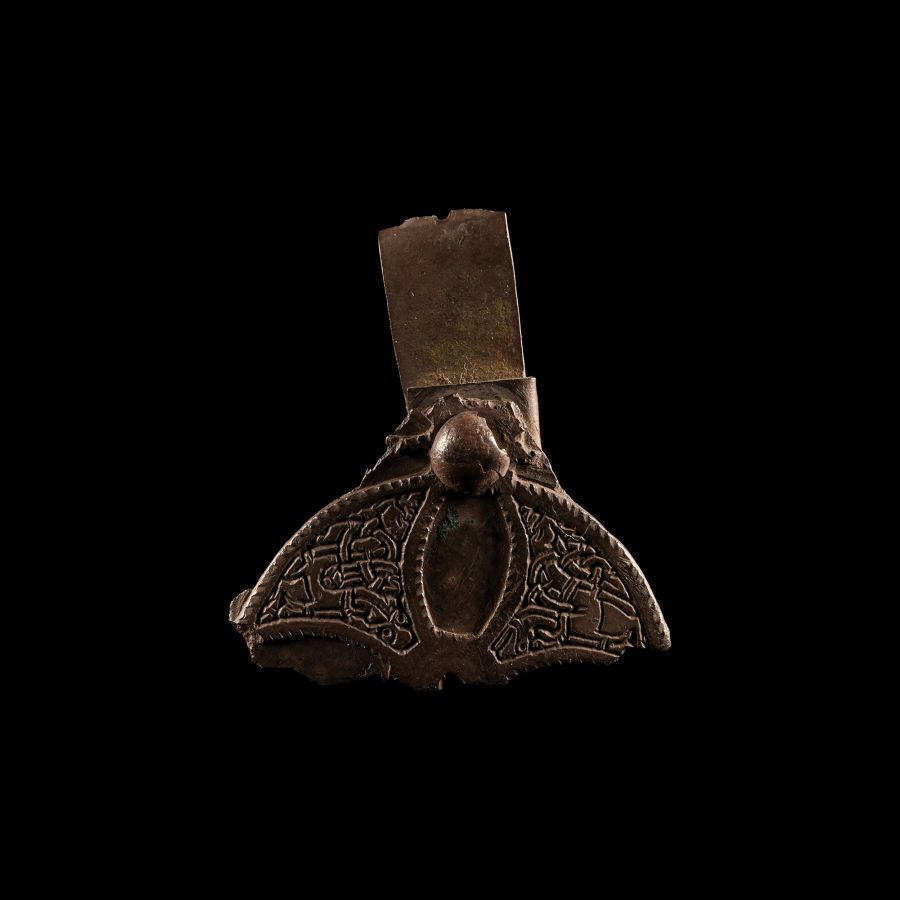
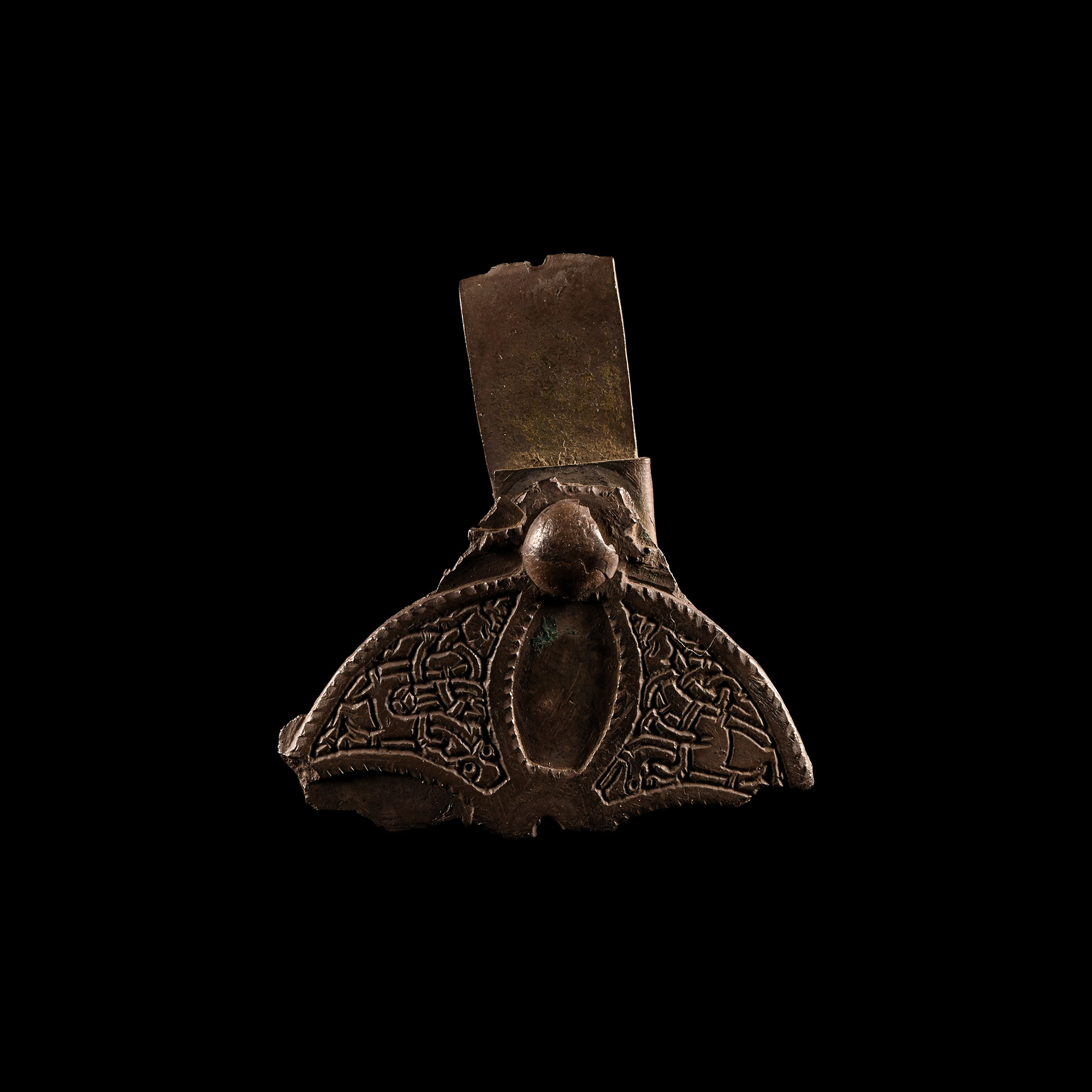
Saxon Silver Attachment Fragment
9TH CENTURY A.D.
2 in. (24.1 grams, 51 mm).
Comprising: a portion of a discoid mount with high-relief cross, the arms decorated with Trewhiddle Style animals and with notched edges, hole to the centre; lobe to the edge attached with a rivet to two rectangular straps, one extending for 34mm and the other broken off and folded to the rear. [No Reserve]
ProvenanceUK private collection, acquired in the 1980s.
LiteratureCf. Webster, L. & Backhouse, J., The Making of England. Anglo-Saxon Art and Culture AD 600-900, London, 1991, item 246 (a,b), for type.
FootnotesThe piece has the appearance of hack-silver in the light of the rough treatment it has received and the breakages.
CONDITIONTimeLine Auctions follows a vetting process to ensure the authenticity and legality of all items, reinforcing our commitment to integrity and responsible trading. Each antiquity, antique, and coin lot undergoes thorough examination by a vetting committee of at least ten external specialists, professional trade association members, scientists, and archaeologists: Our Vetting Process
AUCTIONS:
TimeLine is a leading auction house specialising in antiquities, ancient art, collectables, natural history, coins, medals, and books. Our auctions offer museums, collectors, historians, and enthusiasts the opportunity to acquire unique and historically significant pieces.
-
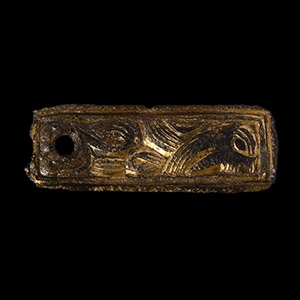
Anglo-Saxon Gilt Bronze Mount
6th century A.D.Sold for (Inc. bp): £72
Comprising a mounting lug to the reverse, hole to one end; raised border and panel of three-band Style I ornament. 2.9 grams, 33 mm
Found Saxmundham, Suffolk, UK. -
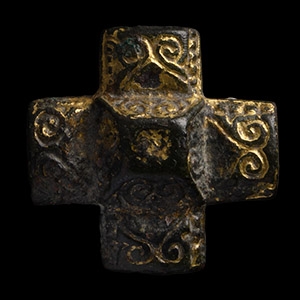
Saxon Gilt Cruciform Pyramid Mount
7th-9th century A.D.Estimate: £150 - 200 (‡+bp*)
Opening Bid: £75
Displaying incised scroll decoration to the arms and pyramidal faces; four attachment lugs to the reverse. 7.1 grams, 21 mm
Acquired on the UK art market before 2016. Ex property of an American collector. -
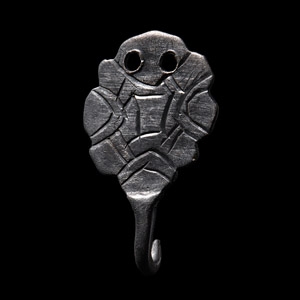
Saxon Silver Dress Hook
8th-10th century A.D.Estimate: £80 - 100 (+bp*)
Opening Bid: £40
Comprising a lobed disc with incised knot design, two attachment holes to the rear edge, thick hook. 0.86 grams, 21 mm
Fine condition.
Acquired in London in 1990. Property of a Kent gentleman.
