
Loading, please wait...
LOT 1358
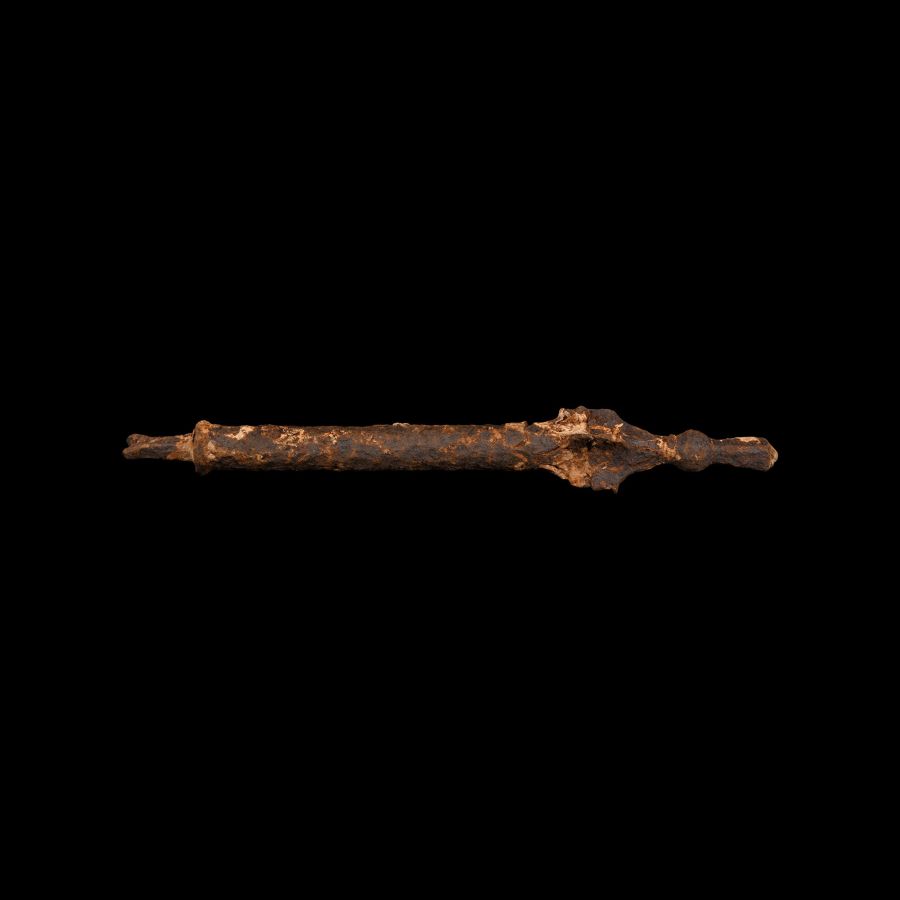
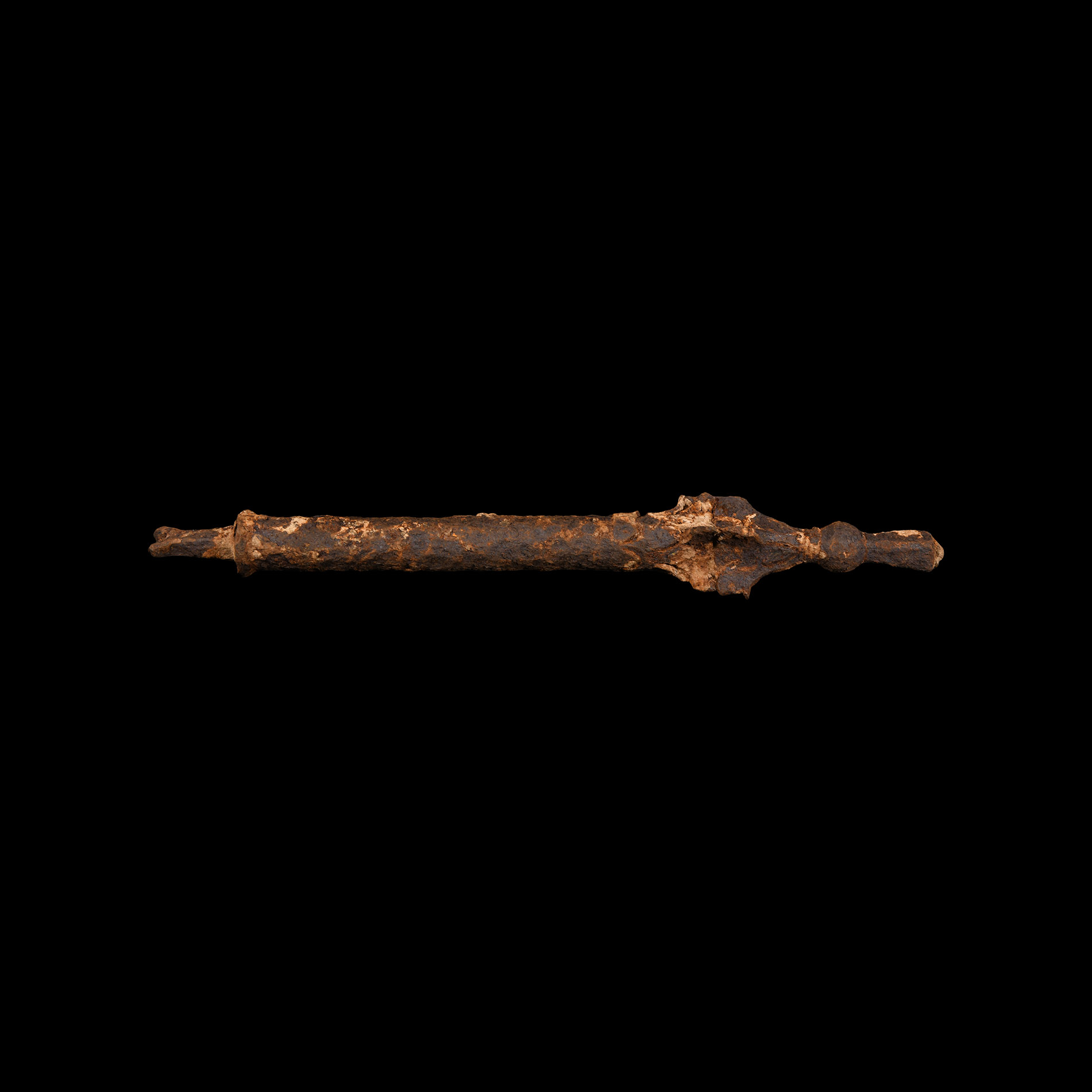
Saxon Period Iron Sceptre Head
8TH-10TH CENTURY A.D. OR LATER
15 3/4 in. (1.1 kg, 40 cm).
Composed of a cylindrical body, lobed neck, bulbous collar to handle with splayed square-section finial and a crescentic arm to the other end.
ProvenanceAcquired 1990s-early 2000s.
East Anglian private collection.
TimeLine Auctions follows a vetting process to ensure the authenticity and legality of all items, reinforcing our commitment to integrity and responsible trading. Each antiquity, antique, and coin lot undergoes thorough examination by a vetting committee of at least ten external specialists, professional trade association members, scientists, and archaeologists: Our Vetting Process
AUCTIONS:
TimeLine is a leading auction house specialising in antiquities, ancient art, collectables, natural history, coins, medals, and books. Our auctions offer museums, collectors, historians, and enthusiasts the opportunity to acquire unique and historically significant pieces.
LOT 1358
Saxon Period Iron Sceptre Head
Estimate £100 - 140€120 - 160 (for guidance only)$140 - 190 (for guidance only)
-

Saxon Decorated Bronze Pin
6th-9th century A.D.Sold for (Inc. bp): £20
Punched ring-and-dot motifs to two faces of the facetted head. 2.6 grams, 62 mm
From the collection of a North American gentleman, formed in the 1990s. -

Saxon Miniature Square-Headed Bronze Brooch
9th-11th century A.D.Sold for (Inc. bp): £26
Decorated with punched ring-and-dot motifs to the head and bow; remains of pin lug to reverse. 5.8 grams, 41 mm
From the collection of a North American gentleman, formed in the 1990s. -

Large Anglo-Saxon Gilt Bronze Harness Pendant with Dragons
Late 5th century A.D.Sold for (Inc. bp): £234
Comprising a bell-shaped body, slot to the upper end, beast-heads to the lateral edges, median raised rib, scrolled detailing to the lower edge; two rows of punchmarks, each a triangle containing three pellets and a separate pellet to the apex. 24.2 grams, 64 mm
Property of a Yorkshire gentleman; found by his grandfather during ground working in the 1950s; thence by descent.
