
Loading, please wait...
LOT 1419
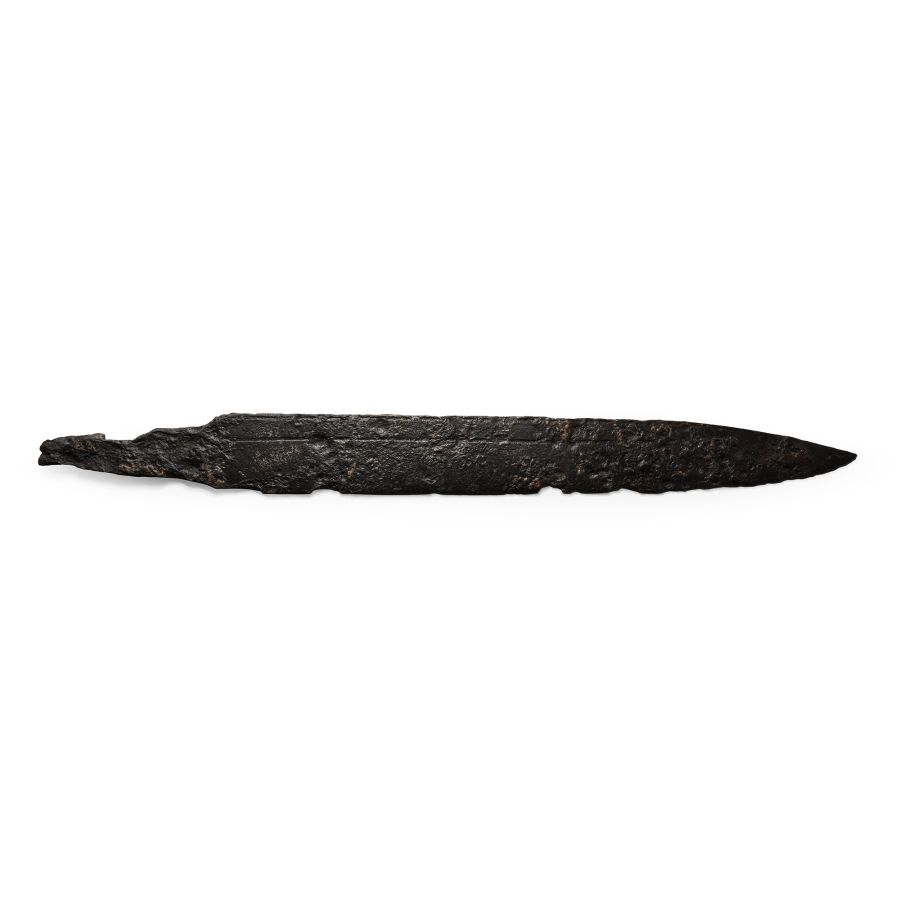
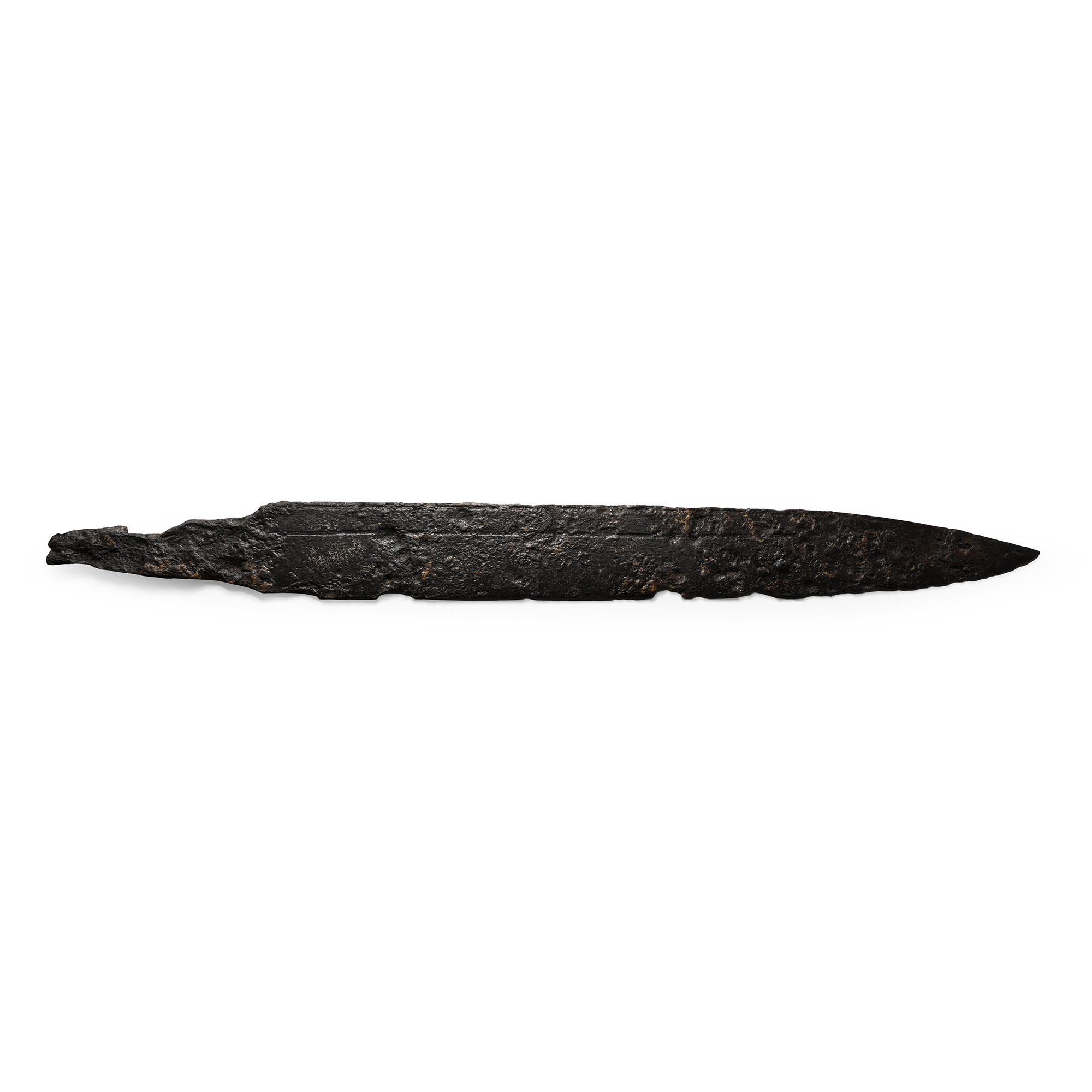
Saxon Iron Single-Edged Seax Sword Blade
7TH-8TH CENTURY A.D.
19 3/4 in. (610 grams, 50 cm).
Of Wheeler's Type I with point at the median line, broad with thick back and wide, flat tang for a whittle-tang hilt assemblage; incised lines to both faces following the profile of the back and cutting edge. [No Reserve]
ProvenancePrivate collection, UK.
LiteratureCf. Webster et al., The Golden Age of Anglo-Saxon Art 966 to 1066, London, 1984, item 94, for type.
CONDITIONTimeLine Auctions follows a vetting process to ensure the authenticity and legality of all items, reinforcing our commitment to integrity and responsible trading. Each antiquity, antique, and coin lot undergoes thorough examination by a vetting committee of at least ten external specialists, professional trade association members, scientists, and archaeologists: Our Vetting Process
AUCTIONS:
TimeLine is a leading auction house specialising in antiquities, ancient art, collectables, natural history, coins, medals, and books. Our auctions offer museums, collectors, historians, and enthusiasts the opportunity to acquire unique and historically significant pieces.
-
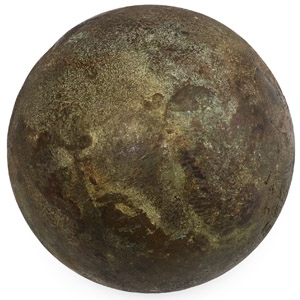
Crimean War Bronze Shrapnel Cannon Ball
Dated 1854 A.D.Sold for (Inc. bp): £117
Hollow-formed shot with plug in situ, engraved: 'INKERMAN / NOV 1854 / 49 FOOT'. 1.7 kg, 80 mm
Acquired on the UK art art. Property of a Nottinghamshire, UK, gentleman.
The 49th (Princess Charlotte of Wales's) (Hertfordshire) Regiment of Foot was an infantry regiment which took part in the Crimean War and fought at the Battle of Inkerman in November 1854. -
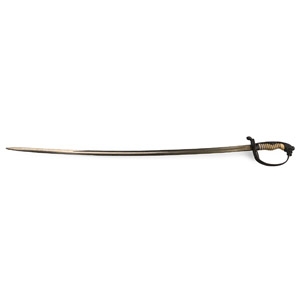
Kriegsmarine WWI German Naval Officer's Sword
Early 20th century A.D.Sold for (Inc. bp): £111
Comprising a slender single-edged blade; the hilt composed of a wire-bound ribbed bone handle, a lion-head pommel with inset eyes (one absent), and an ornate guard with a folding edge to one side. 612 grams, 94.5 cm
From the private collection of author and historian Dr DeWitt Bailey, one of the global authorities on the confederate army in the US civil war; thence by descent to his grandson. -
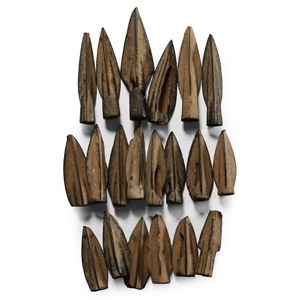
Greek and Other Bronze Arrowhead Collection
Circa 5th-3rd century B.C.Sold for (Inc. bp): £117
The group comprising triangular trilobate types, all socketted. 63.5 grams total, 24-42 mm
Ex London art market, 1980-1990s. This lot is accompanied by an illustrated lot declaration signed by the Head of the Antiquities Department, Dr Raffaele D'Amato.
In the Greek warfare, archers were mainly employed by Scythians and Cretans. Both used composite bows made of wood, horn, bone and sinew. This explains the great range of Scythian arrowheads found on the Greek sites.
