
Loading, please wait...
LOT 1129
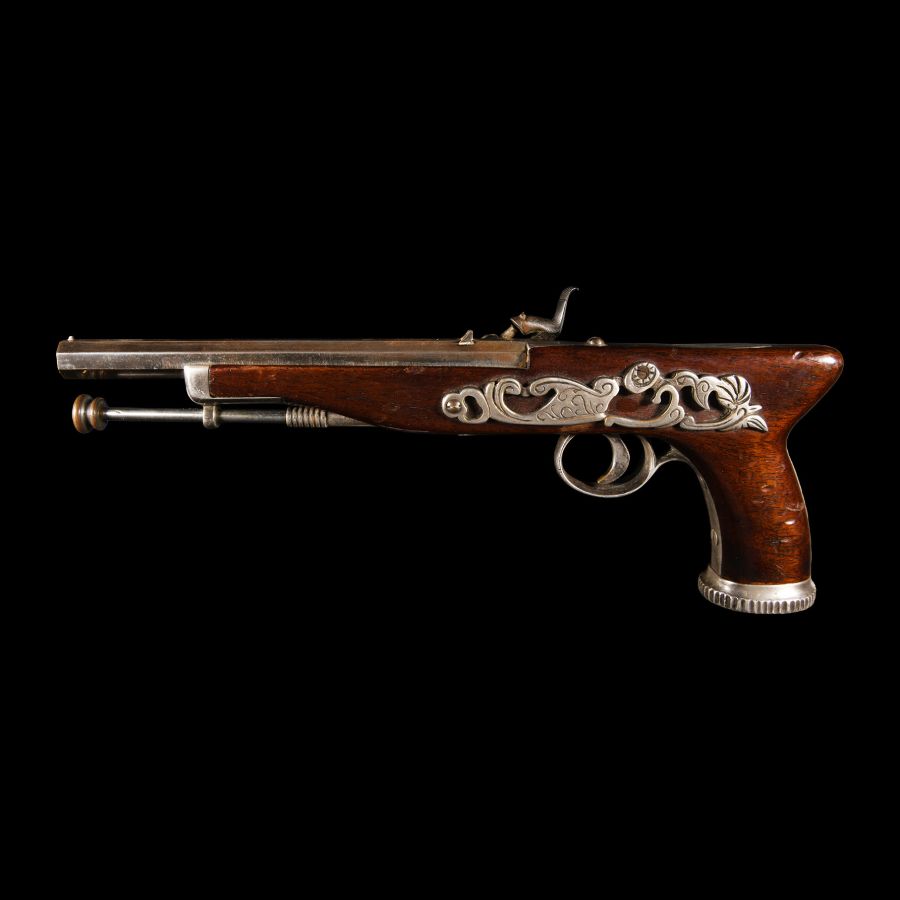
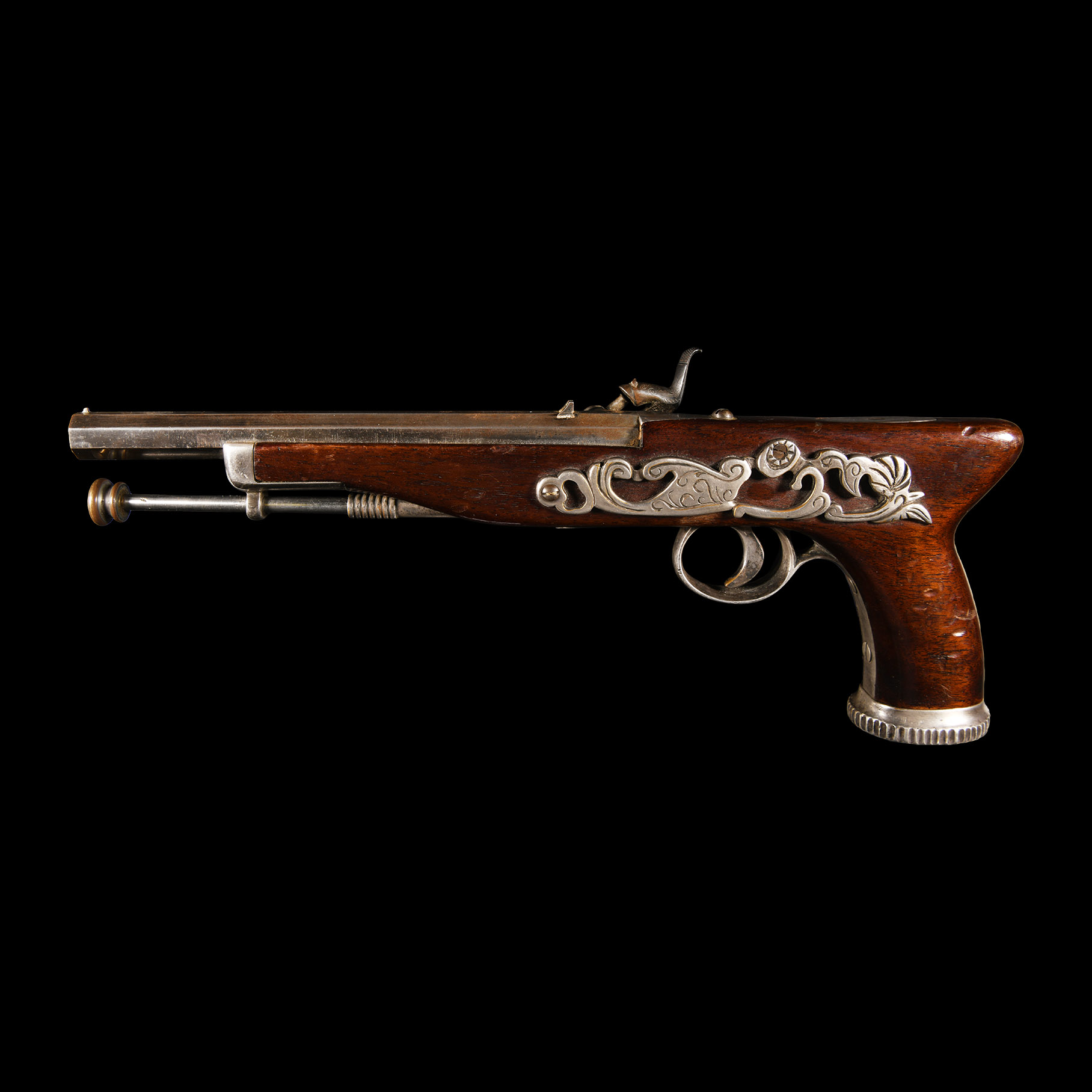
Saw-Butted Percussion Pistol
19TH CENTURY A.D.
10 in. (1.1 kg, 35.5 cm).
With wood butt and silvered butt cap, sideplate, fore-end and trigger guard, fitted with steel ramrod and an octagonal lined sighted barrel with foliate engraved percussion lock signed 'HENRY CLARKE' (lacking hammer retaining screw). [No Reserve]
ProvenanceProperty of a Luton, UK gentleman, by inheritance.
FootnotesThe Clarkes were a Midlands, UK gunsmithing family.
Sold as an exempt item under Section 58 (2) of the Firearms Act, 1968, to be held as a curiosity or ornament. No license required but buyer must be over 18 years of age. Overseas bidders should note that, due to UK regulations governing export of all firearms, overseas buyers will need to make arrangements for shipping this lot out of the UK directly, by air freight, with a specialist company or agent.
TimeLine Auctions follows a vetting process to ensure the authenticity and legality of all items, reinforcing our commitment to integrity and responsible trading. Each antiquity, antique, and coin lot undergoes thorough examination by a vetting committee of at least ten external specialists, professional trade association members, scientists, and archaeologists: Our Vetting Process
AUCTIONS:
TimeLine is a leading auction house specialising in antiquities, ancient art, collectables, natural history, coins, medals, and books. Our auctions offer museums, collectors, historians, and enthusiasts the opportunity to acquire unique and historically significant pieces.
-
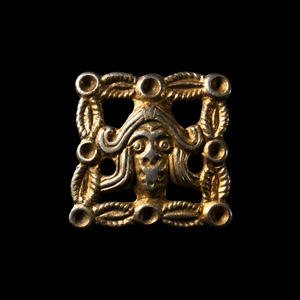
Khazar Silver-Gilt Sword Belt Mount with Warrior
9th-10th century A.D.Sold for (Inc. bp): £374
Square in plan with a slightly convex openwork panel composed of alternating circular cells and leaf-like ovals, central male head with long hair and stylised facial features, possibly wearing a helmet; attachment loop to each corner on the reverse. 8.27 grams, 22 mm
Fine condition.
Acquired in the 1980s-1990s. Ex an important central London gallery, London W1. -
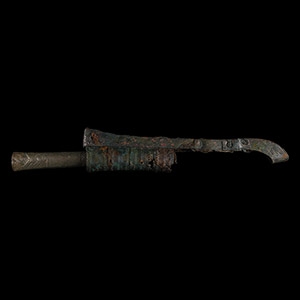
Viking Age Bronze Dagger Hilt with Scabbard
10th-11th century A.D.Sold for (Inc. bp): £130
The scabbard with bronze hoop reinforcements to the upper third decorated with bands of punched holes; lateral suspension flap between bronze plates with reserved interlace motifs on hatched field; hilt with Borre Style ring-chain motifs to the upper end; hollow to the upper face. 119 grams, 24 cm
From the collection of a North American gentleman, formed in the 1990s. -
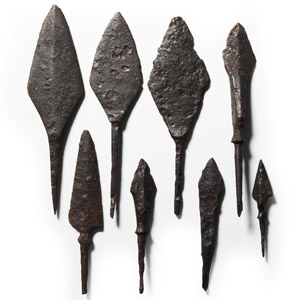
Medieval Iron Arrowhead Group
12th-15th century A.D.Sold for (Inc. bp): £169
Comprising tanged arrowheads of various types, including leaf-shaped, lozengiform, triangular and leaf-shaped examples, together with others. 66 grams total, 41-88 mm
Acquired on the German art market, before 2000. Ex German collection. The Kusmirek Collection, UK.
