
Loading, please wait...
LOT 1204
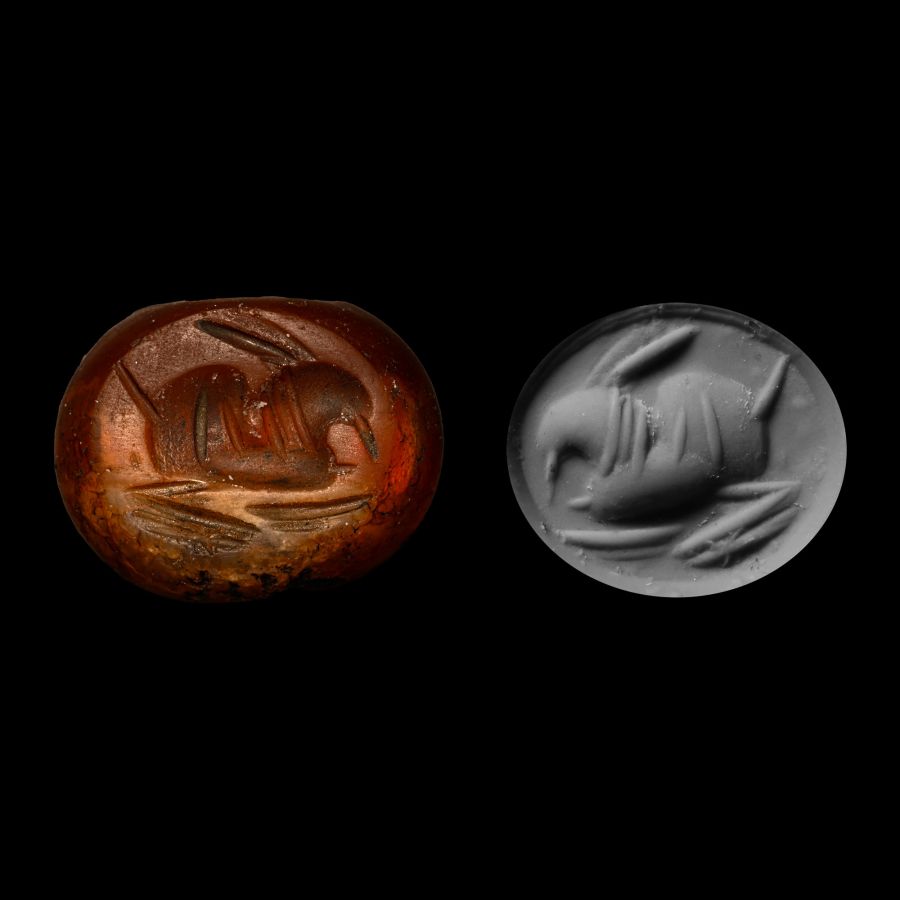
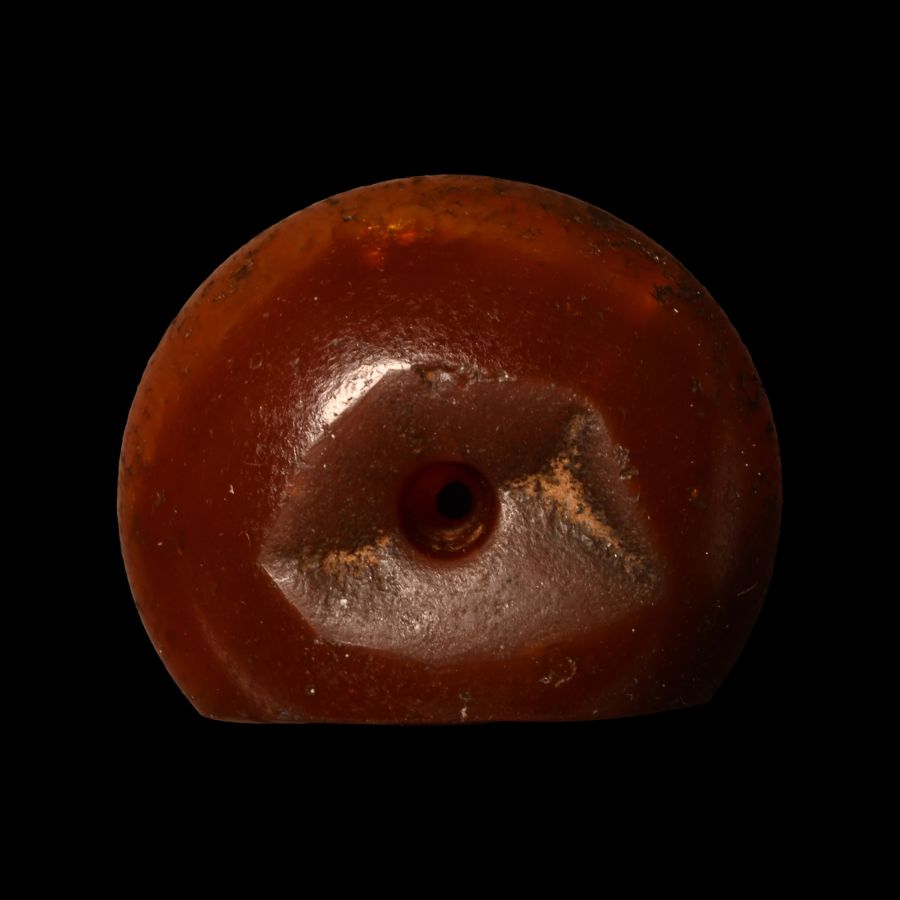
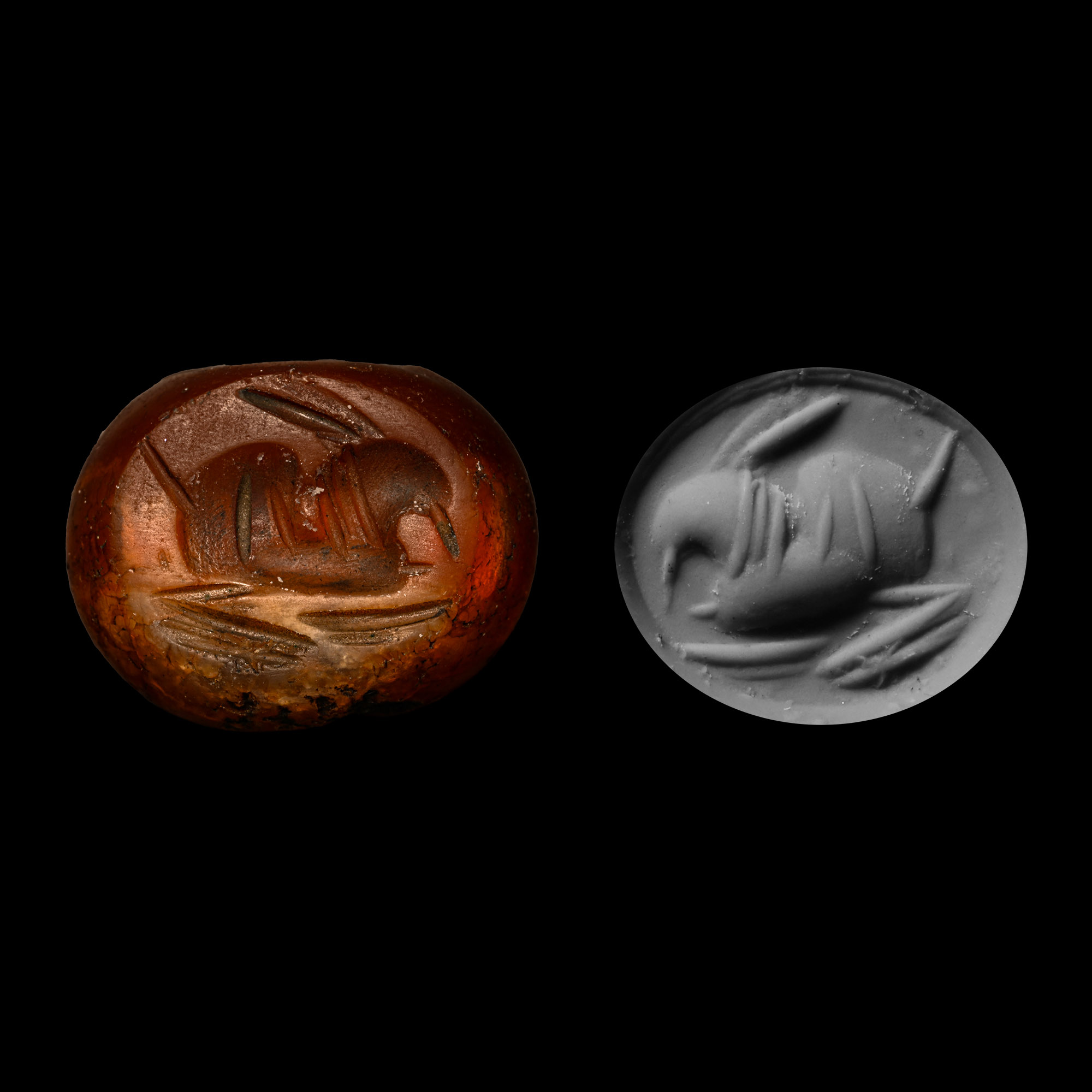
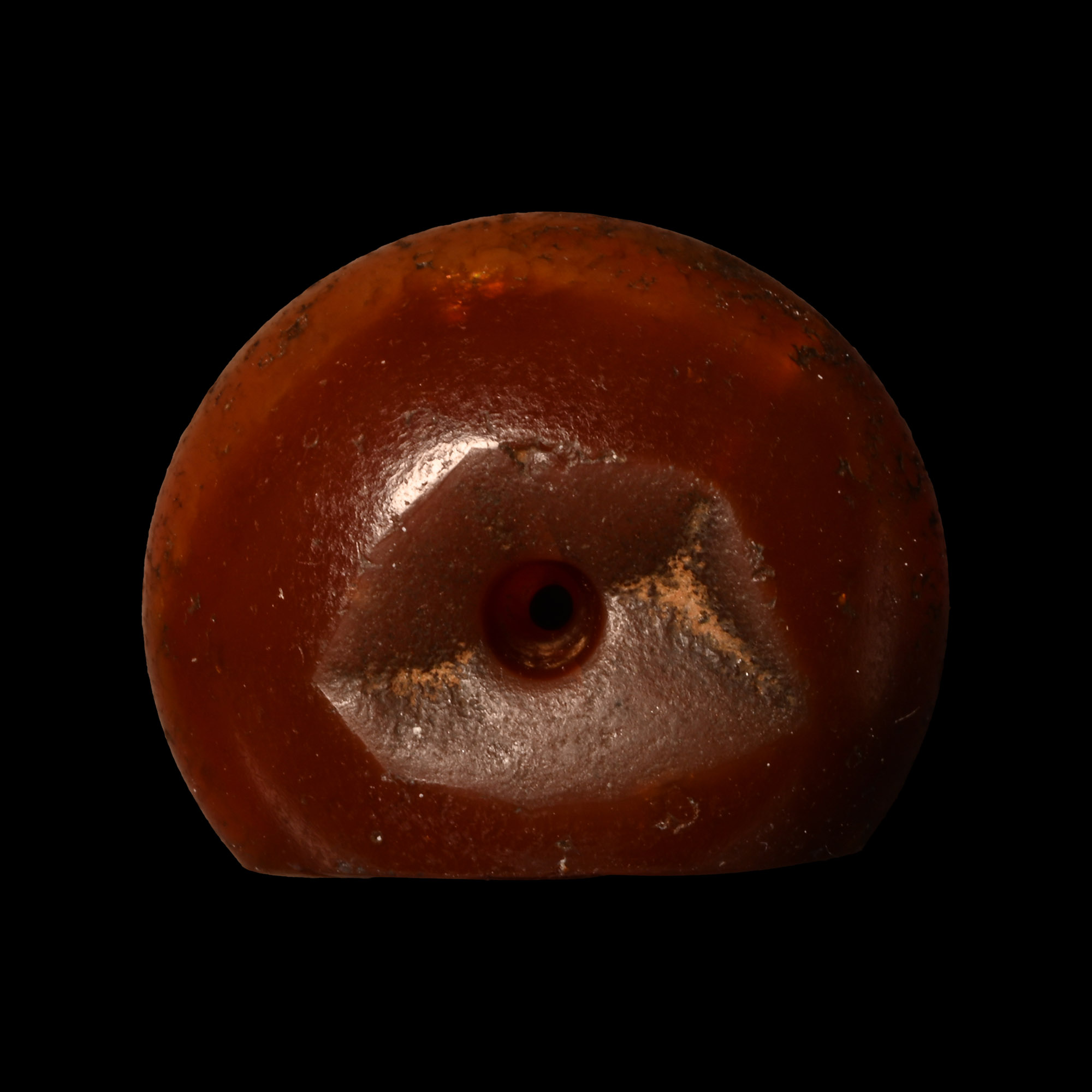
Sassanian Stone Seal with Animal
CIRCA 3RD-7TH CENTURY A.D.
7/8 in. (10.5 grams, 22 mm).
With stylised quadruped resting with head bowed and legs folded beneath the body; supplied with a museum-quality impression.
ProvenanceEx Symes Gallery, Mayfair, UK, before 1999.
CONDITIONTimeLine Auctions follows a vetting process to ensure the authenticity and legality of all items, reinforcing our commitment to integrity and responsible trading. Each antiquity, antique, and coin lot undergoes thorough examination by a vetting committee of at least ten external specialists, professional trade association members, scientists, and archaeologists: Our Vetting Process
AUCTIONS:
TimeLine is a leading auction house specialising in antiquities, ancient art, collectables, natural history, coins, medals, and books. Our auctions offer museums, collectors, historians, and enthusiasts the opportunity to acquire unique and historically significant pieces.
LOT 1204
Sassanian Stone Seal with Animal
Estimate £100 - 140€120 - 160 (for guidance only)$140 - 190 (for guidance only)
-
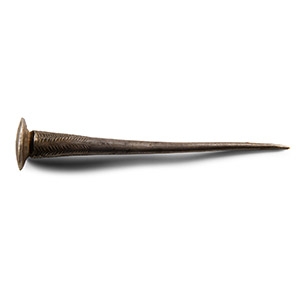
Urartian Decorated Silver Dress Pin
8th-6th century B.C.Sold for (Inc. bp): £46
Tapering body with carinated top and biconvex head, incised herringbone pattern at the top of the shank to prevent slippage. 28 grams, 95 mm
Ex London, UK, collection, 1990s. Ex Den of Antiquity, Cambridgeshire, UK. Accompanied by a dealer's catalogue information card. -
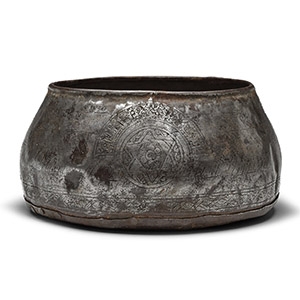
Timurid Engraved Iron Bowl
Circa 14th century A.D.Sold for (Inc. bp): £169
With rivetted sidewall and base, incised herringbone hatching, four roundels each with rosette to the centre and inscribed arch; repaired. 636 grams, 19.5 cm
Fair condition, with later repair.
Formerly acquired in the 1980s. From the family collection of a Hampstead gentleman. -
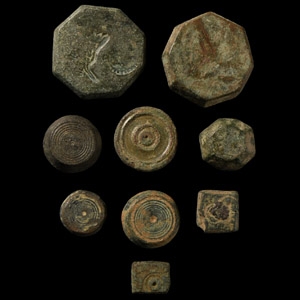
Western Asiatic Bronze Weight Collection
Circa 8th-12th century A.D.Sold for (Inc. bp): £59
Including barrel-shaped, discoid, octagonal and other types, some with stamped markings. 127 grams total, 10-24 mm
Ex Simmons gallery, London, UK. Ex North London collection, 1990s.
