
Loading, please wait...
LOT 0241
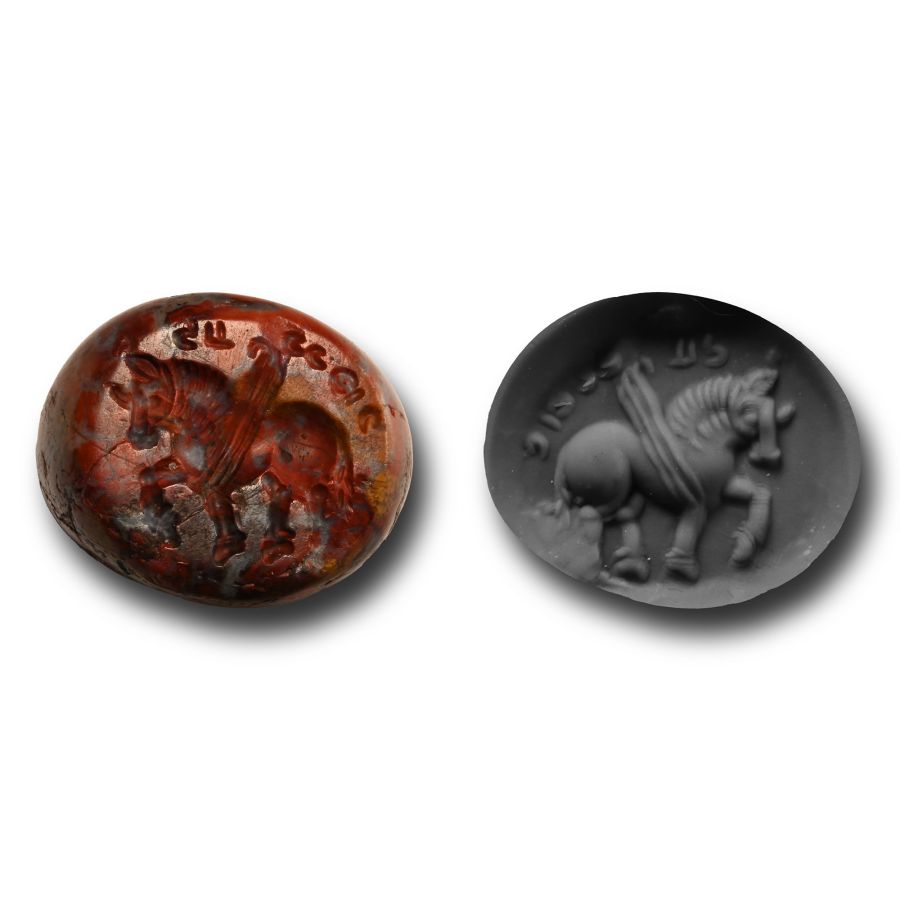
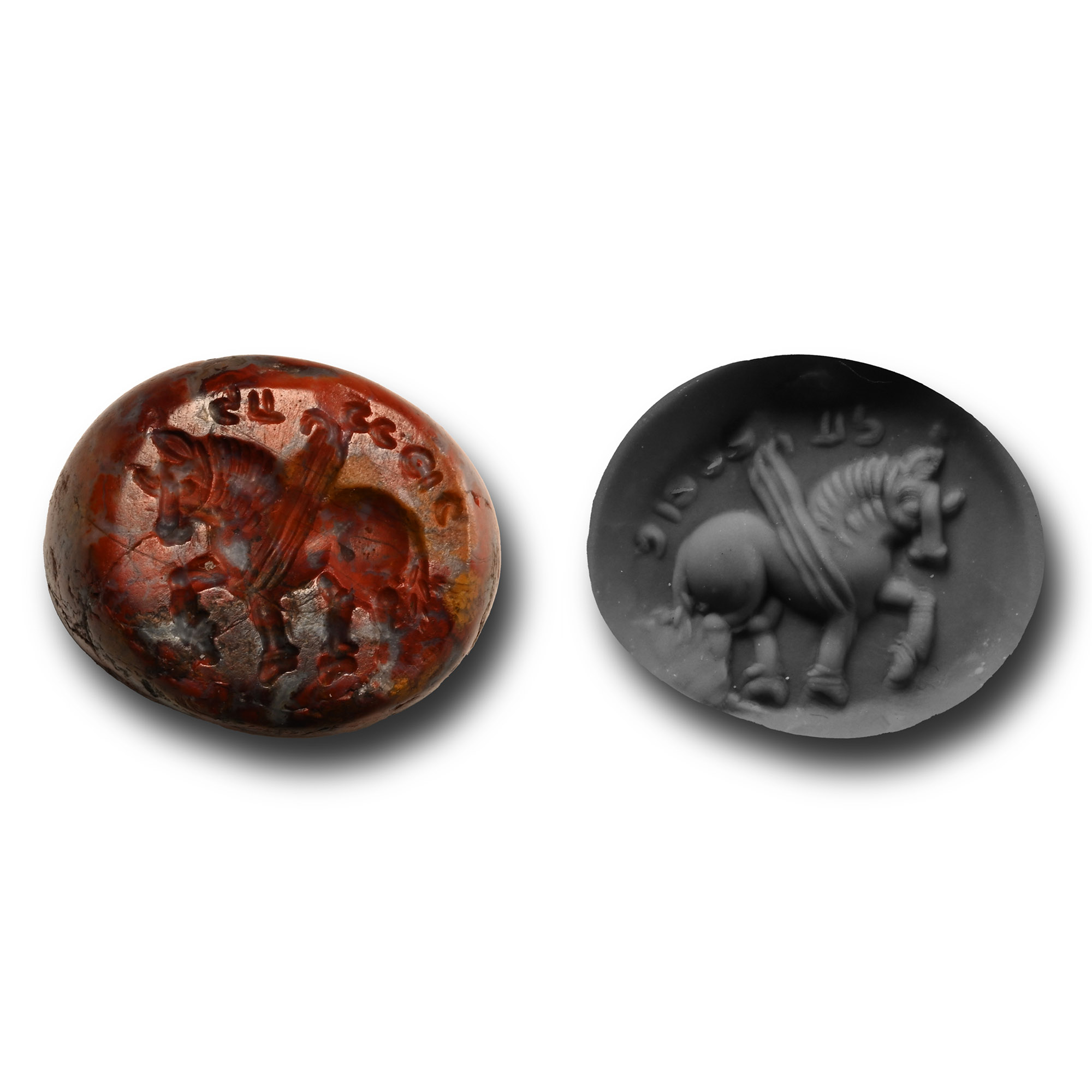
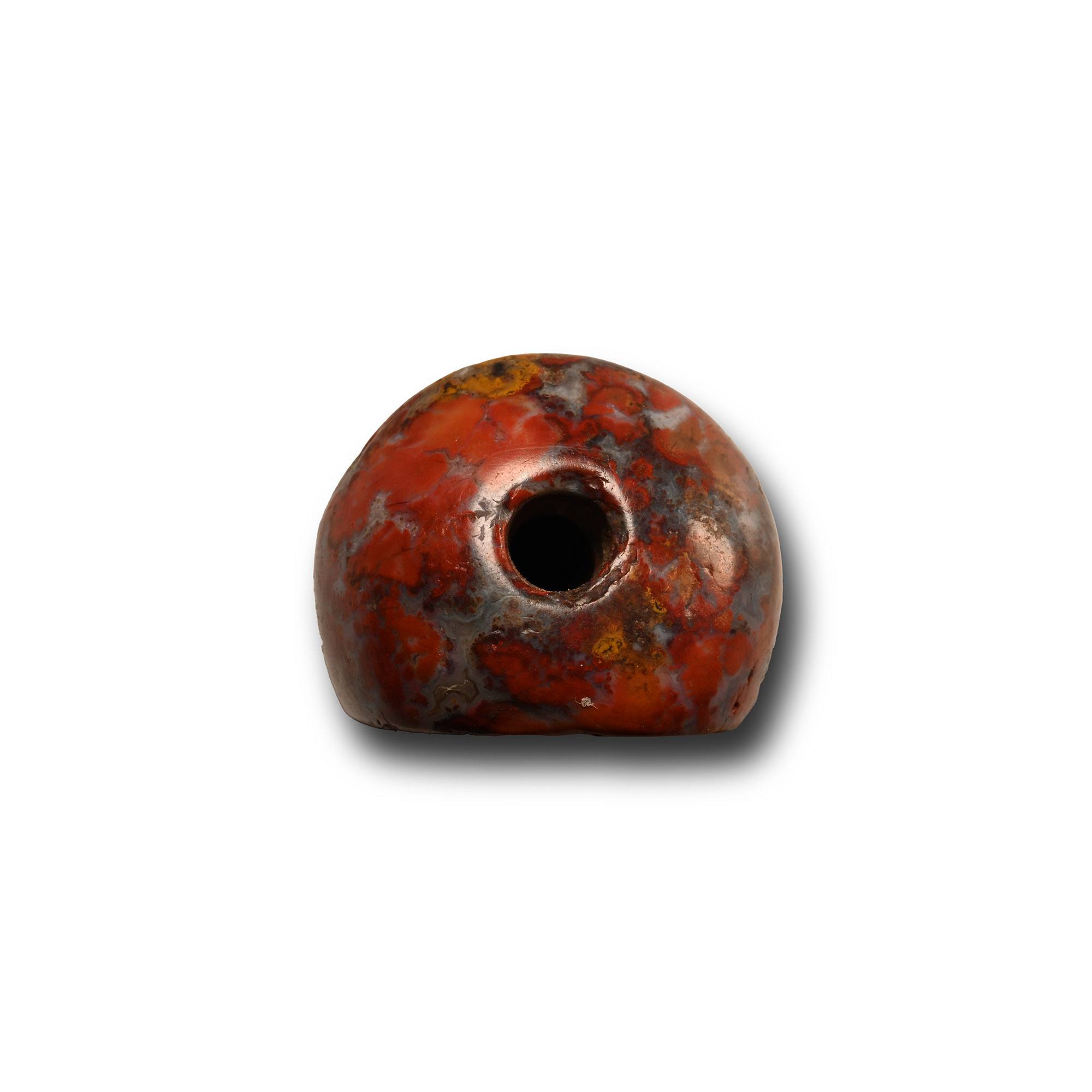
Sassanian Red Jasper Seal with Pegasus
4TH-5TH CENTURY A.D.
3/4 in. (8.1 grams, 20 mm).
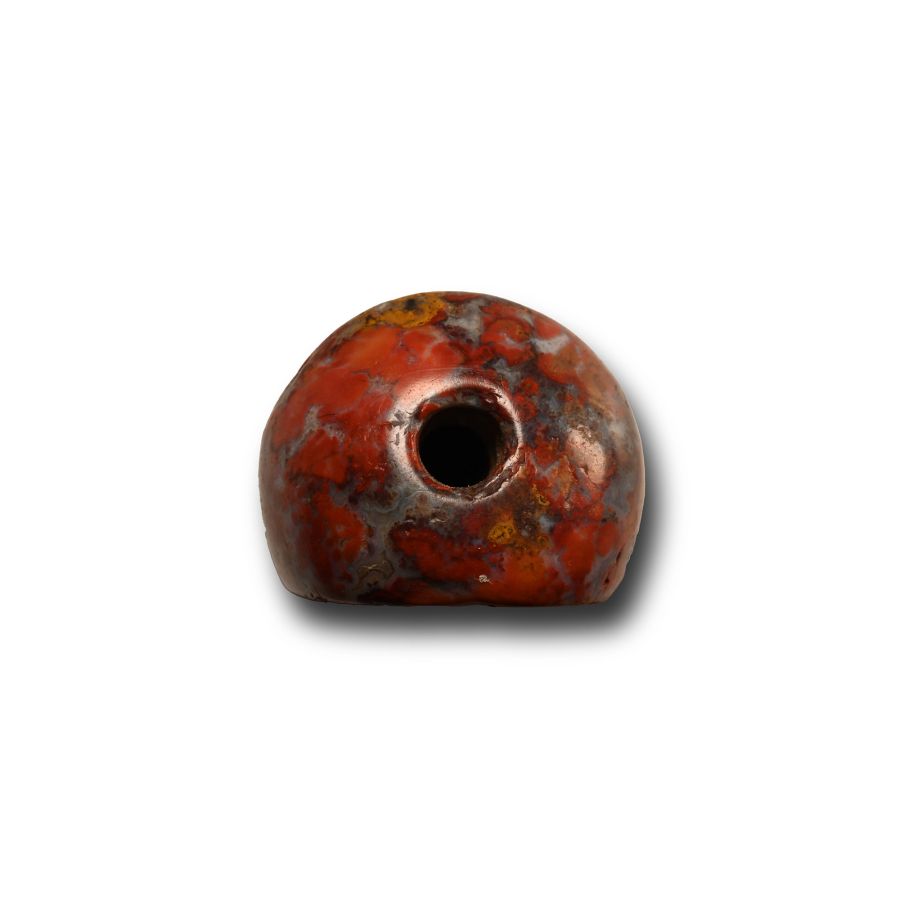
Plano-convex pierced seal with advancing winged horse, Pahlavi inscription 'l'sty rast' ('just'); supplied with a museum-quality impression. [No Reserve]
ProvenanceAcquired between 1980-1983.
From the 'Empire' collection, an important UK private collection of seals, collection no.16.
Accompanied by a copy of a typed and signed scholarly note by A D H Bivar.
TimeLine Auctions follows a vetting process to ensure the authenticity and legality of all items, reinforcing our commitment to integrity and responsible trading. Each antiquity, antique, and coin lot undergoes thorough examination by a vetting committee of at least ten external specialists, professional trade association members, scientists, and archaeologists: Our Vetting Process
AUCTIONS:
TimeLine is a leading auction house specialising in antiquities, ancient art, collectables, natural history, coins, medals, and books. Our auctions offer museums, collectors, historians, and enthusiasts the opportunity to acquire unique and historically significant pieces.
-
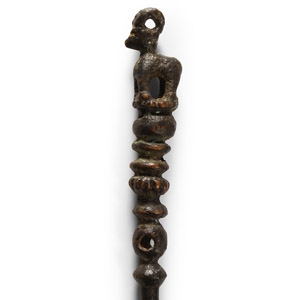
Luristan Bronze Pin with Ibex
1st millennium B.C.Sold for (Inc. bp): £104
With a tapering round-section shank, balustered finial topped with a standing ibex. 11.7 grams, 10.1 cm
UK private collection before 2000. On the UK art market. Property of a London gentleman. -
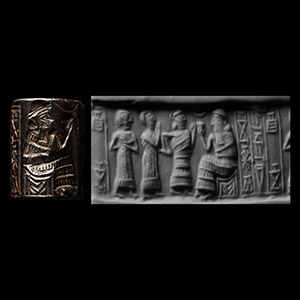
Akkadian Cylinder Seal with Presentation Scene
2nd millennium B.C.Sold for (Inc. bp): £572
Haematite with a seated bearded male figure in long robes and cap, hand held up and holding a cup, crescent moon above; to the front a male deity wearing long robes and a horned cap leading a male figure by the hand, male in long robes and hand held to mouth; behind a male figure in long robes and arms crossed over chest, rectangular panel with three columns of cuneiform text. 7.1 grams, 16 mm
From an important North London collection formed in the late 1980s. From a collection acquired from various auction houses in the UK. From the estate of Mr R.W., a private Wiltshire, UK, collector; thence by descent. -
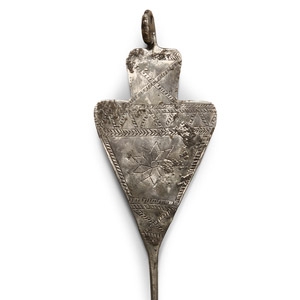
Western Asiatic Decorated Silver Pin
3rd century B.C.-2nd century A.D.Sold for (Inc. bp): £26
With triangular body, comprising a central rosette and herringbone borders; stem of the pin at the apex, rectangular panel above and S-curved securing loop. 17.5 grams, 16 cm
UK private collection before 2000. On the UK art market. Property of a London gentleman.
