
Loading, please wait...
LOT 1245
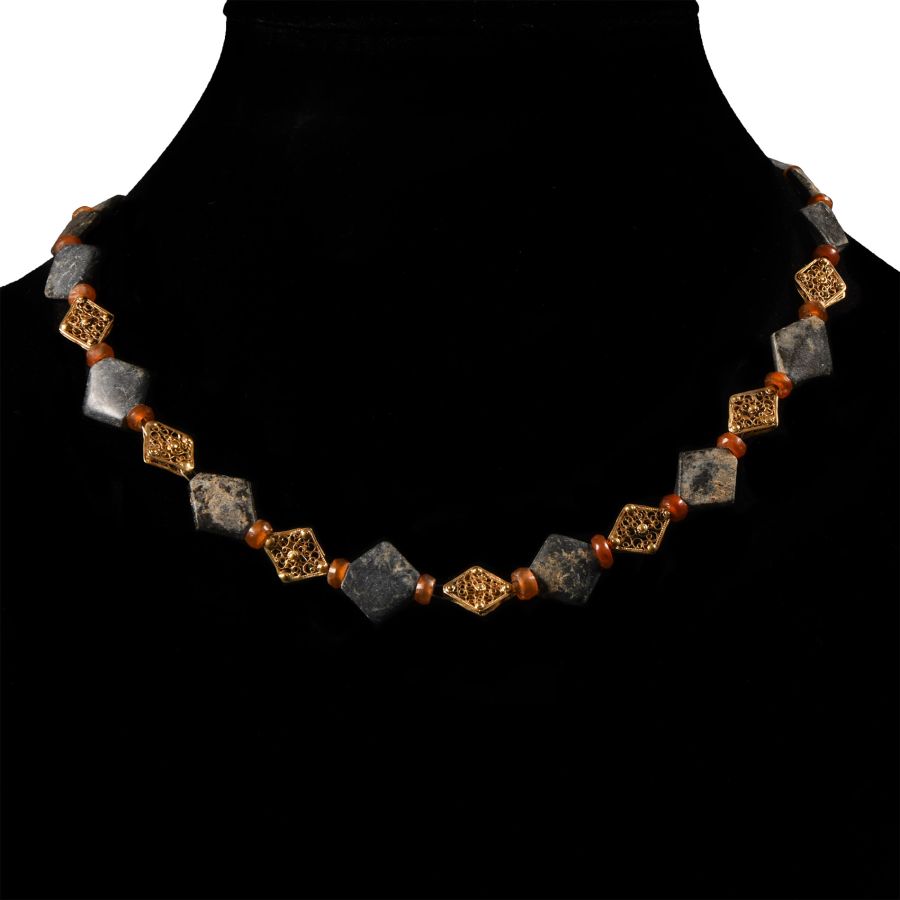
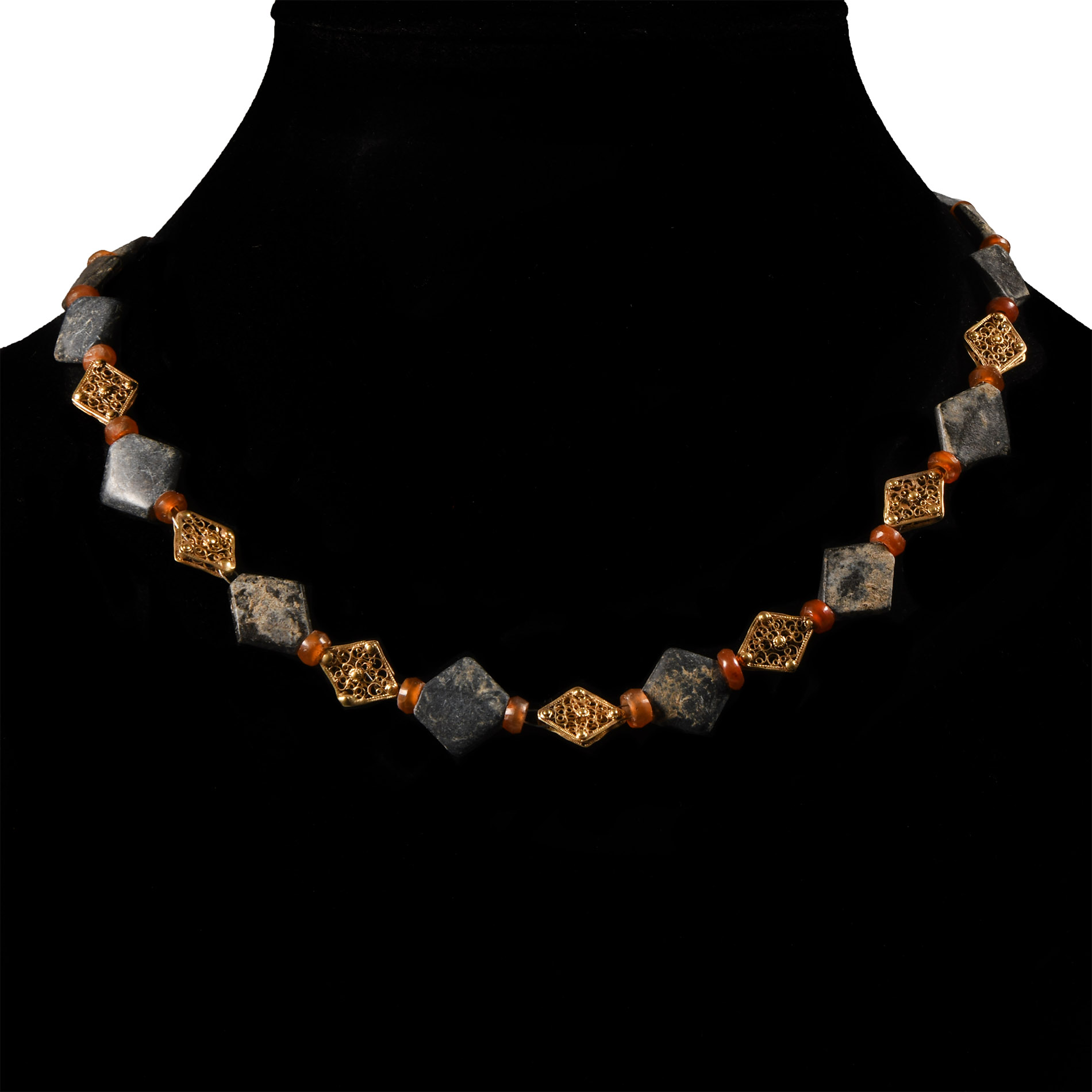
Sassanian Necklace with Gold Pendants
3RD-7TH CENTURY A.D. AND LATER
17 1/2 in. (24.9 grams, 44.5 cm long).
A restrung necklace composed of carnelian and lozengiform lapis lazuli beads interspersed with later gold filigree beads; later hook-and-eye closure.
ProvenanceAcquired before 1983.
Ex London gallery, 1990s.
TimeLine Auctions follows a vetting process to ensure the authenticity and legality of all items, reinforcing our commitment to integrity and responsible trading. Each antiquity, antique, and coin lot undergoes thorough examination by a vetting committee of at least ten external specialists, professional trade association members, scientists, and archaeologists: Our Vetting Process
AUCTIONS:
TimeLine is a leading auction house specialising in antiquities, ancient art, collectables, natural history, coins, medals, and books. Our auctions offer museums, collectors, historians, and enthusiasts the opportunity to acquire unique and historically significant pieces.
-
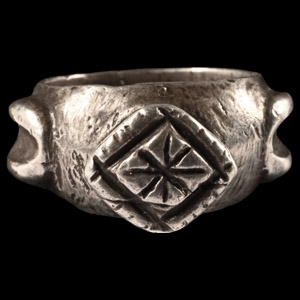
Western Asiatic Silver Ring with Quatrefoil Bezel
12th-13th century A.D.Sold for (Inc. bp): £153
With a wide hoop, grooved plaque to each shoulder; raised quatrefoil bezel with ribbing, central starburst motif enclosed within a hatched frame. 15.25 grams, 29.66 mm overall, 17.23 mm internal diameter (approximate size British O, USA 7, Europe 14.98, Japan 14)
Property of a North American gallery since the 1990s. -
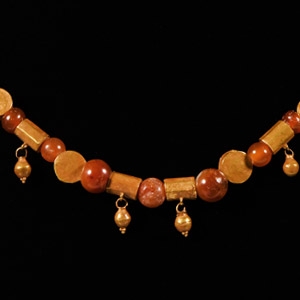
Parthian Carnelian and Gold Bead Necklace
1st century B.C.-1st century A.D.Estimate: £1,000 - 1,400 (+bp*)
Opening Bid: £550
Comprising: sheet-gold drum-shaped and octagonal-section beads with spherical pendants, graduated interstitial spherical or oblate carnelian beads; restrung with modern clasp. 44 grams, 46.5 cm long
Acquired 1970s-1996. Property of a North American collector. London collection, 2016. -
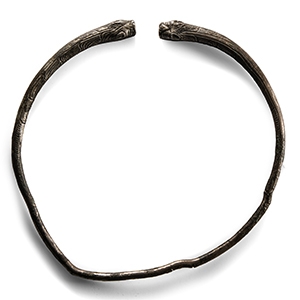
Achaemenid Silver Torc with Animal Heads
6th-4th century BCSold for (Inc. bp): £143
Penannular with tapering round-section profile, hatched panels developing to club-ended finials with beast-head detailing. 86 grams, 13 cm
UK private collection before 2000. UK art market. Property of a London gentleman.
