
Loading, please wait...
LOT 1315
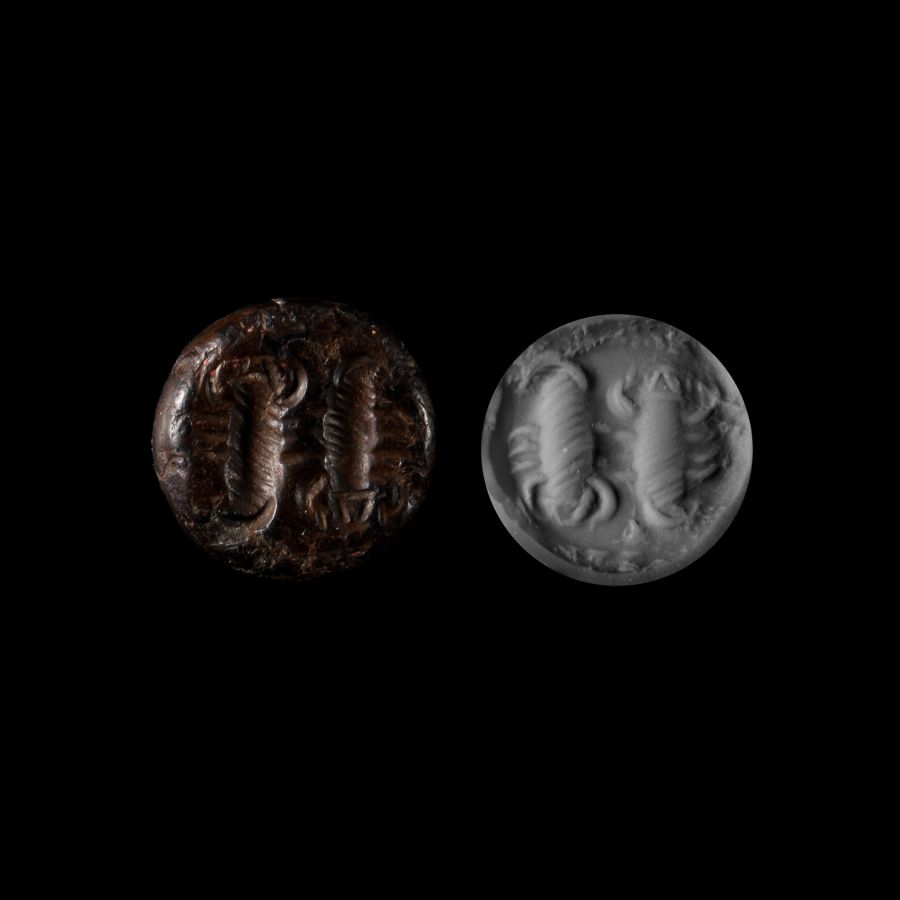
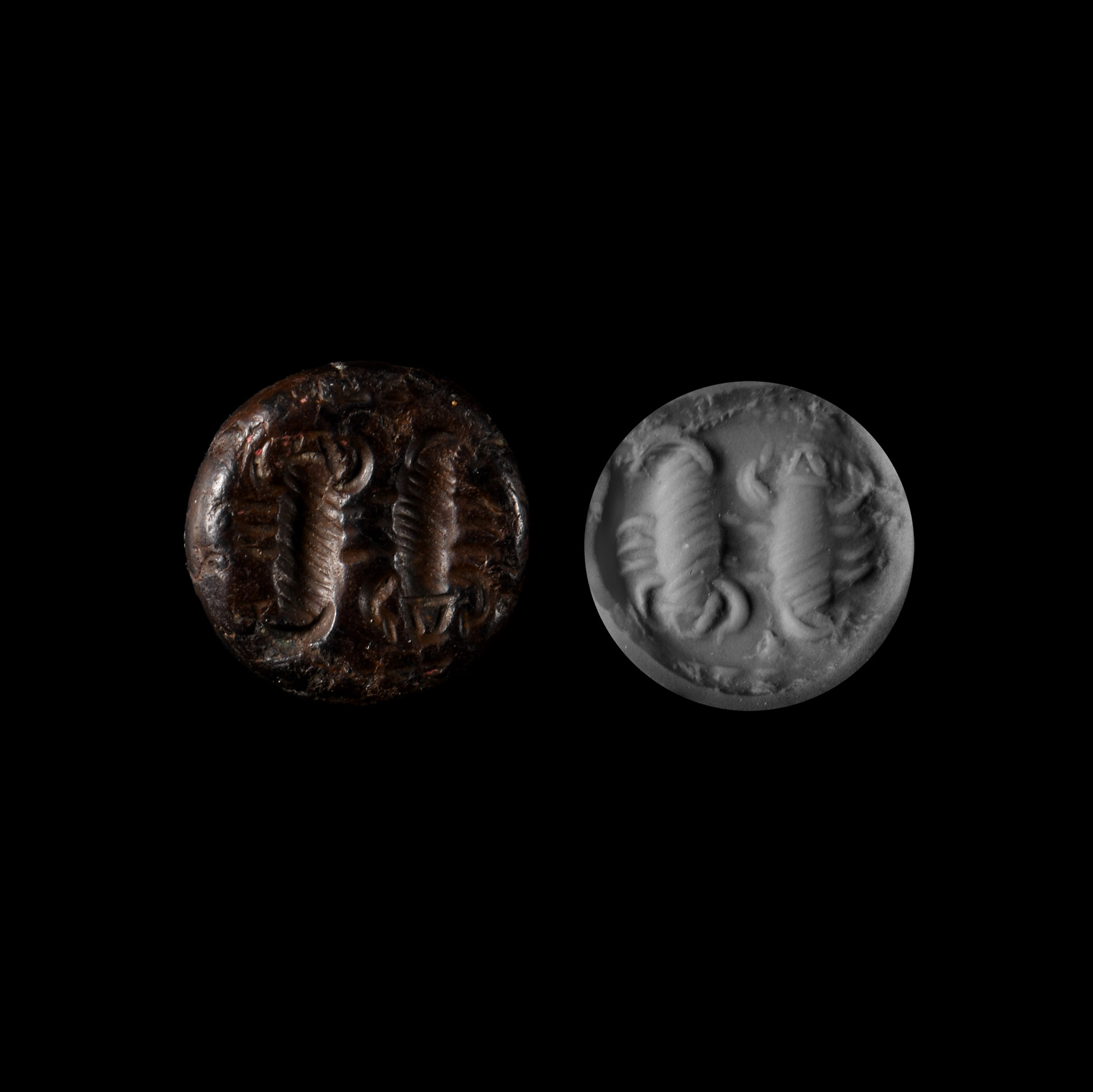
Sassanian Haematite Seal
4TH-7TH CENTURY A.D.
5/8 in. (8 grams, 17 mm).
Plano-convex stamp seal with design of two scorpions placed tête-bêche; supplied with a museum-quality impression.
ProvenanceAcquired in Europe in 1997.
European private collection.
Cf. similar item in the Metropolitan Museum of Art, New York, under accession no.41.160.247, for type.
CONDITIONTimeLine Auctions follows a vetting process to ensure the authenticity and legality of all items, reinforcing our commitment to integrity and responsible trading. Each antiquity, antique, and coin lot undergoes thorough examination by a vetting committee of at least ten external specialists, professional trade association members, scientists, and archaeologists: Our Vetting Process
AUCTIONS:
TimeLine is a leading auction house specialising in antiquities, ancient art, collectables, natural history, coins, medals, and books. Our auctions offer museums, collectors, historians, and enthusiasts the opportunity to acquire unique and historically significant pieces.
LOT 1315
Sassanian Haematite Seal
Estimate £200 - 300€230 - 350 (for guidance only)$270 - 410 (for guidance only)
-
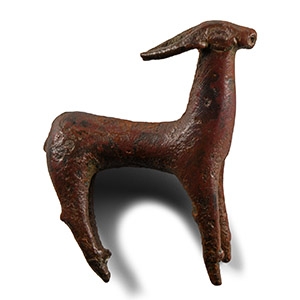
Western Asiatic Bronze Figure of an Antelope
1st millennium B.C.Sold for (Inc. bp): £85
Modelled in the round with head erect and horns swept back,tail curled to the rump; attachment pegs below the hooves. 64 grams, 67 mm
From a collection acquired on the UK art market from various auction houses and collections mostly before 2000. From an important Cambridgeshire estate; thence by descent. -
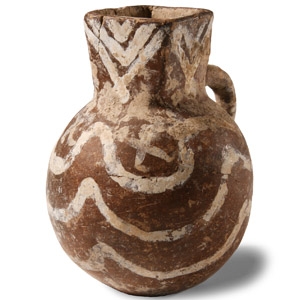
Western Asiatic White Painted Pottery Vessel
Circa 1st millennium B.C.Sold for (Inc. bp): £65
With globular body and square-section neck, loop handle to shoulder and white linear ornament. 200 grams, 10 cm
From the property of Mr O.S., a late Suffolk, UK, gentleman, who acquired at auction from the 1960s. -
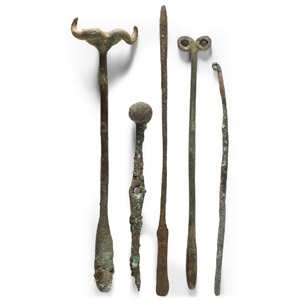
Luristan Bronze Implement Collection
Bronze Age, 13th-7th century B.C.Sold for (Inc. bp): £59
Including a net-needle with pierced centre and ball finial, applicator with bull's head finial, dress-pin with scrolled finial and other items. 47 grams total, 8.5-12.5 cm
From a collection acquired on the UK art market from various auction houses and collections mostly before 2000. From an important Cambridgeshire estate; thence by descent.
