
Loading, please wait...
LOT 0955
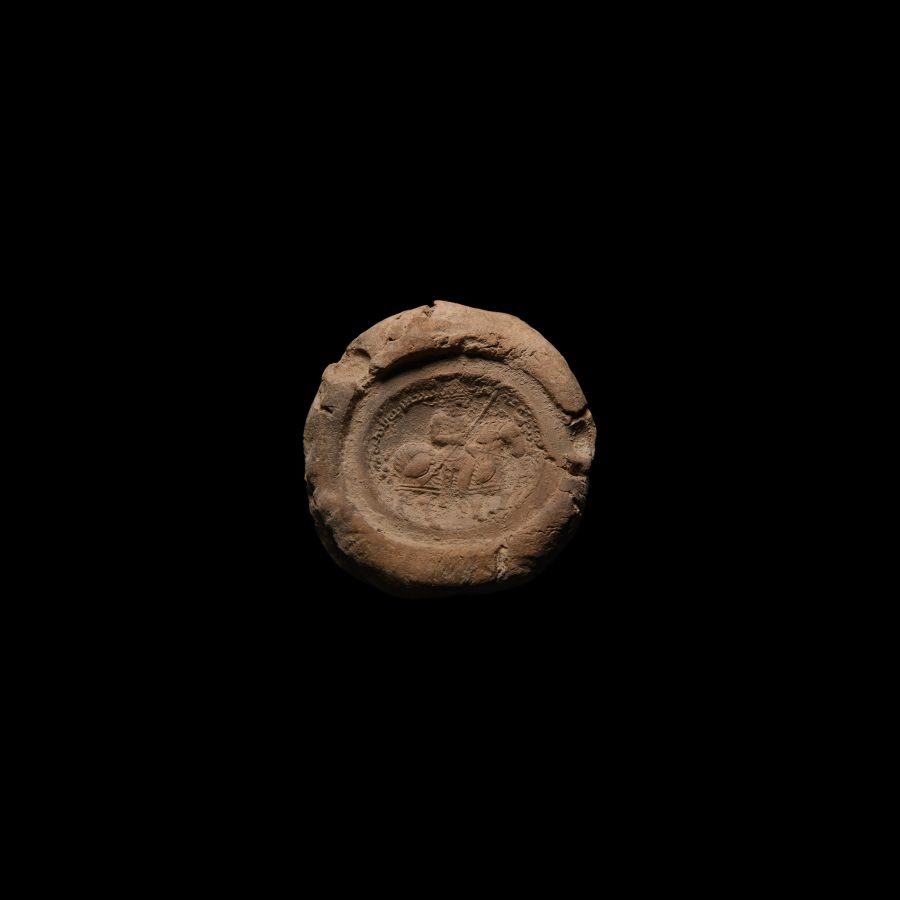
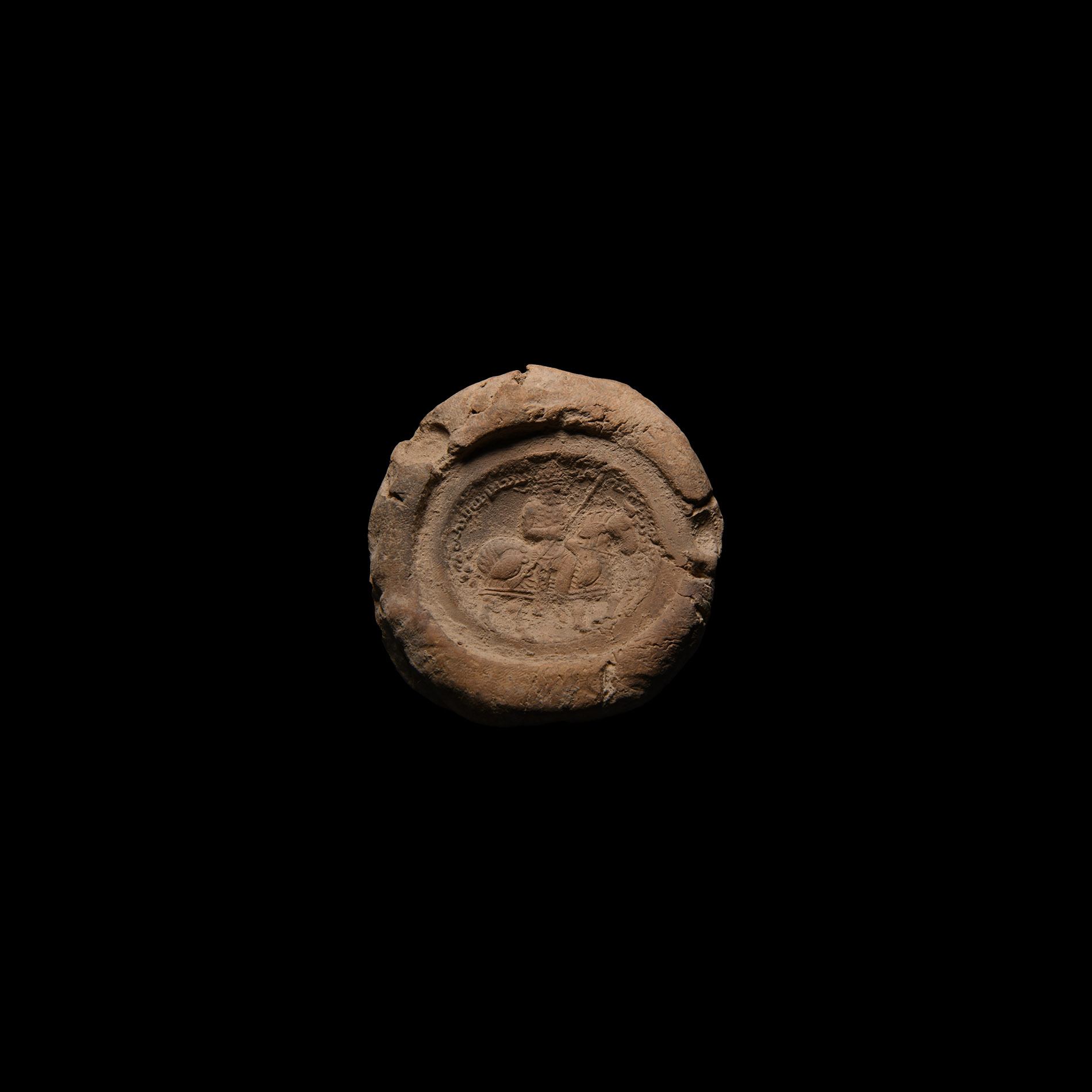
Sassanian General of the South Ceramic Bulla Seal Impression
5TH-6TH CENTURY A.D.
3 in. (144 grams, 78 mm).
Displaying an armoured horseman holding a raised spear, Pahlavi inscription in two lines of lapidary script around the inner circle.
ProvenanceAcquired 1970-1999.
Property of a late Mayfair, London gentleman, by descent.
Cf. Gylselen, R., Acta Iranica 44: Sassanian Seals and Sealings in the A.Saeedi Collection, Peeters, 2007, item III/22, for similar.
CONDITIONTimeLine Auctions follows a vetting process to ensure the authenticity and legality of all items, reinforcing our commitment to integrity and responsible trading. Each antiquity, antique, and coin lot undergoes thorough examination by a vetting committee of at least ten external specialists, professional trade association members, scientists, and archaeologists: Our Vetting Process
AUCTIONS:
TimeLine is a leading auction house specialising in antiquities, ancient art, collectables, natural history, coins, medals, and books. Our auctions offer museums, collectors, historians, and enthusiasts the opportunity to acquire unique and historically significant pieces.
LOT 0955
Sassanian General of the South Ceramic Bulla Seal Impression
Sold for (Inc. bp): £247
-

Babylonian Bronze Age Duck Bill Axehead
2nd-mid 1st millennium B.C.Estimate: £250 - 350 (+bp*)
Opening Bid: £125
Composed of an ovoid socket, tongue-shaped cheeks with raised midrib and two elliptical voids; repaired. 168 grams, 10.3 cm
From the private collection of the late Mr S.M., London, UK. -
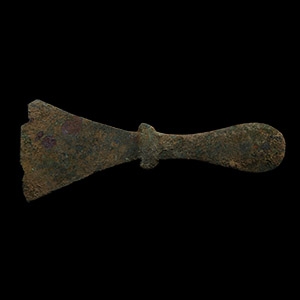
Western Asiatic Bronze Flat Axe
Circa 3rd-2nd millennium B.C.Sold for (Inc. bp): £59
Comprising a wedge-shaped blade and piriform handle. 156 grams, 17.7 cm
UK private collection formed before 2000. Ex North London, UK, gallery.
These blades were fitted directly to the handle or via a sheath. Flat axes, whose axis is parallel to that of the handle, often had a rounded edge like in our specimen, or a flared and bevelled edge, while flat adzes have an axis perpendicular to that of the handle and a bevel edge on one side only. Their shape comes directly from the lithic axes of the Neolithic and Chalcolithic periods. -

Sumerian Bead Necklace
4th-2nd millennium B.C.Sold for (Inc. bp): £20
Composed of shale or shell beads of mainly coin-shaped types; restrung. 82 grams, 62 cm long
From the collection of H.N., Milton Keynes, 1980s-1990s.
