
Loading, please wait...
LOT 0231
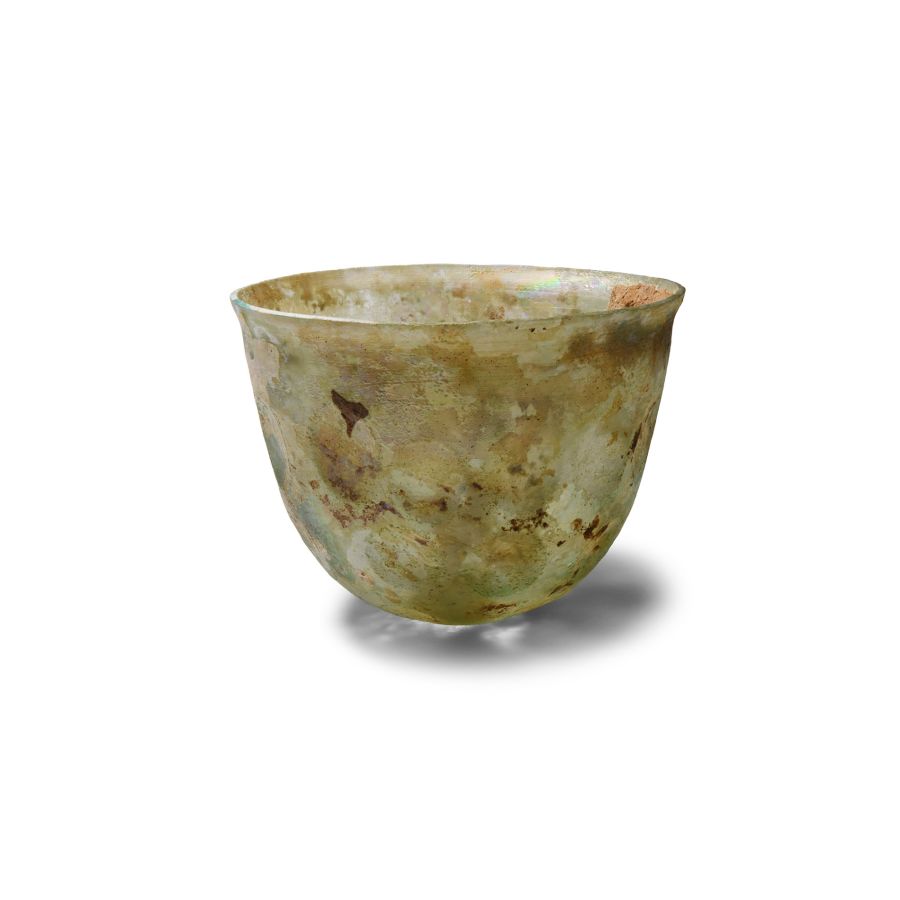
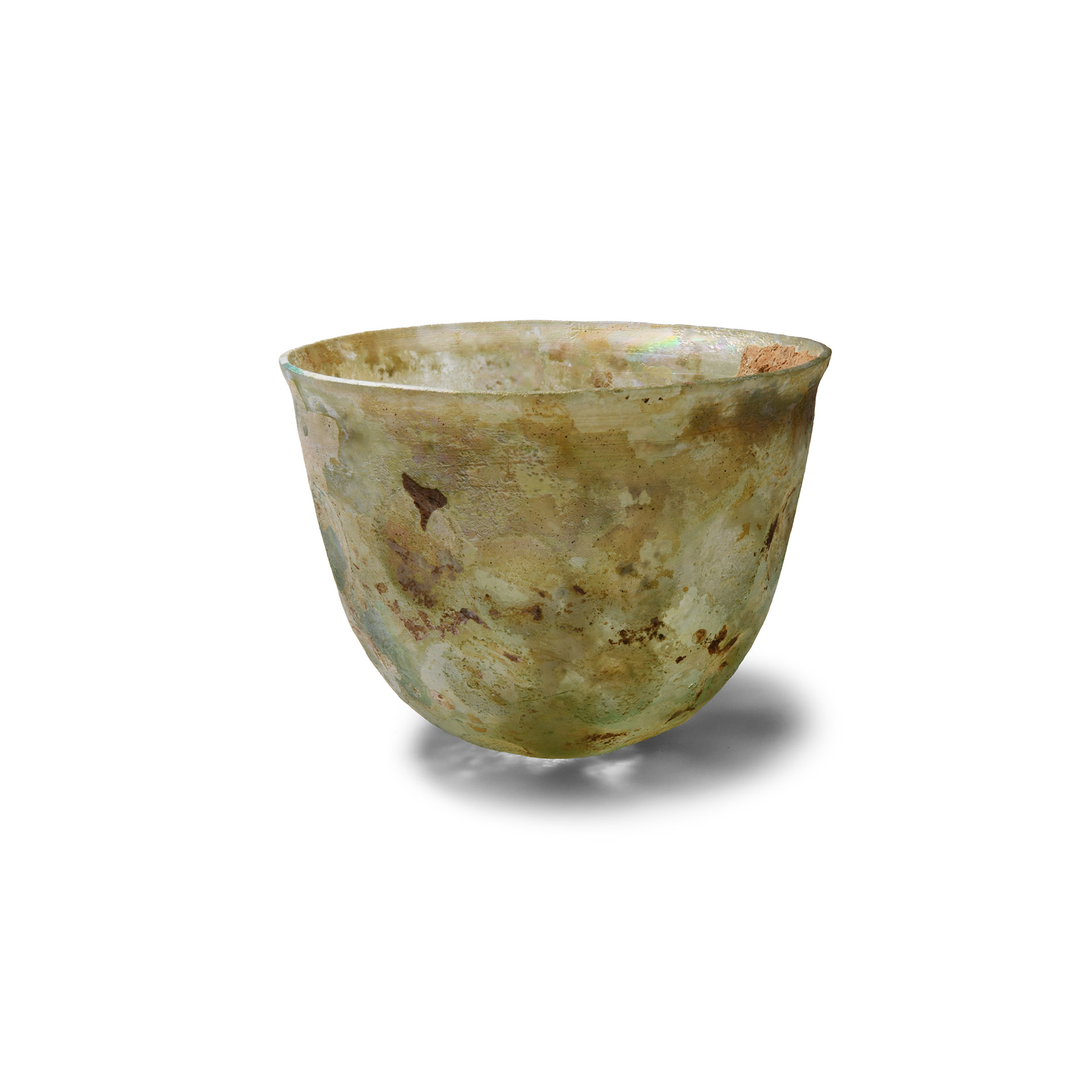
Sassanian Cut Glass Cup
3RD-5TH CENTURY A.D.
4 3/4 in. (239 grams, 12 cm).
The walls tapering slightly towards the base, displaying wheel-cut ovals running in registers around the body, slightly everted rim; iridescent surfaces.
ProvenanceEx Belgian collection, 1980s.
LiteratureCf. The British Museum, museum number 135304, for similar; cf. Corning Museum of Glass, accession numbers 70.1.9 and 54.1.119, for similar.
CONDITIONTimeLine Auctions follows a vetting process to ensure the authenticity and legality of all items, reinforcing our commitment to integrity and responsible trading. Each antiquity, antique, and coin lot undergoes thorough examination by a vetting committee of at least ten external specialists, professional trade association members, scientists, and archaeologists: Our Vetting Process
AUCTIONS:
TimeLine is a leading auction house specialising in antiquities, ancient art, collectables, natural history, coins, medals, and books. Our auctions offer museums, collectors, historians, and enthusiasts the opportunity to acquire unique and historically significant pieces.
-
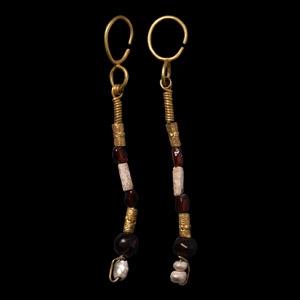
Western Asiatic Gold Bead Drop Earrings
1st millennium B.C.Estimate: £600 - 800 (+bp*)
Opening Bid: £300
Each composed of a slender penannular hoop with loop below and coiled wire arm suspending decorated gold, polished garnet, pearl and composition beads below; assembled from elements. 9.08 grams total, 87-88 mm
Fine condition.
Acquired 1970-2010. Collection of a late Japanese gentleman. -
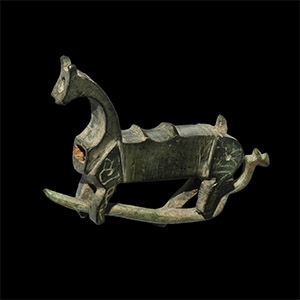
Western Asiatic Bronze Horse Padlock
14th-16th century A.D.Sold for (Inc. bp): £169
Formed as a standing beast with decorative panels to the hips and shoulders, holes to the chest and head, bar with spur and second beast-head. 21.3 grams, 50 mm
Very fine condition.
Acquired on the European art market in the 1990s. Ex property of a Suffolk collector. -
.jpg)
Mesopotamian Pictographic Clay Tablet
Circa 3000 B.C.Sold for (Inc. bp): £4,940
Inscribed on one face with a seven-panelled pictographic grid, with a branch above; the reverse inscribed with a branch and a motif containing two drilled circles. 42 grams, 69 mm
Very fine condition, chipped.
Specialised collection of cuneiform texts, the property of a London gentleman and housed in London before 1992. Thence by descent to family members. Examined by Professor Wilfrid George Lambert FBA (1926-2011), historian, archaeologist, and specialist in Assyriology and Near Eastern archaeology, in the late 1980s and early 1990s. The collection is exceptional for the variety of types, including some very rare and well preserved examples. This lot has been checked against the Interpol Database of stolen works of art and is accompanied by search certificate no.11335-190939.
