
Loading, please wait...
LOT 0238
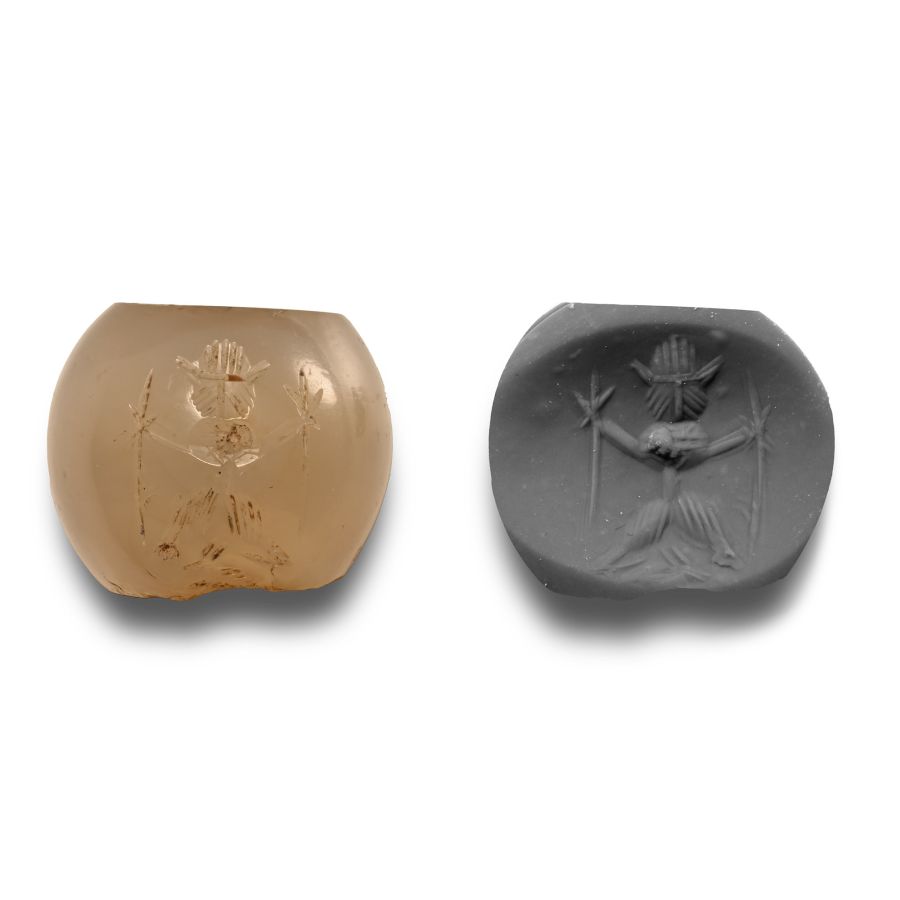
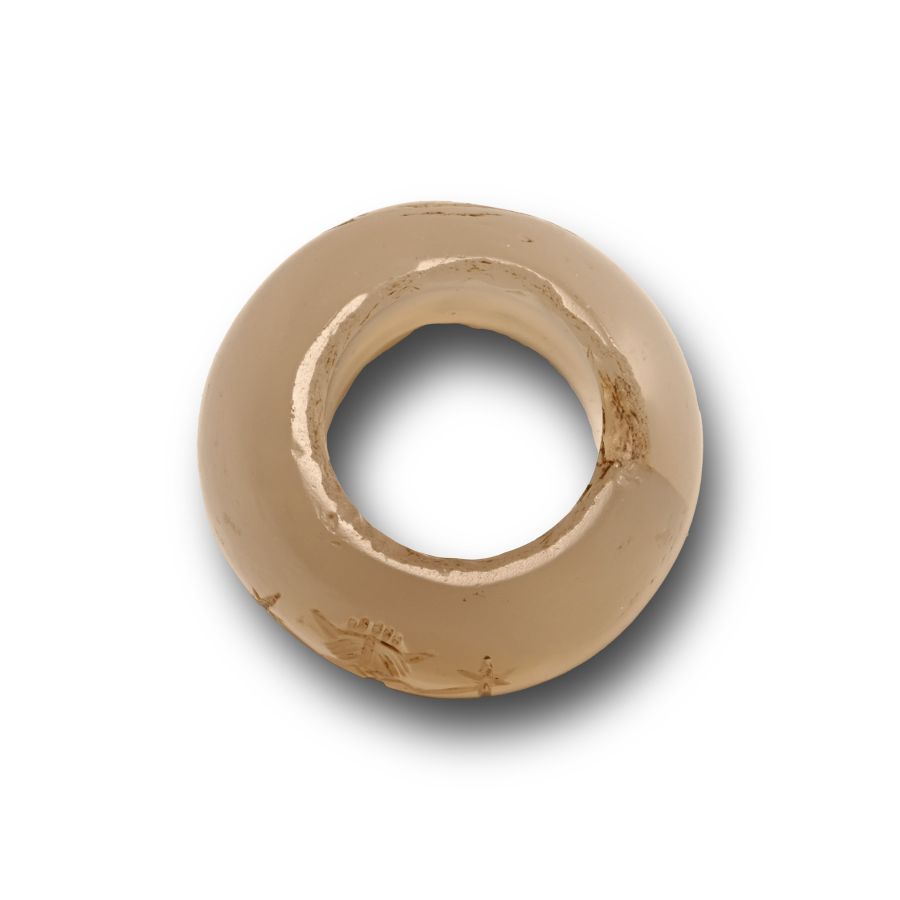
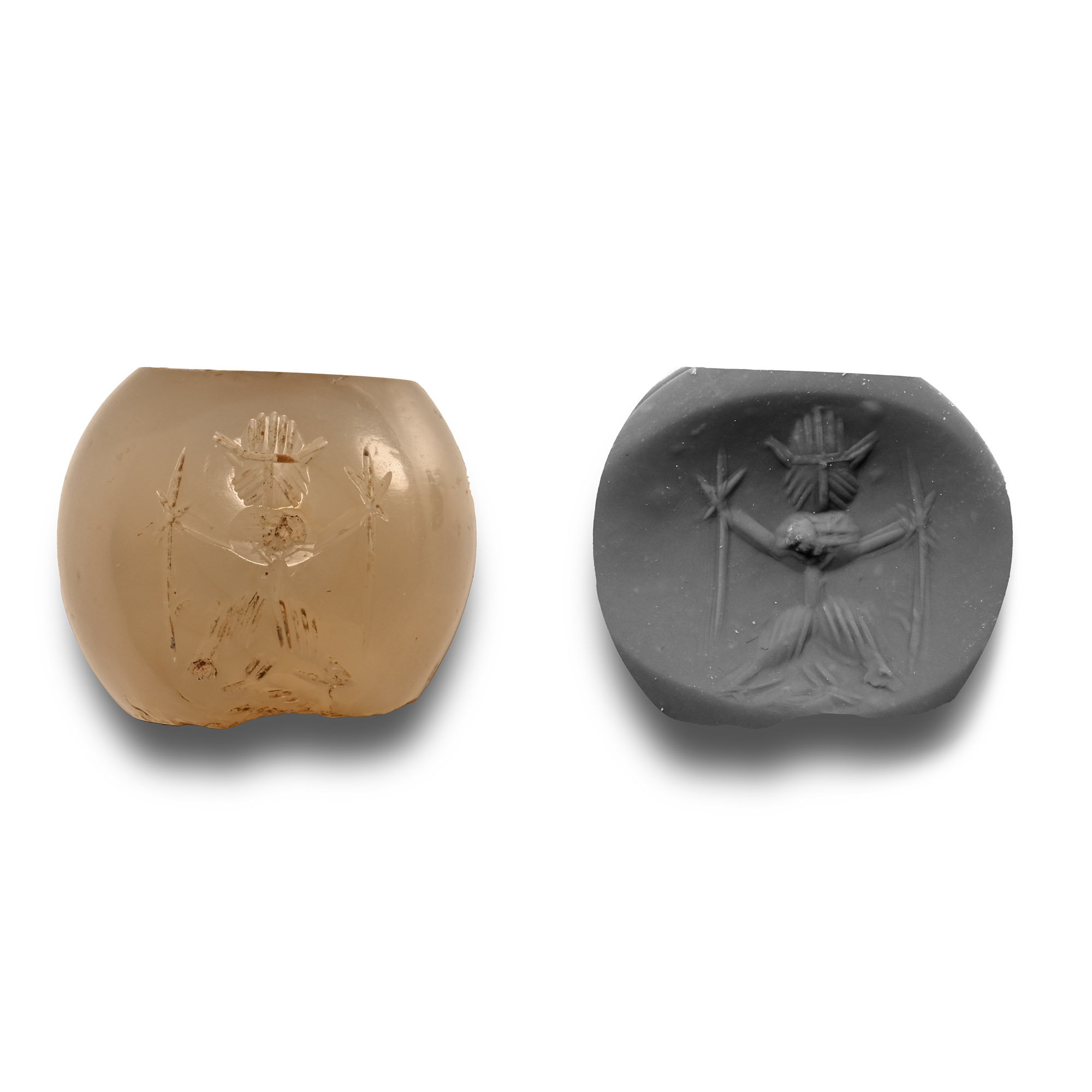
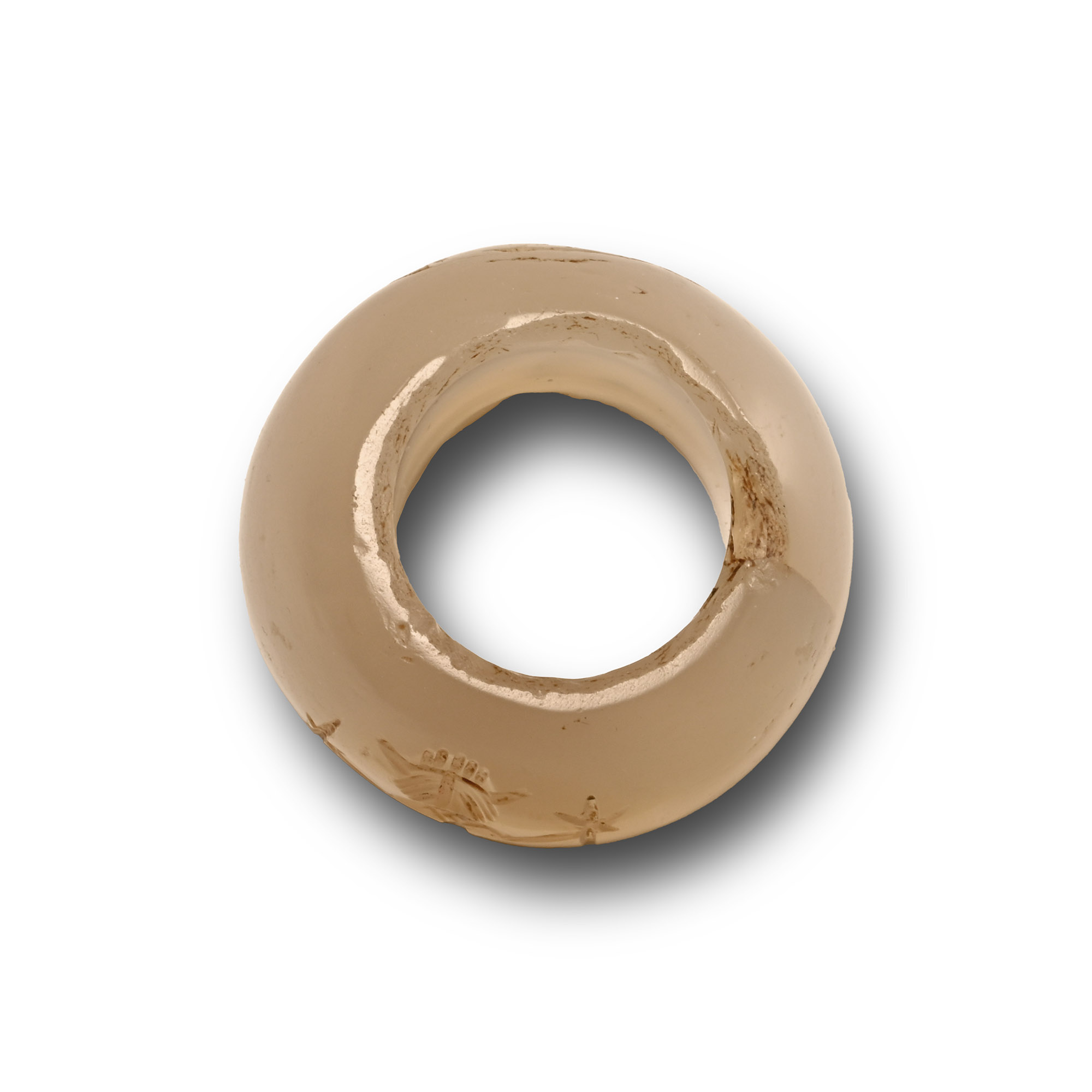
Sassanian Chalcedony Hair Ring with Gayomard Figure
4TH-5TH CENTURY A.D.
1 1/8 in. (23.5 grams, 30 mm).
Barrel-shaped with broad central hole; engraved to the outer face with a 'Gayomard' figure holding spears in his extended hands; supplied with a museum-quality impression. [No Reserve]
Provenancewith Christie's, London, 21 April 1999, no.11.
From the 'Empire' collection, an important UK private collection of seals, no.19
Accompanied by a copy of an old typed cataloguing page signed by A D H Bivar.
This lot has been checked against the Interpol Database of stolen works of art and is accompanied by a search certificate number no.12127-217086.
TimeLine Auctions follows a vetting process to ensure the authenticity and legality of all items, reinforcing our commitment to integrity and responsible trading. Each antiquity, antique, and coin lot undergoes thorough examination by a vetting committee of at least ten external specialists, professional trade association members, scientists, and archaeologists: Our Vetting Process
AUCTIONS:
TimeLine is a leading auction house specialising in antiquities, ancient art, collectables, natural history, coins, medals, and books. Our auctions offer museums, collectors, historians, and enthusiasts the opportunity to acquire unique and historically significant pieces.
-
Western Asiatic Gold Bead Collection
2nd-1st millennium B.C.Sold for (Inc. bp): £715
Including ribbed tubular, granulated disc, biconvex and other types. 10.13 grams total, 2-8 mm
Ex property of a late Japanese collector, 1970s. -
Luristan Tripod Legged Pouring Vessel
13th-7th century B.C.Sold for (Inc. bp): £351
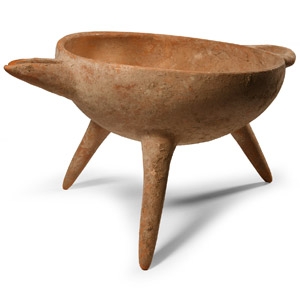
Squat in profile with rounded underside and inturned rim, loop handle and tubular spout, long tripod legs. 1.75 kg, 36.5 cm
Ex Mayfair gallery, London, UK, 1980s. From a private collection, London, UK. -
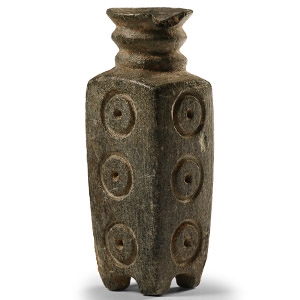
Bactrian Decorated Stone Kohl Pot
2nd millennium B.C.Sold for (Inc. bp): £98
With rectangular-section body and four stub feet, flared mouth with ribbed neck; the body decorated with three ring-and-dot motifs to each side. 33.13 grams, 53 mm
UK private collection before 2000. On the UK art market. Property of a London gentleman.
