
Loading, please wait...
LOT 0283
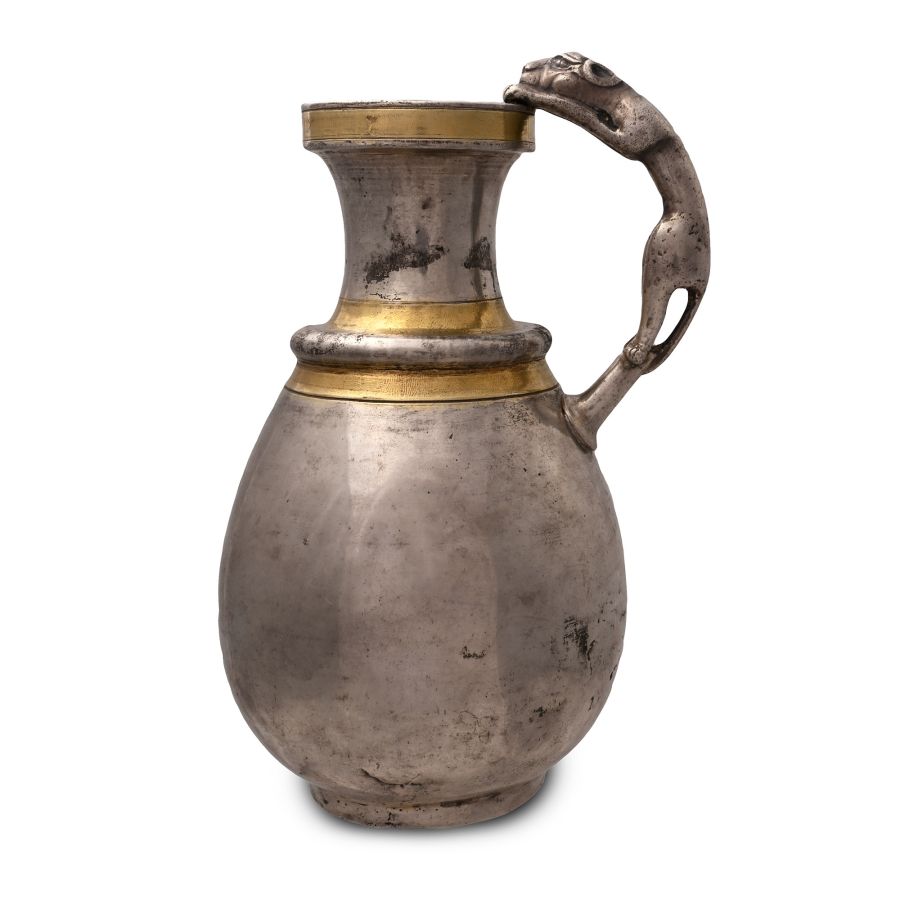
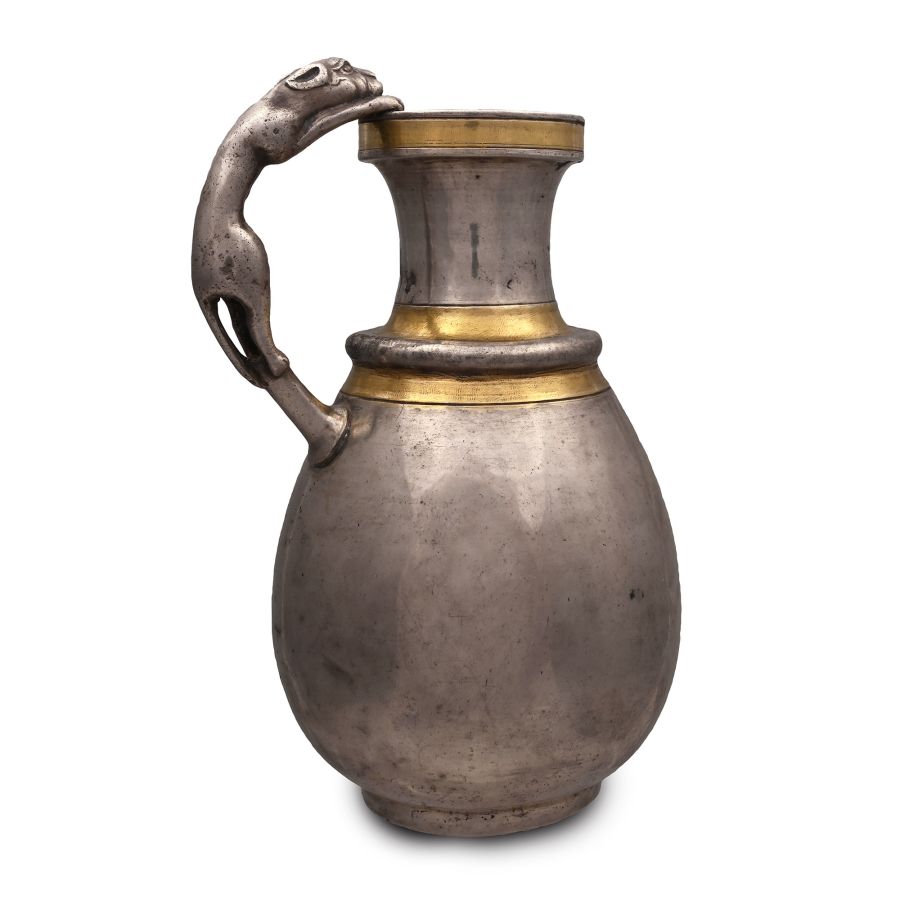
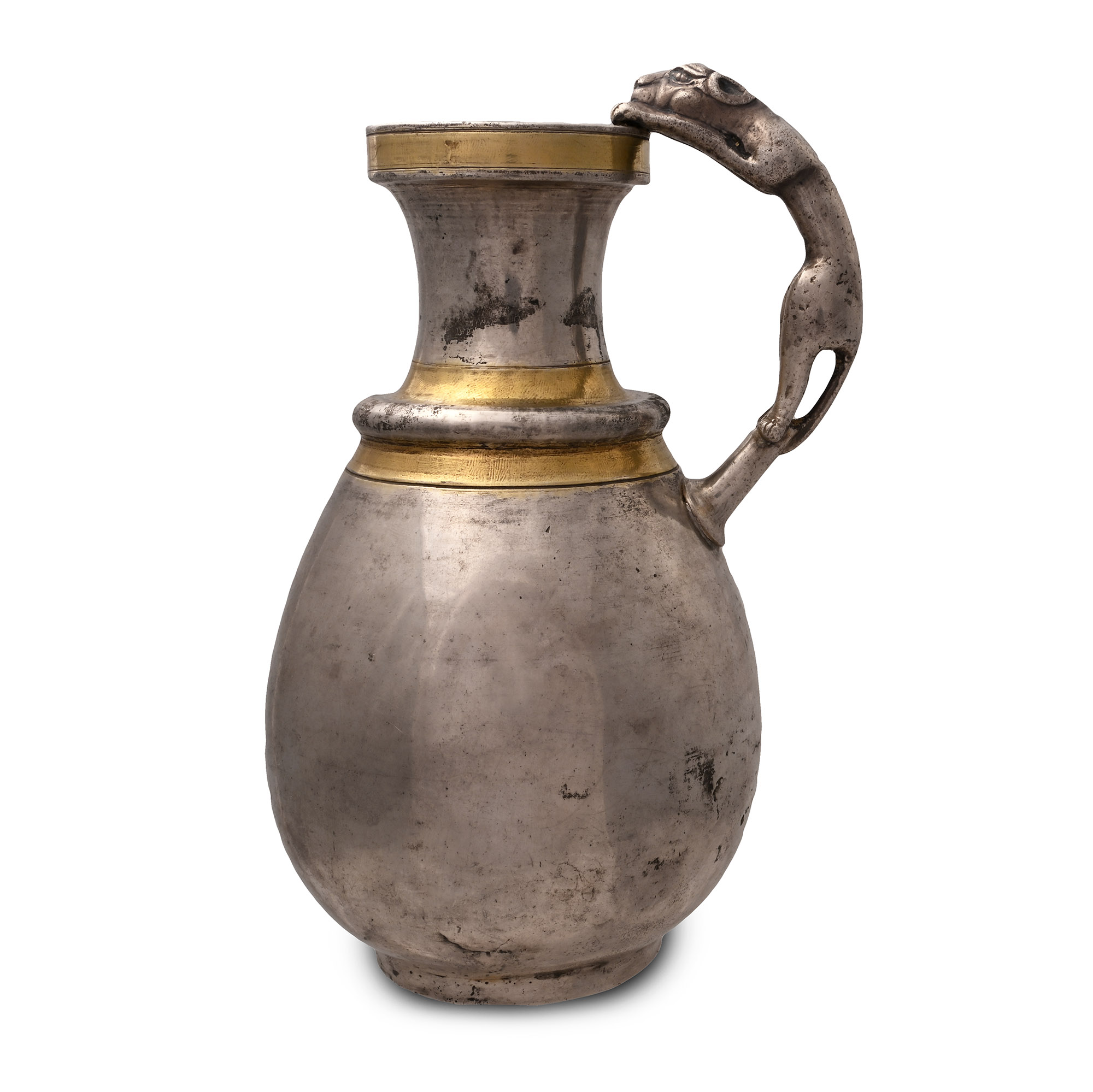
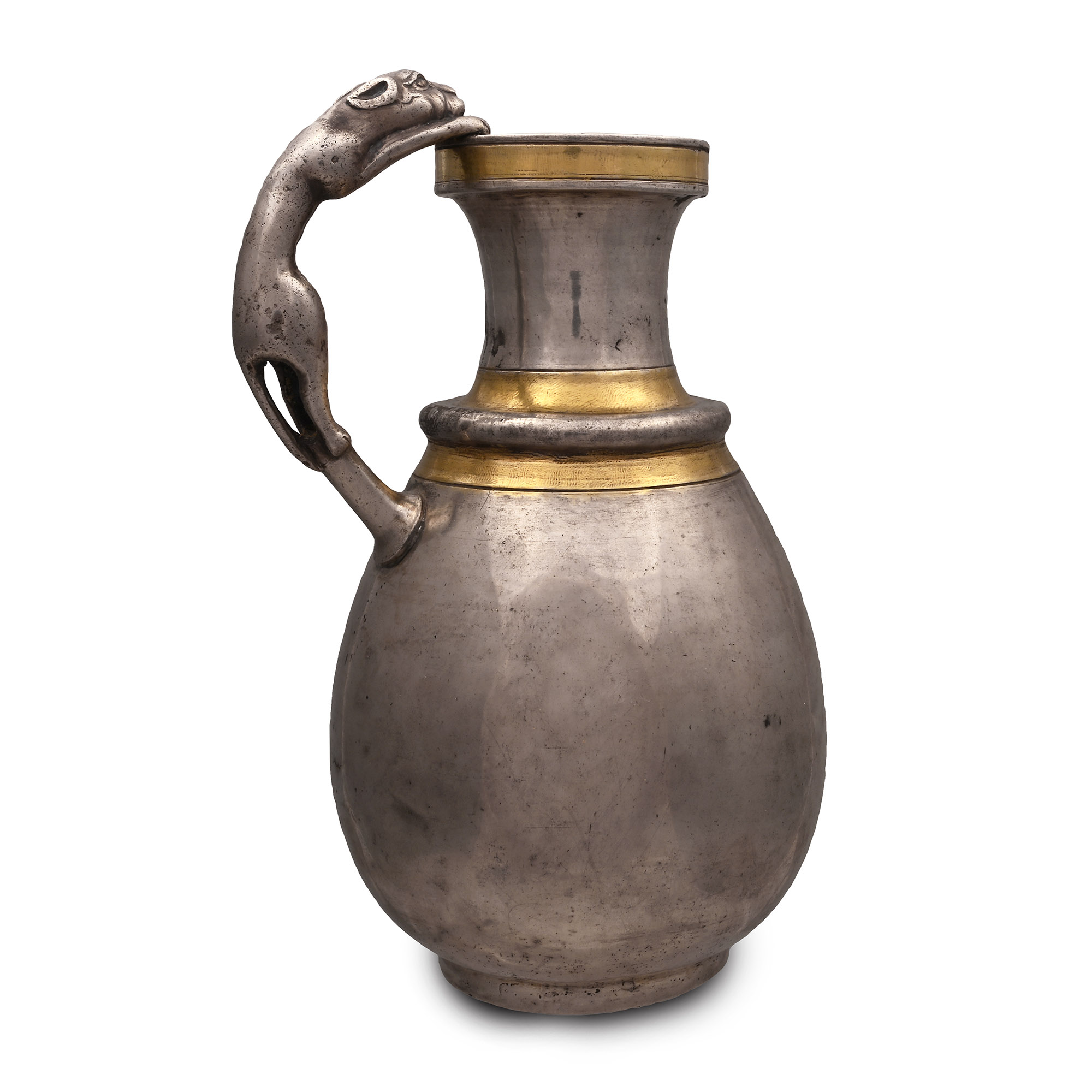
Sasanian Silver-Gilt Wine Vase with Handle
6TH-7TH CENTURY A.D. AND EARLIER
7 1/2 in. (612 grams, 19 cm high).
With waisted neck, mouth with vertical wall, underside of foot with hatched lozenge; earlier strap handle from mouth to shoulder formed as a leaping lioness with forepaws hooked over the rim.
ProvenancePrivate collection, 1980s.
This lot has been checked against the Interpol Database of stolen works of art and is accompanied by a search certificate number no.12711-235451.
This lot has been cleared against the Art Loss Register database, and is accompanied by an illustrated lot declaration signed by the Head of the Antiquities Department, Dr Raffaele D'Amato.
Cf. The British Museum, museum number 124094, for similar; also see Prudence Oliver Harper, The Royal Hunter: Art of the Sasanian Empire, New York, 1978; Ehsan Yarshater (ed.), The Cambridge History of Iran, vol.3 (part 2), 1983; Exhibition catalogue, Splendeur des Sassanides, Brussels, 1993, p.240, no.89; Exhibition catalogue, Ancient Art from the Shumei Family Collection, New York, 1996, pp.75-7; Joseph N. Newland, Miho Museum: South Wing, 1997, especially pp.110-1, for type.
CONDITIONTimeLine Auctions follows a vetting process to ensure the authenticity and legality of all items, reinforcing our commitment to integrity and responsible trading. Each antiquity, antique, and coin lot undergoes thorough examination by a vetting committee of at least ten external specialists, professional trade association members, scientists, and archaeologists: Our Vetting Process
AUCTIONS:
TimeLine is a leading auction house specialising in antiquities, ancient art, collectables, natural history, coins, medals, and books. Our auctions offer museums, collectors, historians, and enthusiasts the opportunity to acquire unique and historically significant pieces.
-
Bactrian Terracotta Chalice
1st millennium B.C.Sold for (Inc. bp): £39
Comprising a columnar stem with ribbed collars flaring to the broad base with carinated rim, the bowl broad and dished. 2.35 kg, 28 cm
From a West London, UK, collection, 1990s. This lot has been cleared against the Art Loss Register database, and is accompanied by an illustrated lot declaration signed by the Head of the Antiquities Department, Dr Raffaele D'Amato. -
Persian Painting of a Kneeling Warrior
Early 20th century A.D.Sold for (Inc. bp): £520
Showing a Turkoman archer holding a small cup in his right hand, bow-case and quiver with arrows suspended from his belt, kilij and a dagger resting against his legs; Nastaliq script border with leaves and floral motifs. 47 grams, 29.5 x 21 cm
From the family collection of a Hampstead gentleman; formerly acquired in the 1980s. This lot has been cleared against the Art Loss Register database, and is accompanied by an illustrated lot declaration signed by the Head of the Antiquities Department, Dr Raffaele D'Amato. -
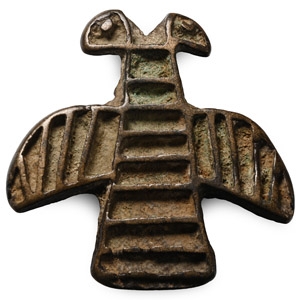
Western Asiatic Bronze Bird-Shaped Stamp Seal
Circa 2200-2000 B.C.Sold for (Inc. bp): £572
Comprising a trapezoidal body with D-shaped lateral wings and eyes; ribbing forming the cells for inlaid ornament (?); looped slider-bar to reverse. 28.5 grams, 50 mm
Shinya Tagava, Honcho, Tokyo, Japan, pre-1986. This lot has been cleared against the Art Loss Register database, and is accompanied by an illustrated lot declaration signed by the Head of the Antiquities Department, Dr Raffaele D'Amato.
