
Loading, please wait...
LOT 1254
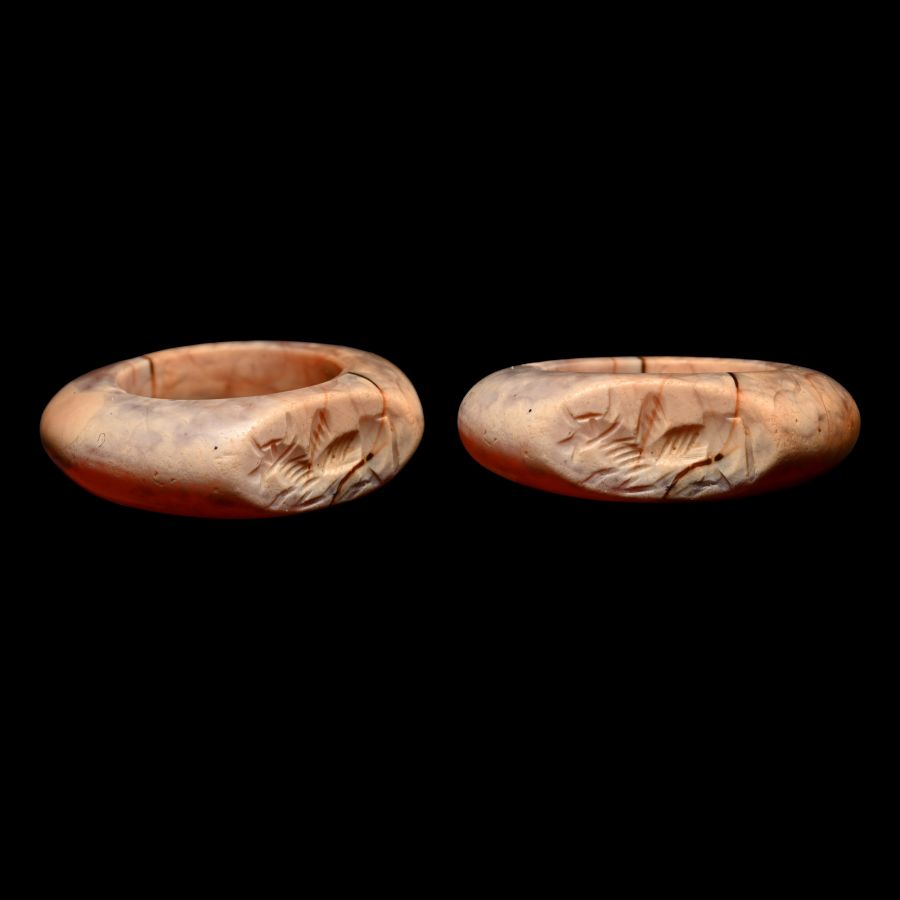
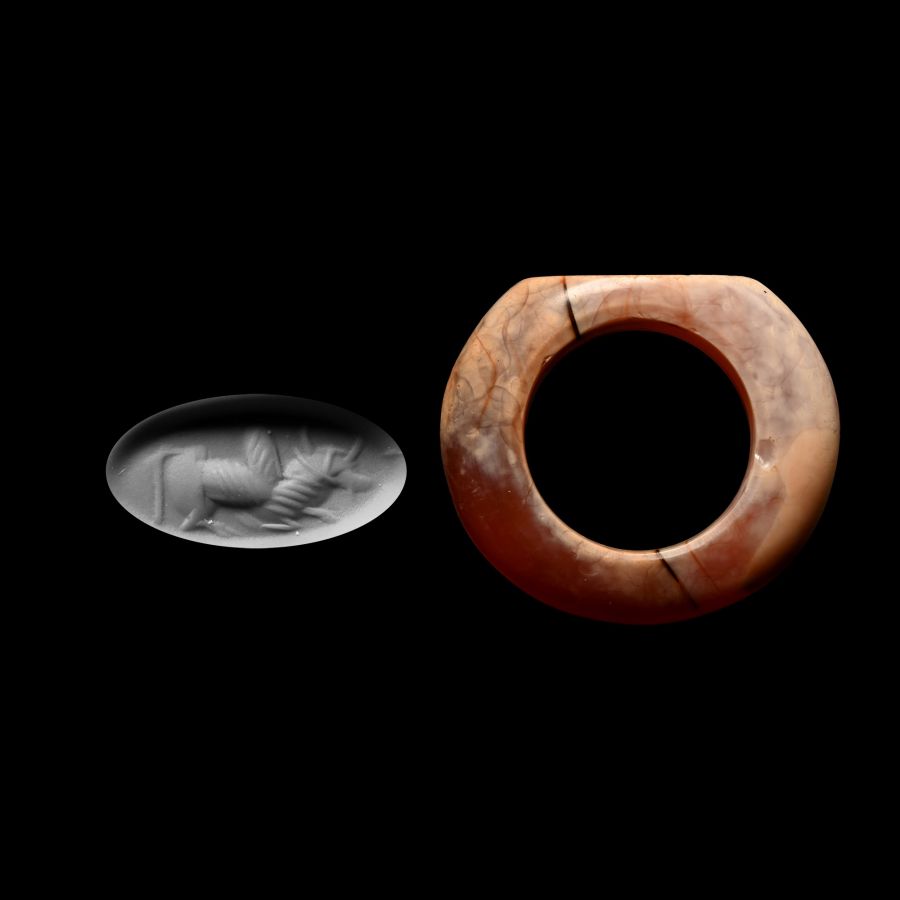
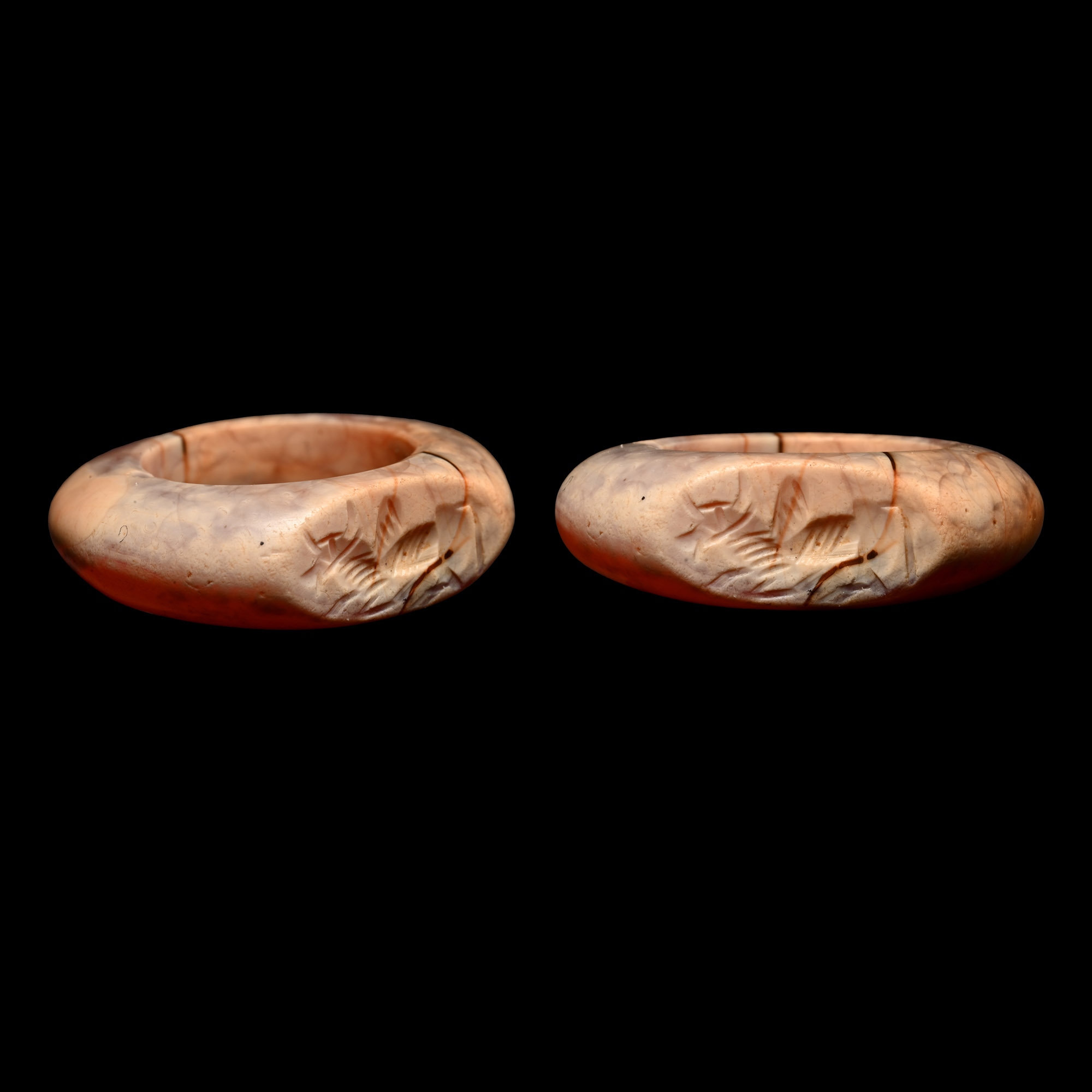
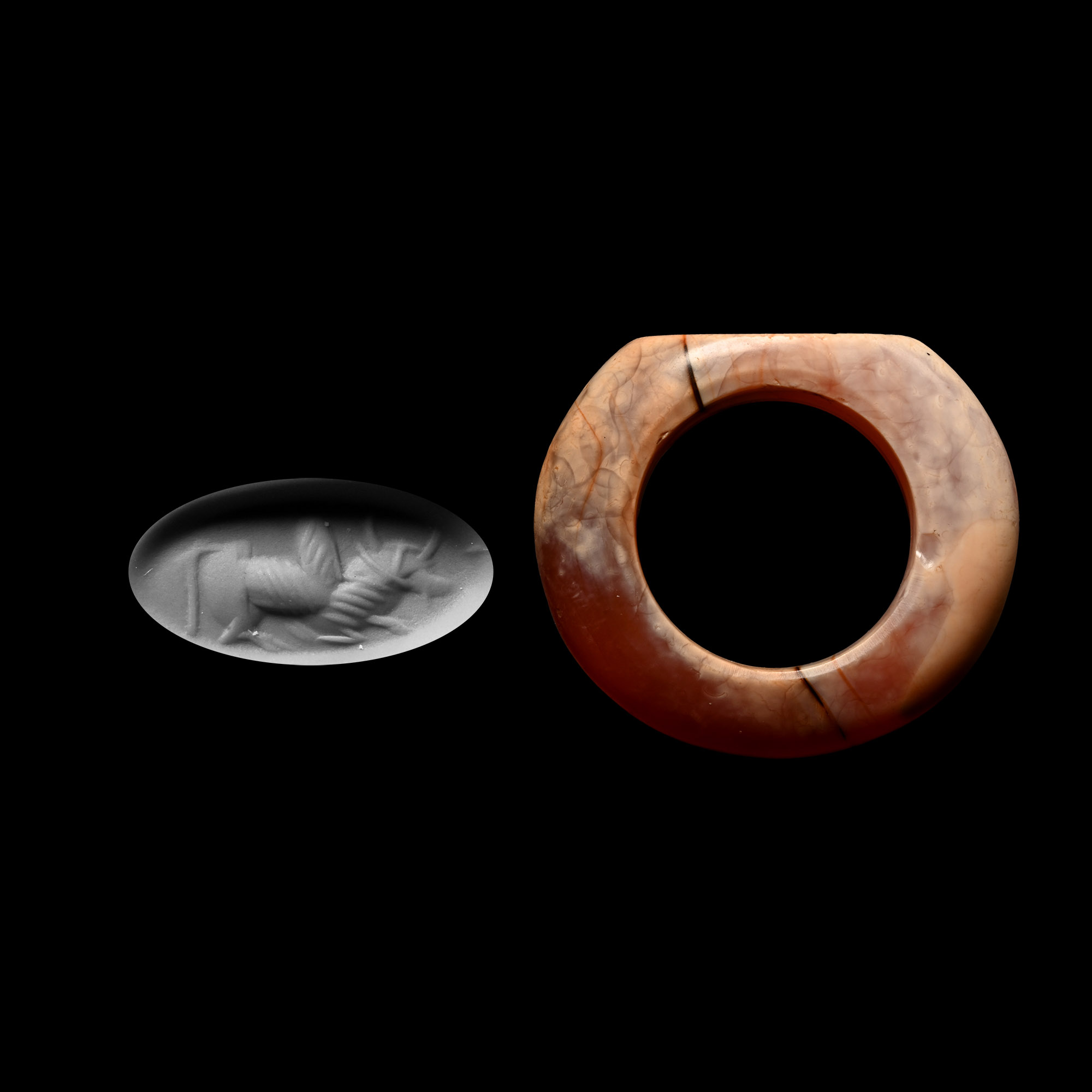
Sasanian Red Agate Ring
3RD-4TH CENTURY A.D.
1 in. (4.37 grams, 25.53 mm overall, 14.30 mm internal diameter (approximate size British G, USA 3 1/4, Europe 4.92, Japan 4)).
With scaphoid plaque, intaglio kneeling zebu motif.
ProvenanceMr S.A. collection, Switzerland, acquired in the 1980s.
Thence by descent, private collection, since 1998.
This lot has been cleared against the Art Loss Register database, and is accompanied by an illustrated lot declaration signed by the Head of the Antiquities Department, Dr Raffaele D'Amato.
TimeLine Auctions follows a vetting process to ensure the authenticity and legality of all items, reinforcing our commitment to integrity and responsible trading. Each antiquity, antique, and coin lot undergoes thorough examination by a vetting committee of at least ten external specialists, professional trade association members, scientists, and archaeologists: Our Vetting Process
AUCTIONS:
TimeLine is a leading auction house specialising in antiquities, ancient art, collectables, natural history, coins, medals, and books. Our auctions offer museums, collectors, historians, and enthusiasts the opportunity to acquire unique and historically significant pieces.
-
Western Asiatic White Stone and Shell Bead Necklace String
1st millennium B.C. and laterSold for (Inc. bp): £7
Restrung group of fusiform, irregular and other beads. 24.3 grams, 42 cm
Ex London, UK, collection, 1990s. This lot has been cleared against the Art Loss Register database, and is accompanied by an illustrated lot declaration signed by the Head of the Antiquities Department, Dr Raffaele D'Amato. -
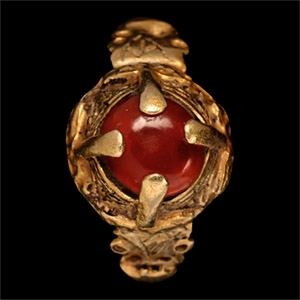
Western Asiatic Gold Ring with Cornelian Gemstone
12th-13th century A.D.Sold for (Inc. bp): £715
D-section hoop with openwork floral shoulders, domed bezel with inset cabochon in a claw setting. 3.51 grams, 23.66 mm overall, 15.89 mm internal diameter (approximate size British K 1/2, USA 5 1/2, Europe 10.58, Japan 10)
Acquired in the 1980s. Private collection, Switzerland, thence by descent. Private collection, since the late 1990s. This lot has been cleared against the Art Loss Register database, and is accompanied by an illustrated lot declaration signed by the Head of the Antiquities Department, Dr Raffaele D'Amato. -
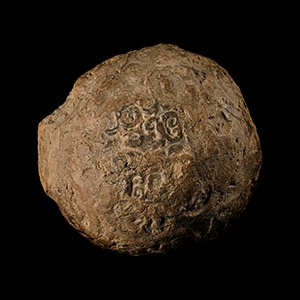
Large Sumerian Terracotta Bulla Envelope with Impressed Decoration
Uruk Period, 5500-3100 B.C.Sold for (Inc. bp): £702
Spherical and hollow-formed with moulded animal and other ornament to the outer face; clay tokens inside. 243 grams, 72 mm
Specialised collection of cuneiform texts, the property of a London gentleman and housed in London before 1988. Thence by descent to family members. Examined by Professor Wilfrid George Lambert FBA (1926-2011), historian, archaeologist, and specialist in Assyriology and Near Eastern archaeology, in the late 1980s and early 1990s. The collection is exceptional for the variety of types, including some very rare and well preserved examples. Accompanied by a copy of a previous two page illustrated cataloguing note, collection no.23. This lot has been cleared against the Art Loss Register database, and is accompanied by an illustrated lot declaration signed by the Head of the Antiquities Department, Dr Raffaele D'Amato.
