
Loading, please wait...
LOT 0243
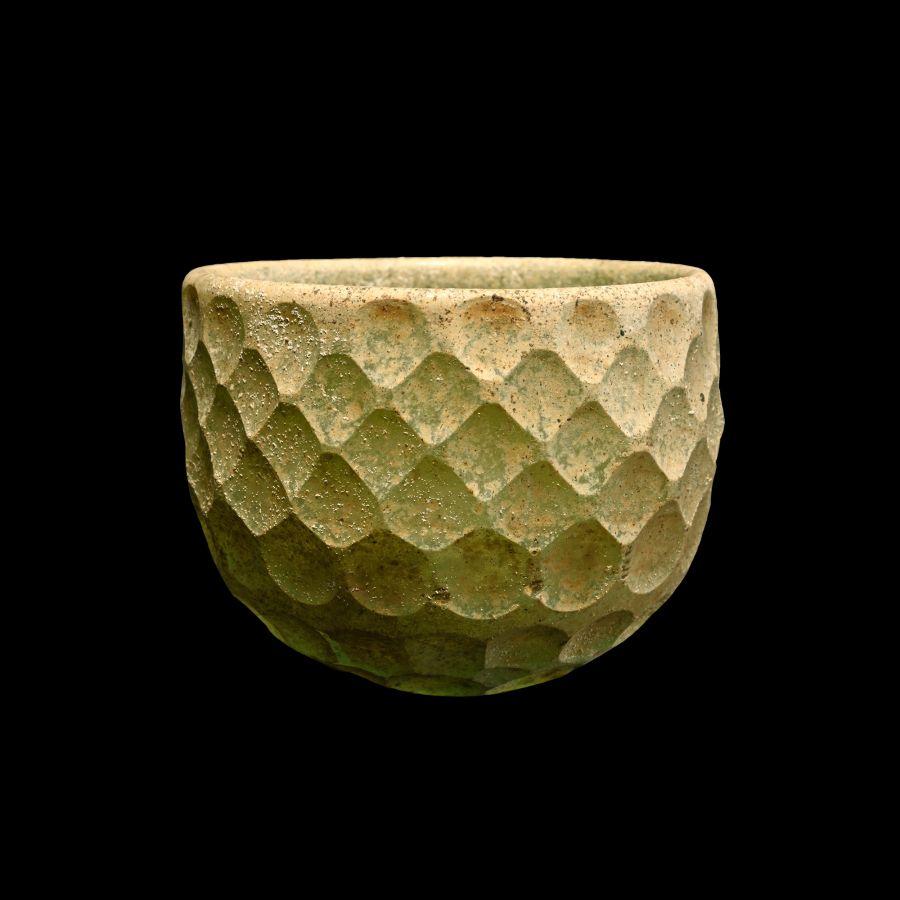
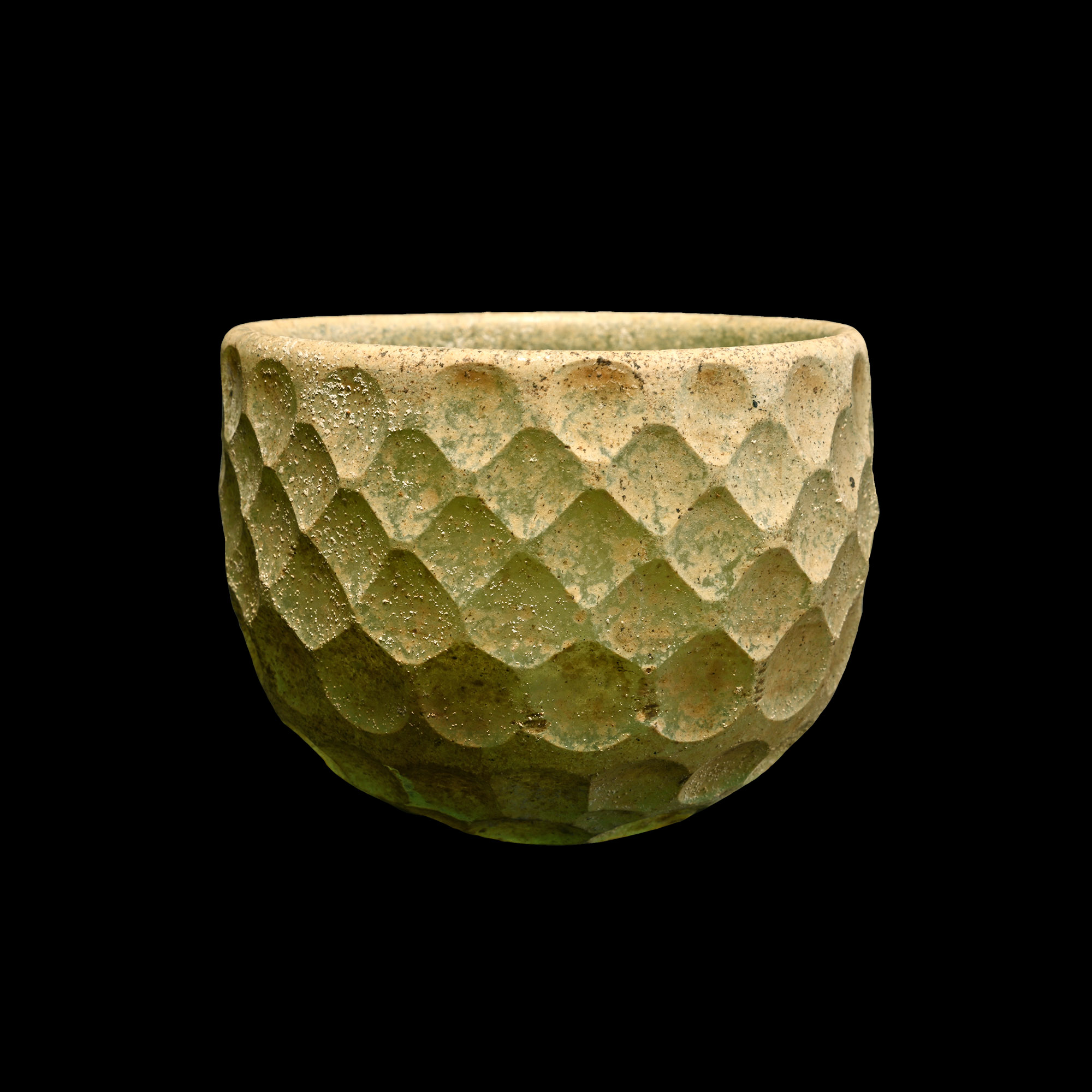
Sasanian Cut Glass Bowl
5TH CENTURY A.D.
3 3/4 in. (187 grams, 96 mm).
Rounded in profile and decorated with a dense frieze of wheel-cut facets.
ProvenanceLondon art market, 1989.
Private collection, London, UK.
This lot has been checked against the Interpol Database of stolen works of art and is accompanied by a search certificate number no.12896-241337.
Cf. The Metropolitan Museum, New York, accession number 59.34, for similar; cf. Oliver, A. Jr., Ancient Glass, In the Carnegie Museum of Natural History, Pittsburgh, 1980, p.138, no.235, for similar.
CONDITIONTimeLine Auctions follows a vetting process to ensure the authenticity and legality of all items, reinforcing our commitment to integrity and responsible trading. Each antiquity, antique, and coin lot undergoes thorough examination by a vetting committee of at least ten external specialists, professional trade association members, scientists, and archaeologists: Our Vetting Process
AUCTIONS:
TimeLine is a leading auction house specialising in antiquities, ancient art, collectables, natural history, coins, medals, and books. Our auctions offer museums, collectors, historians, and enthusiasts the opportunity to acquire unique and historically significant pieces.
-
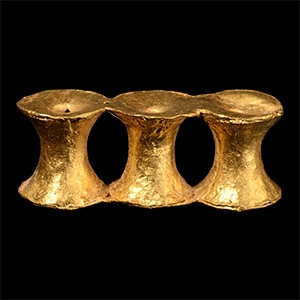
Western Asiatic Spool-Shaped Gold Beads
Late 2nd-1st millennium B.C.Sold for (Inc. bp): £208
Group of three spool-shaped elements, each pierced longitudinally and forming a spacer bead for a multi-strand necklace. 1.91 grams, 19 mm
From the collection of a late Japanese gentleman, 1970s onwards. -
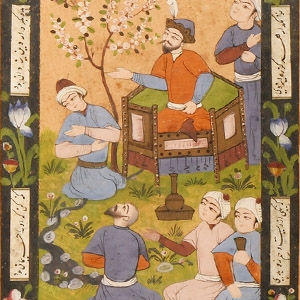
Persian Framed Watercolour Painting Group
Late 19th-early 20th century A.D.Estimate: £100 - 140 (+bp*)
Opening Bid: £50
Framed and glazed and displaying polychrome figural scenes bordered by flowering plants and panels of script: one depicting a tea(?) ceremony set in a landscape featuring blossoming trees and birds; a prince or other figure seated on a bolster, in a landscape featuring a brook and blossoming trees, surrounded by attendants. 932 grams total, 31 x 21.5 cm each
Acquired by the vendor's father on the UK art market, before 1990. -
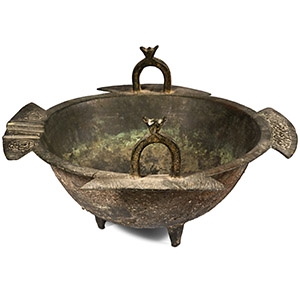
Khorasan 'Muhammad Bin Husayn' Bronze Cauldron
11th-12th century A.D.Estimate: £500 - 700 (+bp*)
Opening Bid: £200
With a deep hemispherical bowl and three stub feet, two lateral trapezoidal flanges to the rim, each with an arched handle; similar flange to forward edge with reserved panel of scrolled foliage; to the rear, flange with shallow median socket decorated with scrolled tendrils, two lateral discs each with a star of intersecting triangles; signed by Muhammad Bin Husayn. 5.75 kg, 43.5 cm
with Christie's, South Kensington, Art & Textiles of The Islamic & Indian Worlds, 8 April 2011, no.150. Private collection, UK.
