
Loading, please wait...
LOT 1165
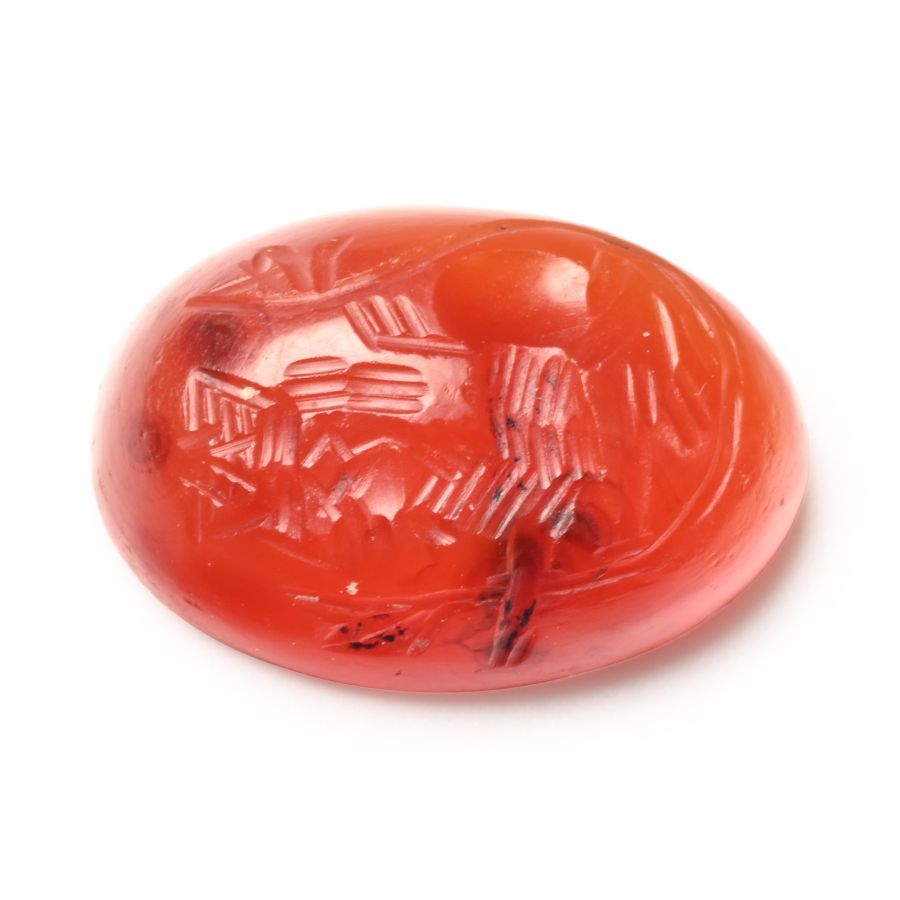
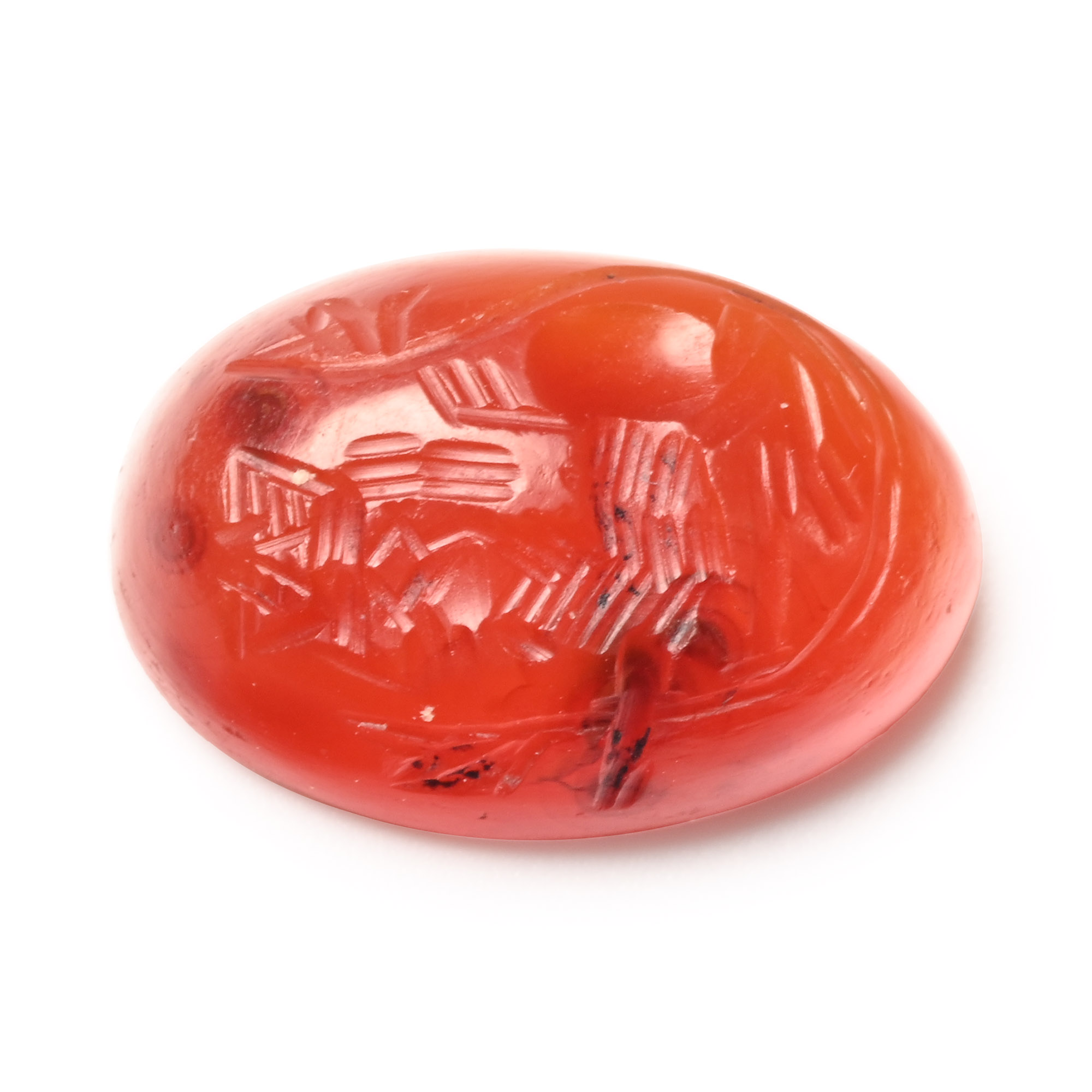
Sasanian Carnelian Gemstone with Quadruped
4TH CENTURY A.D.
1/2 in. (1.43 grams, 14 mm).
Oval with domed upper face, engraved image of a stylised horned animal. [No Reserve]
Provenancewith a London, UK gallery 1971-early 2000s.
Private collection, London.
This lot has been cleared against the Art Loss Register database, and is accompanied by an illustrated lot declaration signed by the Head of the Antiquities Department, Dr Raffaele D'Amato.
TimeLine Auctions follows a vetting process to ensure the authenticity and legality of all items, reinforcing our commitment to integrity and responsible trading. Each antiquity, antique, and coin lot undergoes thorough examination by a vetting committee of at least ten external specialists, professional trade association members, scientists, and archaeologists: Our Vetting Process
AUCTIONS:
TimeLine is a leading auction house specialising in antiquities, ancient art, collectables, natural history, coins, medals, and books. Our auctions offer museums, collectors, historians, and enthusiasts the opportunity to acquire unique and historically significant pieces.
-
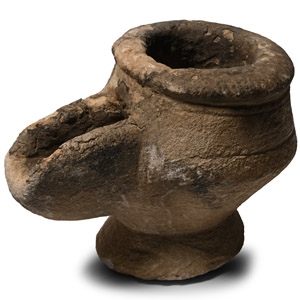
Western Asiatic Stone Libation Bowl
1st millennium B.C.Estimate: £100 - 140 (+bp*)
Opening Bid: £50
With a biconical body and flared foot set off-centre, large U-shaped spout and flat rim. 667 grams total, 11.9 cm
From a collection formed before 1988, London and Geneva. This lot has been cleared against the Art Loss Register database, and is accompanied by an illustrated lot declaration signed by the Head of the Antiquities Department, Dr Raffaele D'Amato. -
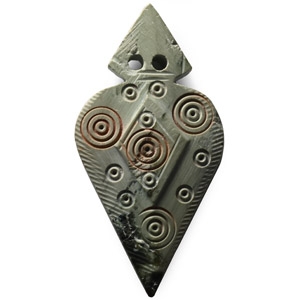
Western Asiatic Eye Pendant
19th-20th century A.D.Sold for (Inc. bp): £7
Plano-convex in section, heart-shaped body with reserved lozenge panel, incised ring-and-dot motifs; lozengiform bale with two suspension holes. 4.27 grams, 42 mm
Private collection, London, UK. This lot has been cleared against the Art Loss Register database, and is accompanied by an illustrated lot declaration signed by the Head of the Antiquities Department, Dr Raffaele D'Amato. -
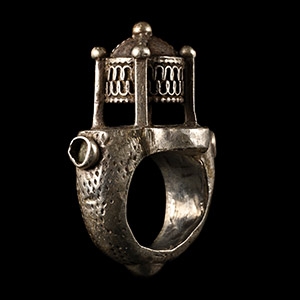
Western Asiatic Silver Architectural Ring
12th-13th century A.D.Estimate: £1,800 - 2,400 (‡+bp*)
Opening Bid: £900
D-section hoop with boss to underside and cell to each shoulder, cruciform plaque supporting a four-legged drum-shaped structure with granule finial. 35 grams, 45.64 mm overall, 18.81 mm internal diameter (approximate size British P 1/2, USA 7 3/4, Europe 16.86, Japan 16)
Acquired in the 1980s. Private collection, Switzerland, thence by descent. Private collection, since the late 1990s. This lot has been checked against the Interpol Database of stolen works of art and is accompanied by a search certificate number no.12718-234695. This lot has been cleared against the Art Loss Register database, and is accompanied by an illustrated lot declaration signed by the Head of the Antiquities Department, Dr Raffaele D'Amato.
