
Loading, please wait...
LOT 1212
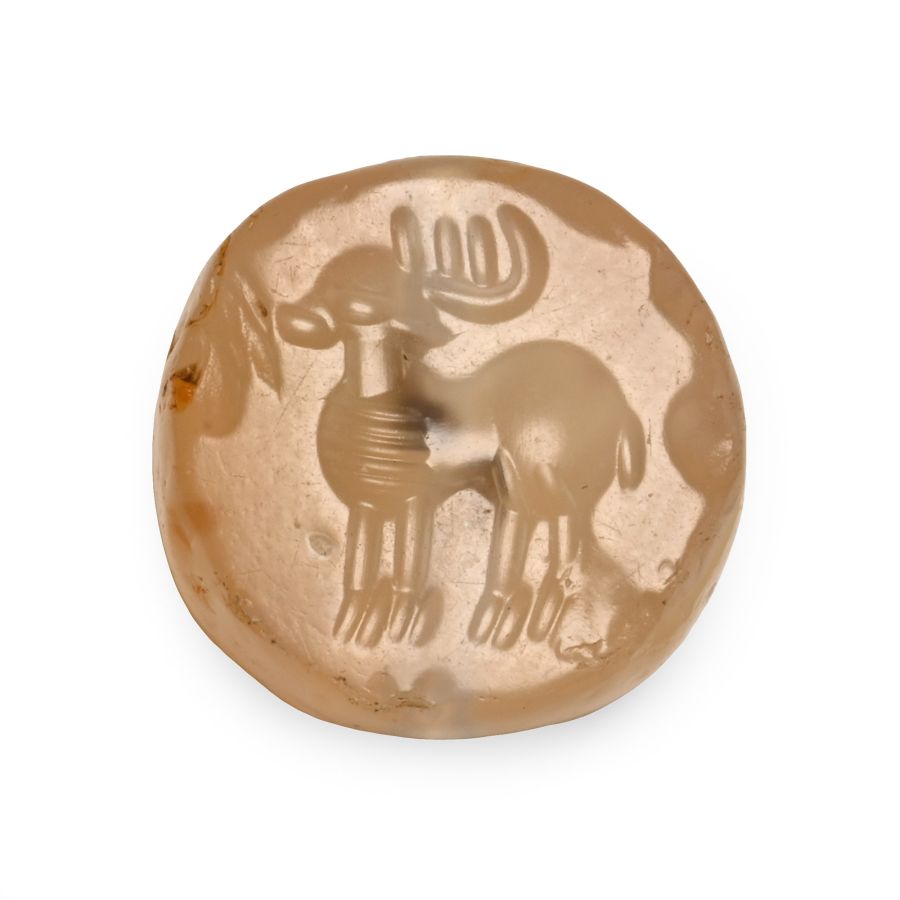
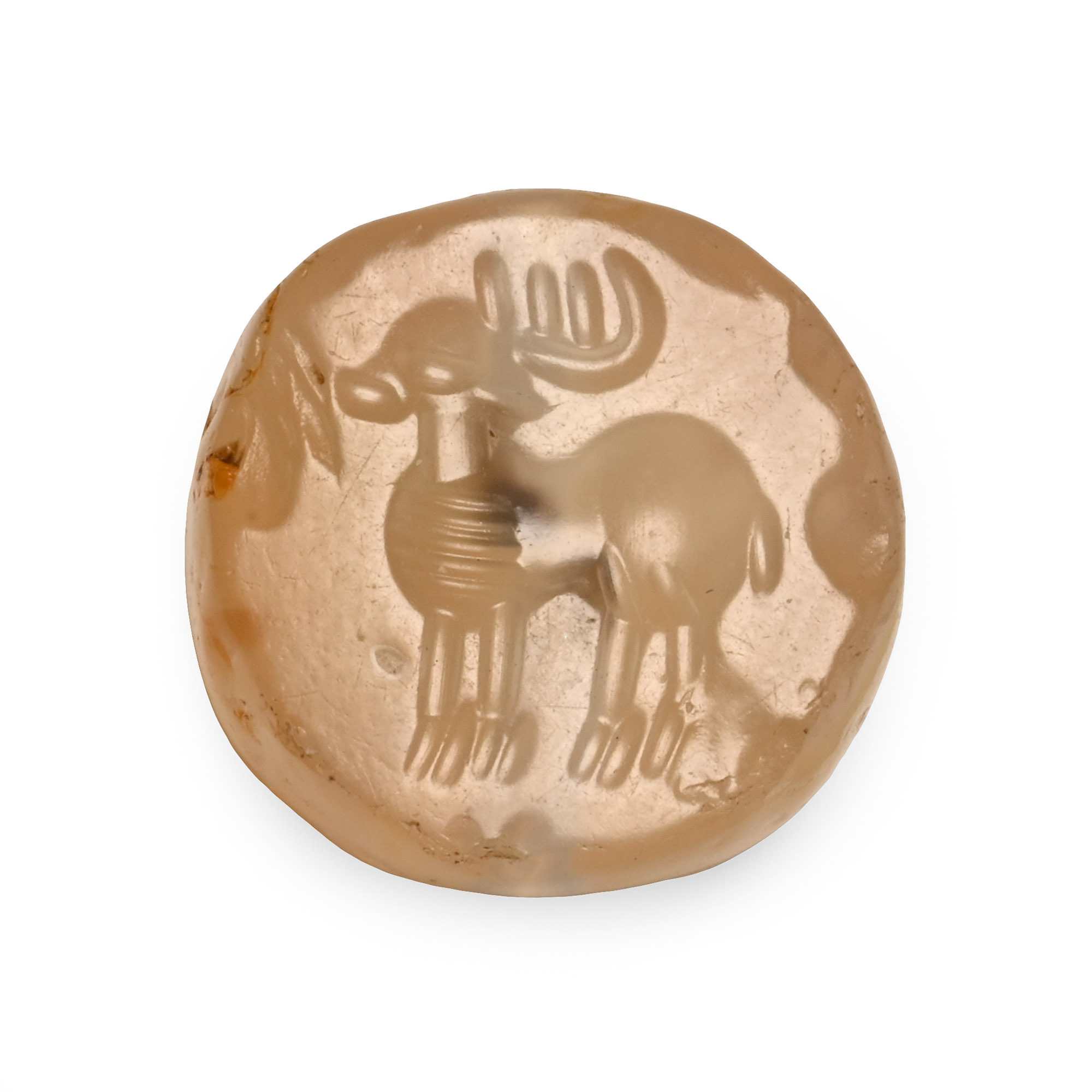
Sasanian Agate Stamp Seal with Stag
CIRCA 6TH-7TH CENTURY A.D.
1/2 in. (3.42 grams, 15 mm).
Plano-convex in section and discoid in plan with transverse piercing; intaglio figure of a standing stag to underside. [No Reserve]
ProvenanceEx P Chapman collection, 1980s-1990s.
LiteratureCf. for similar seals, Brunner, J., Sasanian Stamp Seals in the Metropolitan Museum of Art, New York, 1978, items 43,46, 124.
CONDITIONTimeLine Auctions follows a vetting process to ensure the authenticity and legality of all items, reinforcing our commitment to integrity and responsible trading. Each antiquity, antique, and coin lot undergoes thorough examination by a vetting committee of at least ten external specialists, professional trade association members, scientists, and archaeologists: Our Vetting Process
AUCTIONS:
TimeLine is a leading auction house specialising in antiquities, ancient art, collectables, natural history, coins, medals, and books. Our auctions offer museums, collectors, historians, and enthusiasts the opportunity to acquire unique and historically significant pieces.
-
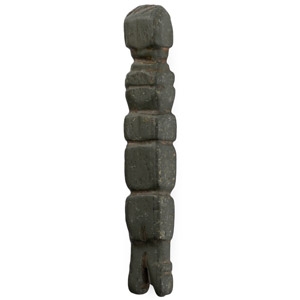
Western Asiatic Stone Implement
1st millennium B.C.Sold for (Inc. bp): £39
Square in section with segmented body and forked end; possibly a yarn-winding tool. 50 grams, 10.6 cm
with Archaeologia, Switzerland, before 1983. Ex private North American collection. London private collection, 2016. -
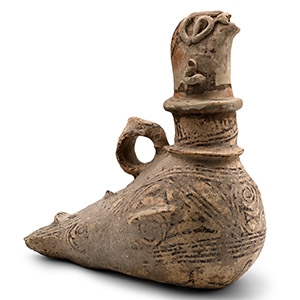
Western Asiatic Terracotta Vessel with Bird Head
8th-9th century A.D.Estimate: £300 - 400 (+bp*)
Opening Bid: £150
Aviform body with loop handle and applied collars and detailing to the neck and head; painted spiral tendril design. 612 grams, 18 cm
UK collection, 1990s. Acquired on the UK art market, before 2000. Private collection, Mr M.V., a London-based businessman. -
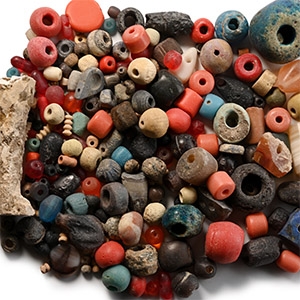
Mixed Ancient Bead Collection
1st millennium B.C. and laterSold for (Inc. bp): £59
Including fusiform, oblate biconical, polyhedral and other types in glass, and other materials. 107 grams total, 1-43 mm
London, UK, collection, 2000s.
