
Loading, please wait...
LOT 1145
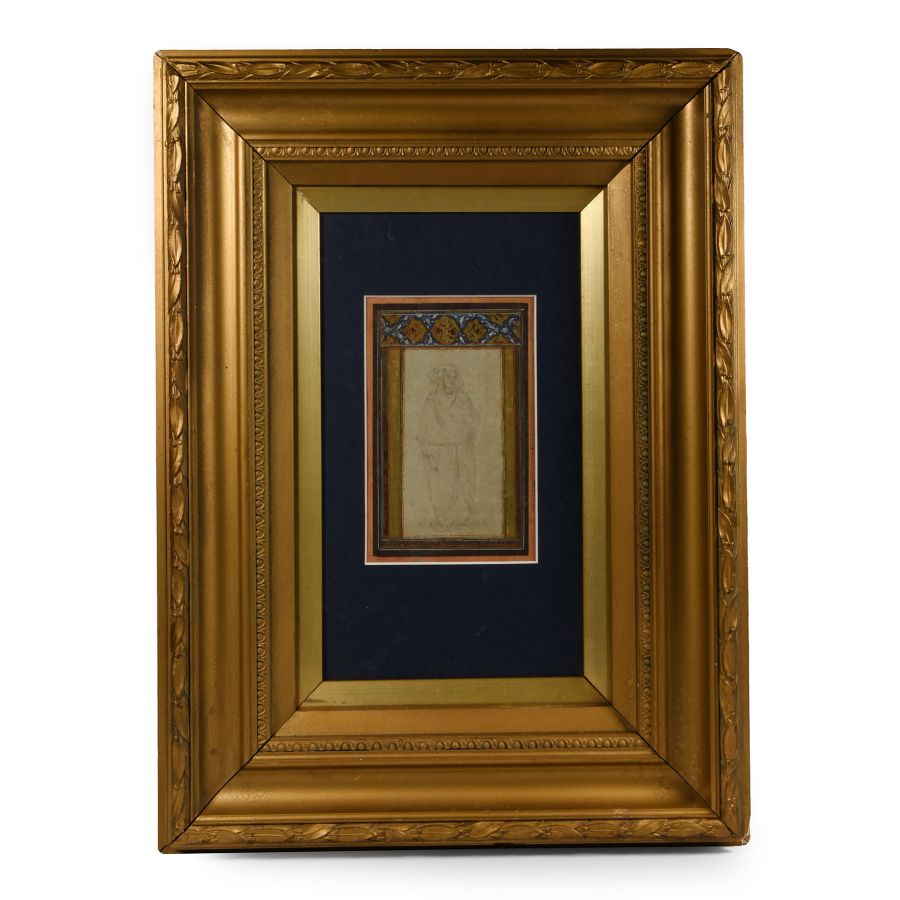
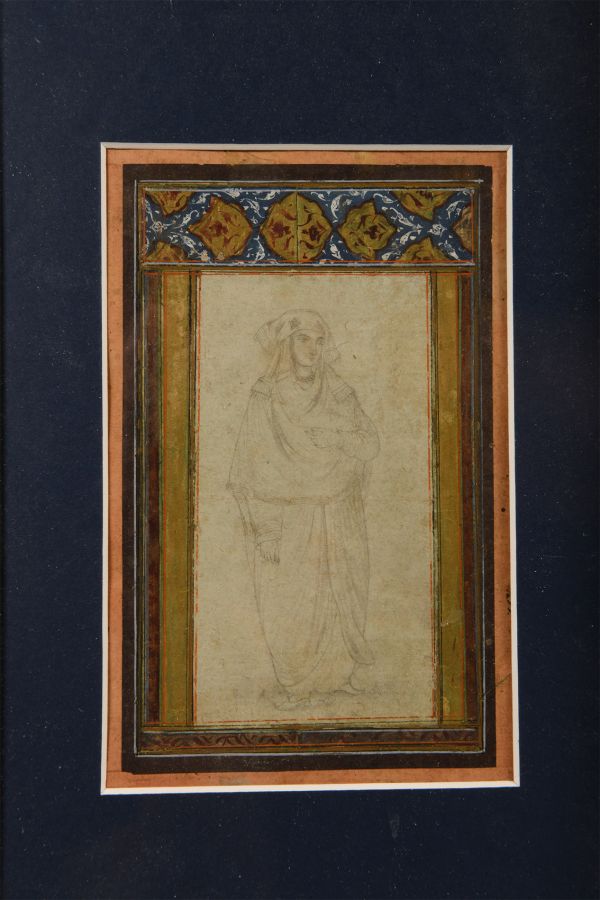
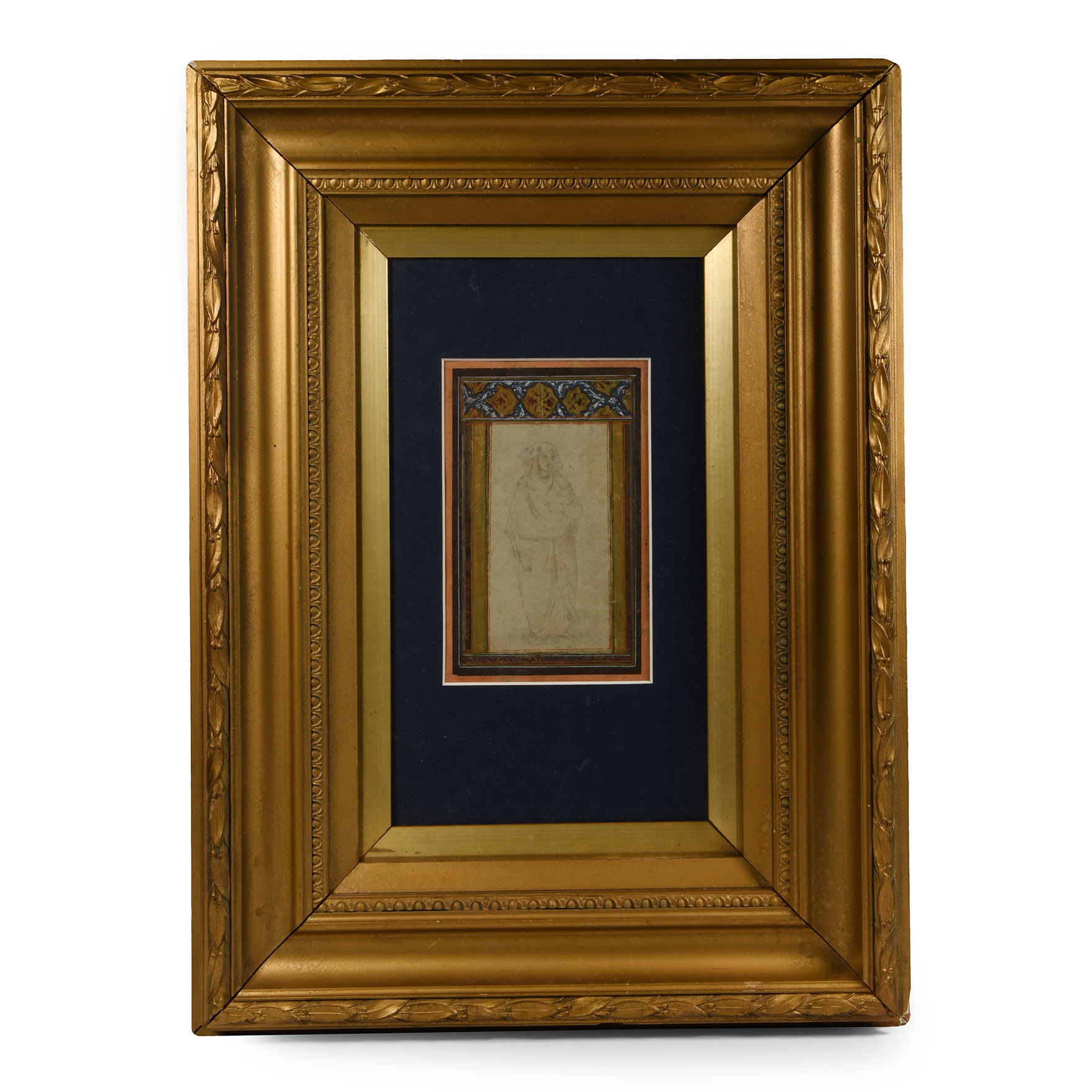
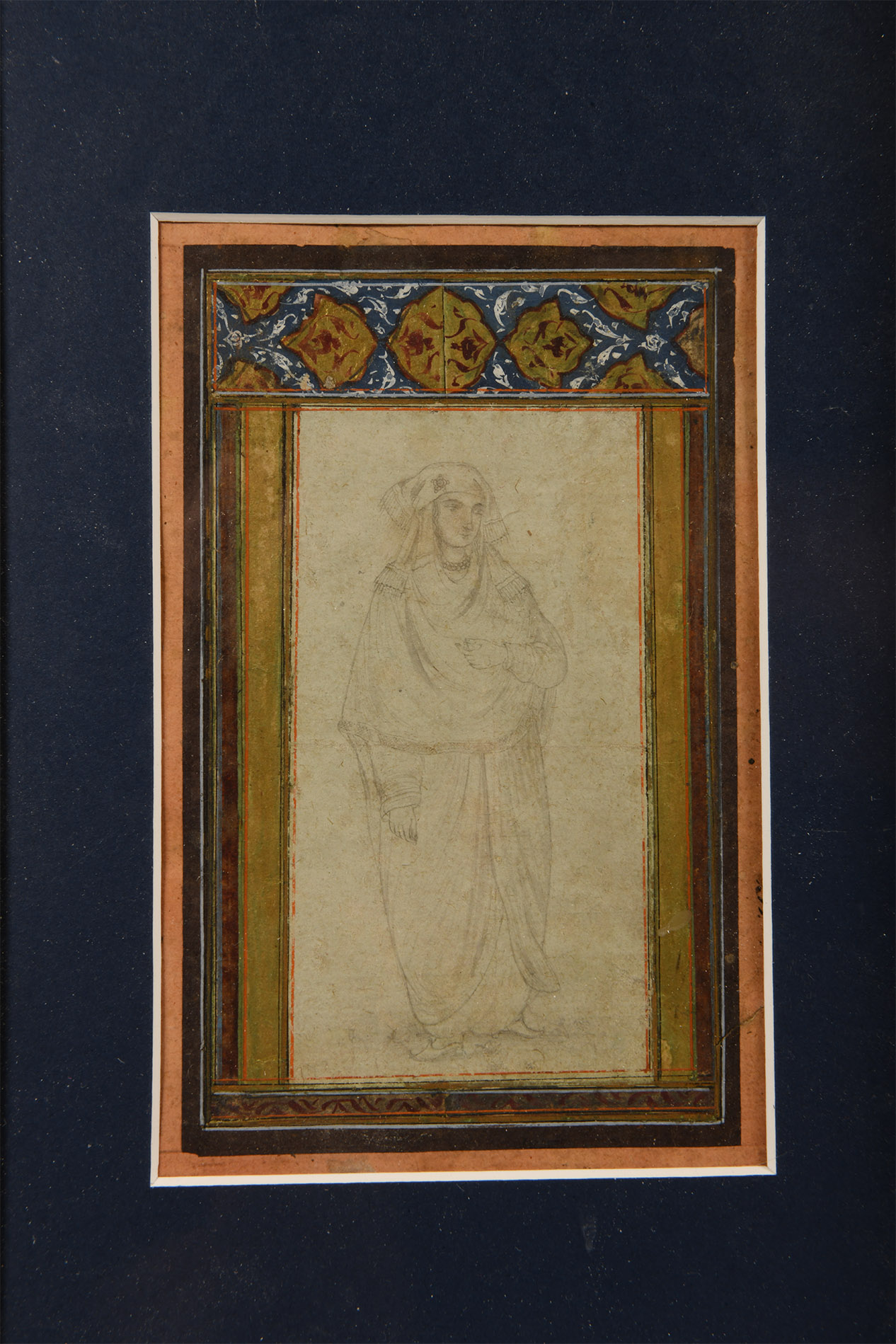
Safavid Drawing of a Western Pilgrim
CIRCA 1680 A.D.
14 1/8 x 19 1/4 in. (2.3 kg, 36 x 49 cm including frame).
Ink on paper; drawing of a Western noblewoman or pilgrim; mounted with dark blue reveal in a Victorian gilt ornate frame and later illuminated border with decorative gold and red paint.
ProvenanceAcquired from the UK art market.
Private Scottish collection.
The headgear may suggest that the subject is Portuguese, if it depicts the traditional 'capote e capelo' hood.
CONDITIONTimeLine Auctions follows a vetting process to ensure the authenticity and legality of all items, reinforcing our commitment to integrity and responsible trading. Each antiquity, antique, and coin lot undergoes thorough examination by a vetting committee of at least ten external specialists, professional trade association members, scientists, and archaeologists: Our Vetting Process
AUCTIONS:
TimeLine is a leading auction house specialising in antiquities, ancient art, collectables, natural history, coins, medals, and books. Our auctions offer museums, collectors, historians, and enthusiasts the opportunity to acquire unique and historically significant pieces.
LOT 1145
Safavid Drawing of a Western Pilgrim
Estimate £200 - 300€230 - 350 (for guidance only)$270 - 410 (for guidance only)
-
Cappadocian Cylinder Seal with Standing Figures and Lamma
Circa 1900-1800 B.C.Sold for (Inc. bp): £416
Haematite with four standing figures; accompanied by a section of an old typed scholarly note on a collection of 61 seals, typed and unsigned, by W. G. Lambert, late Professor of Assyriology, University of Birmingham, 1970-1993, which states: 'Cappadocian, c. 1900-1800 B.C. Hematite. Figure with axe over shoulder and holding symbol facing (i) figure holding different symbol, (ii) Lamma, and (iii) worshipper; bird, "vessel" and "ball staff".' 4.28 grams, 17 mm
Property of a London gentleman; part of his family collection since the 1970s with collection identification no.39. From a collection acquired from various auction houses in the UK. From the estate of Mr R.W., a private Wiltshire, UK, collector; thence by descent. Accompanied by a copy of an unsigned scholarly note by the late W.G. Lambert, Professor of Assyriology at the University of Birmingham, 1970-1993. -
Amlash Terracotta Vessel
1st millennium B.C.Estimate: £300 - 400 (+bp*)
Opening Bid: £150
Of zoomorphic form, with a globular body, u-section spout and handle with figurative animal design. 545 grams, 26.5 cm wide
Fine condition.
Acquired 1970s-1990s. Ex Rabi Gallery, Mayfair, London, UK. From a specialist collection of pottery.
Likely representing a wading bird. -
.jpg)
Sassanian Carnelian Stamp Seal
3rd-7th century A.D.Sold for (Inc. bp): £26
Composed of a small plano-convex body engraved with a ritualistic figure or symbol to the base; drilled for suspension. 1.19 grams, 10 mm
UK gallery, early 2000s.
According to some scholars, these seals originated as brands for cattle and contain elaborated hereditary notes. According to others they could represent monograms or Neshan (rank badges) or rank insignia. The crescent can be also associated with Zoroastrian shrines.
