
Loading, please wait...
LOT 1897
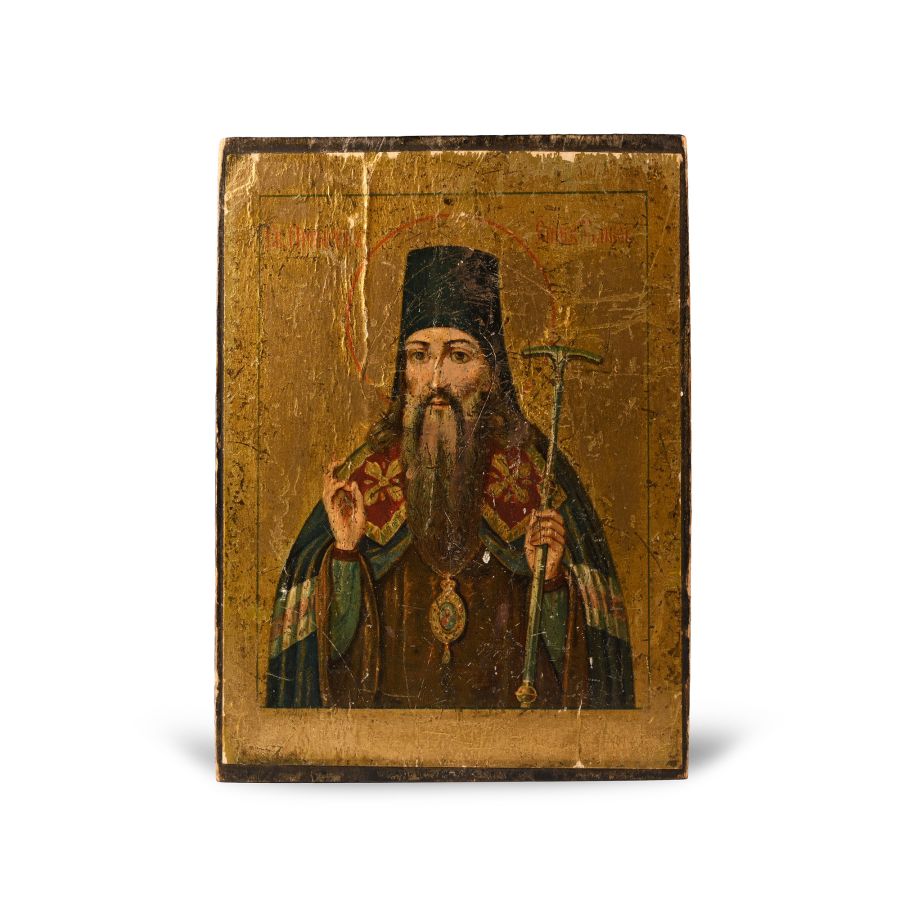
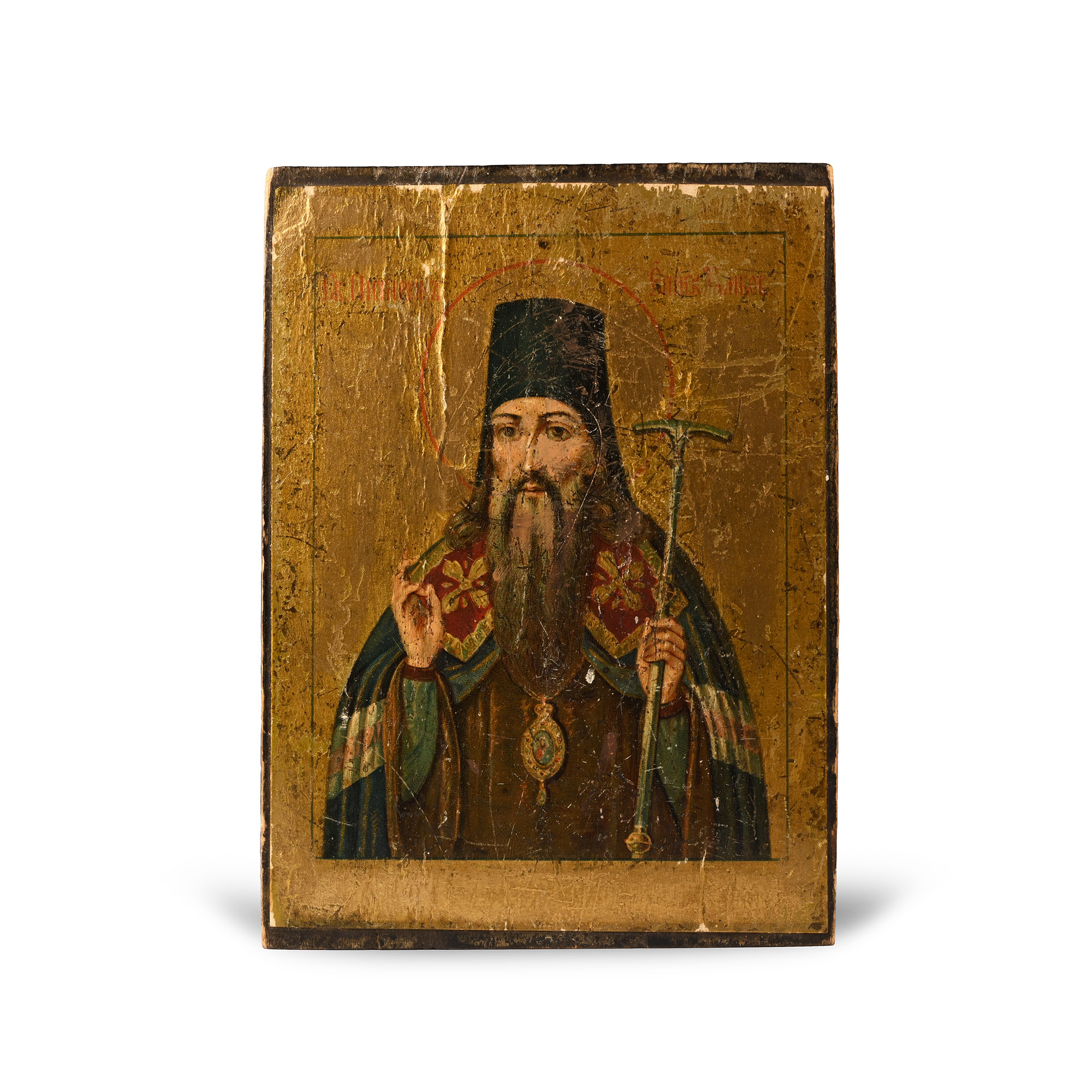
Russian Orthodox Gilt Wooden Icon with Patriarch
LATE 19TH CENTURY A.D.
7 1/8 x 5 1/4 in. (237 grams, 18.2 x 13.5 cm).
Wearing a tall clerical headdress and mantle, large religious pendant suspended beneath the long beard, left hand holding a crozier and right hand making the gesture of blessing; Cyrillic inscription flanking the halo. [No Reserve]
ProvenanceIan Wilkinson collection, Nottinghamshire, UK, formed since 1985.
This lot is accompanied by an illustrated lot declaration signed by the Head of the Antiquities Department, Dr Raffaele D'Amato.
TimeLine Auctions follows a vetting process to ensure the authenticity and legality of all items, reinforcing our commitment to integrity and responsible trading. Each antiquity, antique, and coin lot undergoes thorough examination by a vetting committee of at least ten external specialists, professional trade association members, scientists, and archaeologists: Our Vetting Process
AUCTIONS:
TimeLine is a leading auction house specialising in antiquities, ancient art, collectables, natural history, coins, medals, and books. Our auctions offer museums, collectors, historians, and enthusiasts the opportunity to acquire unique and historically significant pieces.
-
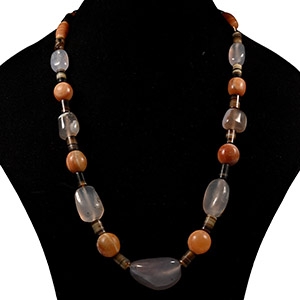
Western Asiatic Style Mixed Agate Bead Necklace
20th century A.D.Sold for (Inc. bp): £195
Composed of cylindrical dark beads alternating with larger light-coloured agate and chalcedony beads; restrung. 166 grams, 69 cm
From the family collection of a Hampstead gentleman; formerly acquired in the 1980s. This lot is accompanied by an illustrated lot declaration signed by the Head of the Antiquities Department, Dr Raffaele D'Amato. -
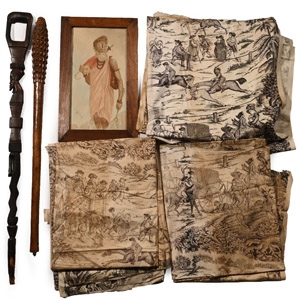
Ethnographic Wooden Walking Stick, Club and Other Items
20th century A.D.Sold for (Inc. bp): £39
Comprising: a walking stick with a profile bust; a club with tapering handle and ribbed finial; two pieces of decorative fabric; a glazed painting of an ascetic. 3.7 kg total, walking stick: 91 cm
Acquired London, UK. Property of a Harwich gentleman. This lot is accompanied by an illustrated lot declaration signed by the Head of the Antiquities Department, Dr Raffaele D'Amato. -
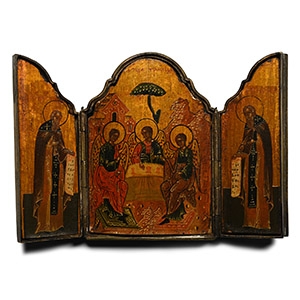
Russian Travelling Triptych Icon with Silver Mounts
Circa 1800 A.D.Estimate: £800 - 1,000 (+bp*)
Opening Bid: £400
Comprising: wooden triptych with gilt field and painted figures of St Nikolas and St Charalambos in the lateral panels and SS Konstantine, Helen and Barbara in the central panel, each with red lettering above; house in a purpose-made silver case with engraved scene to the central panel of Maria Theotokos flanked by celestial figures holding a crown above her head; front panels with facing figures of SS Nikolas, Barbara, Konstantine, Helena and Charalambos; in a custom-made wooden travelling case with hooked fastener. 331 grams total, 11.8 x 9.4 cm including case
Ex Iconastas, London SW1, UK, in 1997. Property of a London, UK, gentleman collector. Accompanied by a copy of the Iconastas invoice no.7463 dated 7 April 1997. This lot is accompanied by an illustrated lot declaration signed by the Head of the Antiquities Department, Dr Raffaele D’Amato. This lot is accompanied by an illustrated lot declaration signed by the Head of the Antiquities Department, Dr Raffaele D'Amato.
