
Loading, please wait...
LOT 2012
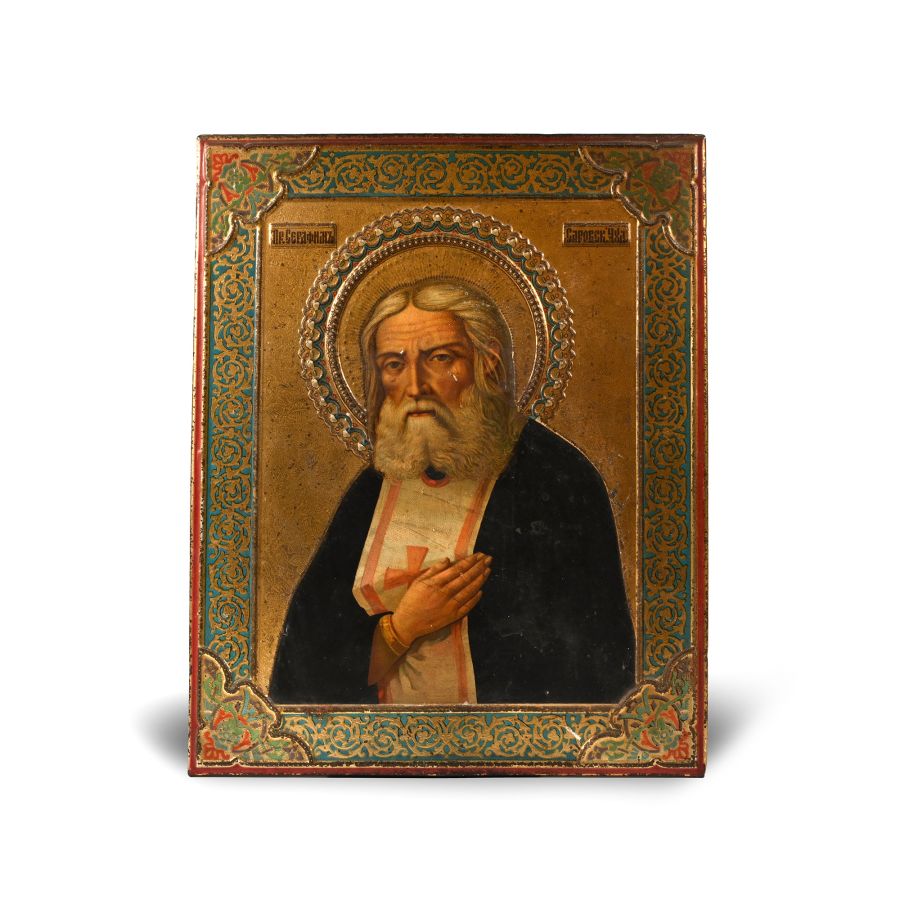
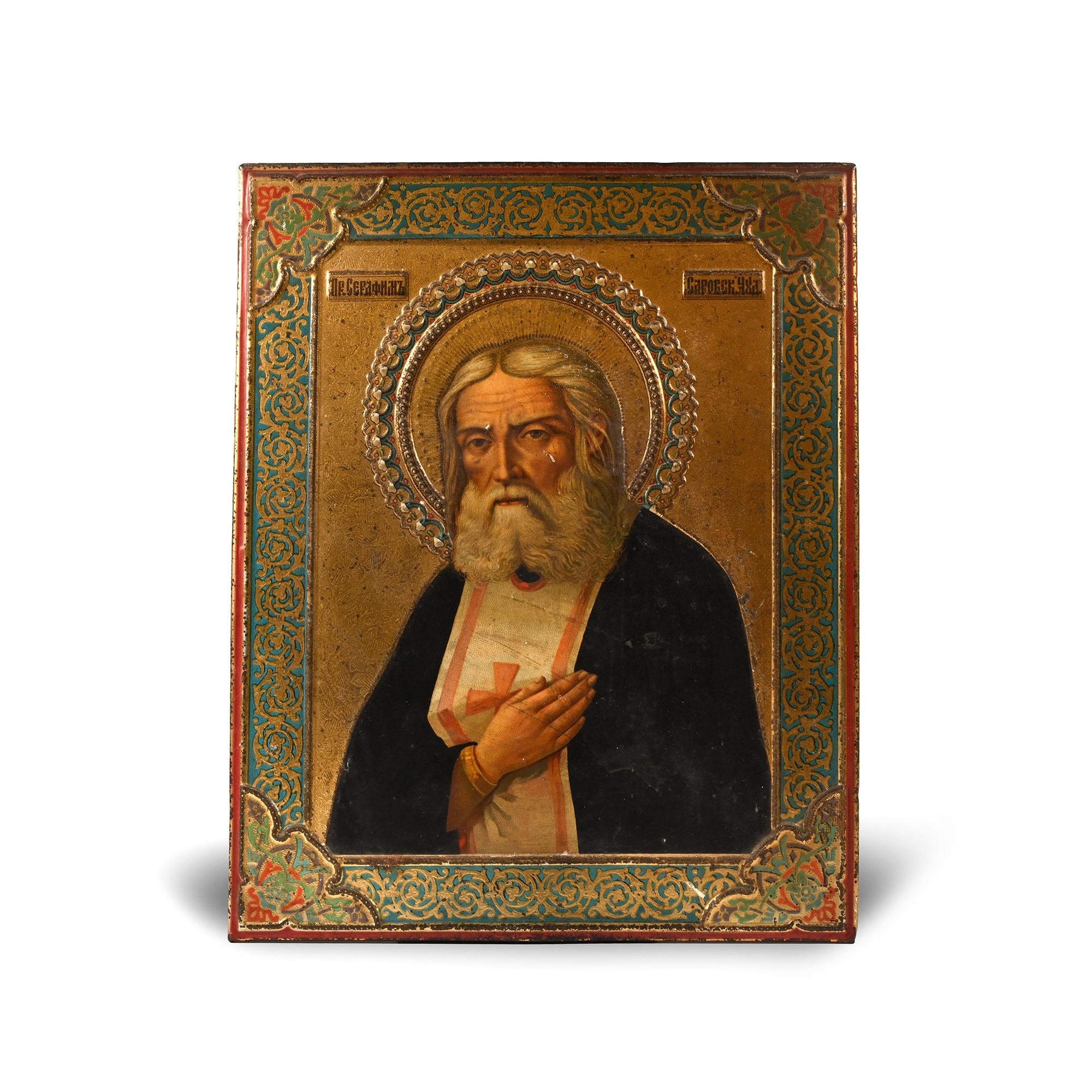
Russian Orthodox Gilt Icon with Saint Seraphim
20TH CENTURY A.D.
8 7/8 x 7 1/8 in. (178 grams, 22.4 x 18 cm).
Showing Saint Seraphim of Sarov printed on embossed metal-sheet with fabric backing, Cyrillic inscription flanking the elaborate halo. [No Reserve]
ProvenanceIan Wilkinson collection, Nottinghamshire, UK, formed since 1985.
This lot is accompanied by an illustrated lot declaration signed by the Head of the Antiquities Department, Dr Raffaele D'Amato.
Saint Seraphim of Sarov (1759-1833) was a renowned Russian monk and mystic whose ascetic practice and counselling in cases of conscience awarded him the title Starets (spiritual teacher).
CONDITIONTimeLine Auctions follows a vetting process to ensure the authenticity and legality of all items, reinforcing our commitment to integrity and responsible trading. Each antiquity, antique, and coin lot undergoes thorough examination by a vetting committee of at least ten external specialists, professional trade association members, scientists, and archaeologists: Our Vetting Process
AUCTIONS:
TimeLine is a leading auction house specialising in antiquities, ancient art, collectables, natural history, coins, medals, and books. Our auctions offer museums, collectors, historians, and enthusiasts the opportunity to acquire unique and historically significant pieces.
-

Stained Glass Panel with the Resurrection
Flemish, 19th century A.D. or earlierSold for (Inc. bp): £1,950
In late 15th century style, showing triumphant Jesus on the foreground, holding a flag and dressed in a brocade cloak, stigmata showing on his hands and feet; two guards on his side looking stunned, one wearing a full plate armour with a sallet and the other a leather corselet with a bascinet, third guard at the bottom of the panel looking terrified; an angel dressed in white robe, extending his arms towards Jesus; the opened tomb on the background and medieval Flemish inscription at the bottom reading 'DE VERISENIS VAN CHRISTUS’ (the Resurrection of Christ) in uncial letters; some restoration. 4.5 kg, 65 x 53.5 cm
Some restoration.
From a war-damaged church in Belgium. Ex property of a late Northumberland collector. From a private collection, Derbyshire, UK. This lot has been cleared against the Art Loss Register database, and is accompanied by an illustrated lot declaration signed by the Head of the Antiquities Department, Dr Raffaele D'Amato.
The scene represents the Resurrection of Christ according to the Gospel of Matthew (28,2-4), as revealed by the presence of an angel moving away the stone, and of the soldiers. According to the Christian tradition, the bodily resurrection was the restoration to life of a body transformed and nourished by the spirit, as described by Paul and the Evangelists, which led to the affirmation of Christianity. In Christian theology, the Resurrection of Jesus is ‘the fundamental mystery of faith’, as recalled by Easter, together with the remaining Christological mystery (Incarnation, Passion and Death), and together with the Logia and the works of the ministry of Jesus. For Christians, the resurrection of Jesus is a guarantee that all the dead Christians will come back to life at the time of the parousia (second coming) of Christ. -
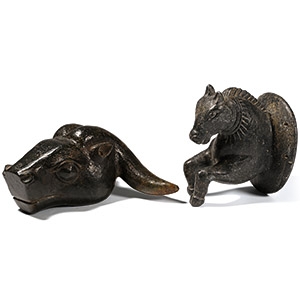
Western Asiatic Style Carved Stone Animal Group
20th century A.D.Sold for (Inc. bp): £52
Comprising: a horse protome modelled as the foreparts of a leaping horse; a bull's head with large curving horns. 1.94 kg total, 12-18 cm
From the family collection of a Hampstead gentleman; formerly acquired in the 1980s. This lot is accompanied by an illustrated lot declaration signed by the Head of the Antiquities Department, Dr Raffaele D'Amato. -
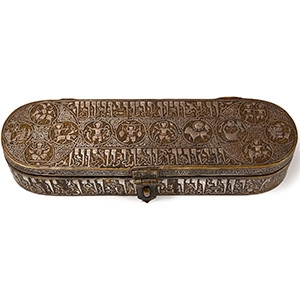
Large Western Asiatic Style Silver Inlaid Bronze Calligraphic Brush or Pen Box
20th century A.D.Sold for (Inc. bp): £975
Hinged lid with lock hasp; extensive decoration to the outer faces, including human-headed birds, animals, and various human figures. 1.22 kg, 28.2 cm
From the family collection of a Hampstead gentleman; formerly acquired in the 1980s. This lot is accompanied by an illustrated lot declaration signed by the Head of the Antiquities Department, Dr Raffaele D'Amato.
