
Loading, please wait...
LOT 2045
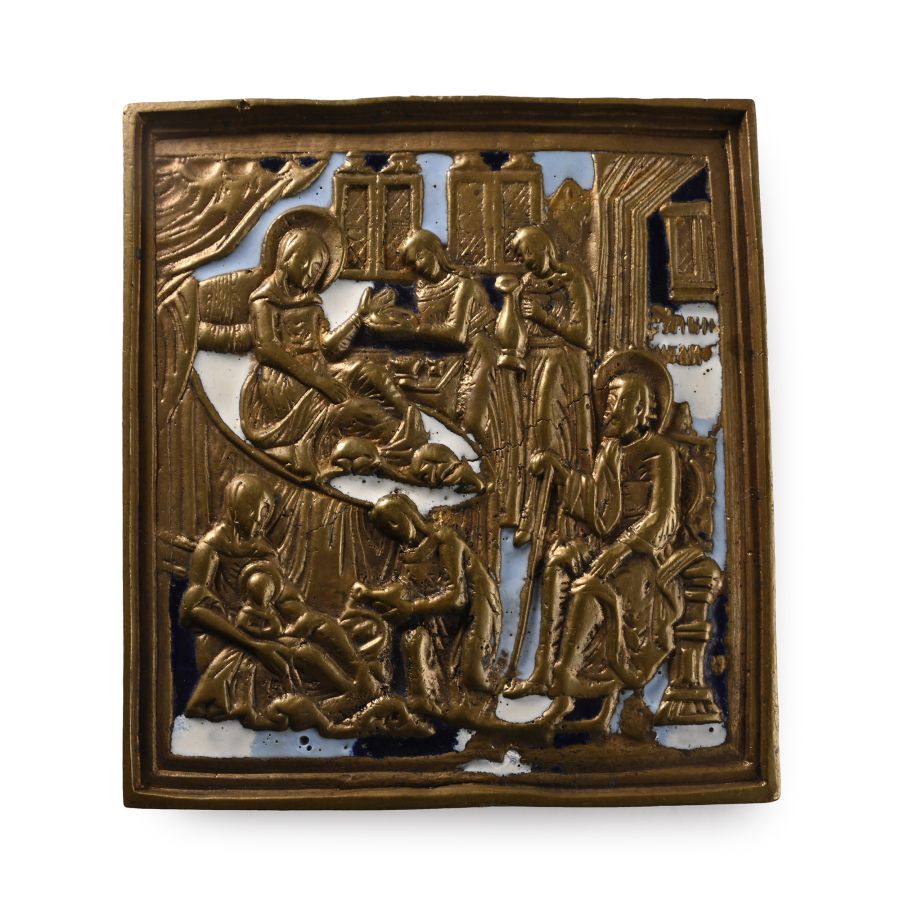
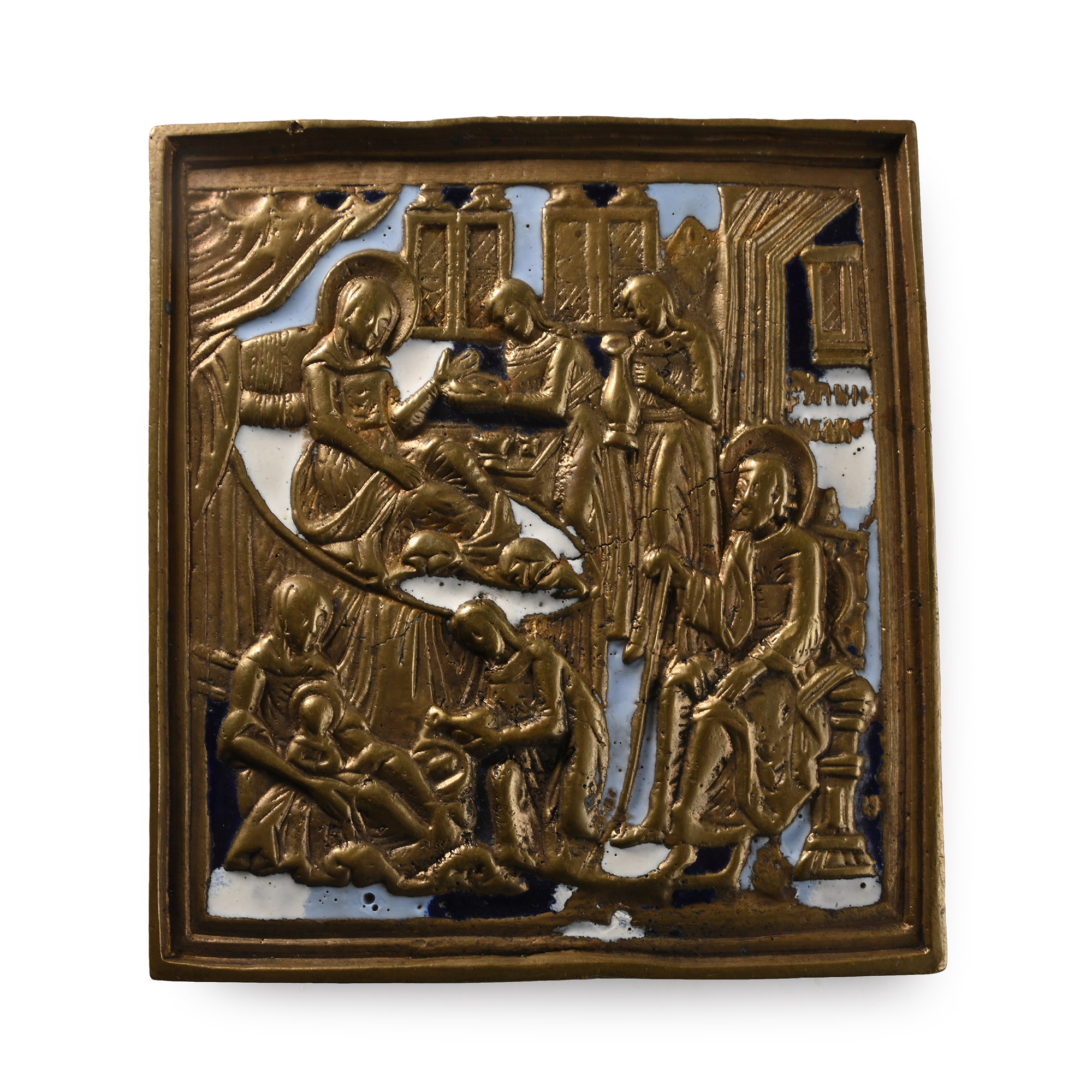
Russian Orthodox Enamelled Bronze Travel Icon with the Birth of the Virgin
19TH CENTURY A.D.
3 7/8 in. (230 grams, 98 mm).
Presenting an architectural setting with figures in two chambers framed with cornices, columns and furnitures; the upper chamber showing Saint Anna in birthing bed with two attendants; the lower room with two attendants bathing an infant; on the right Saint Joachim seated upon a cathedra; Old Slavonic inscription reciting ‘The birth of the most holy mother of God’.
ProvenanceAcquired from Chris Martin-Zakheim, Iconastas, 5 Piccadilly Arcade, London SW1.
From the private collection of a West London, UK, gentleman, formed since the early 2000s.
Cf. Eighme Ahlborn, R., Beaver-Bricken Espinola, V., Russian Copper Icons and crosses from the Kunz Collection: Castings of Faith, Washington, 1991, nos.25819.174 and 25819.251, pp.68,75, for similar iconography.
FootnotesAccording to the Protoevangelium of James, Mary's parents were called Anna and Joachim and conceived Mary at a late age.
CONDITIONTimeLine Auctions follows a vetting process to ensure the authenticity and legality of all items, reinforcing our commitment to integrity and responsible trading. Each antiquity, antique, and coin lot undergoes thorough examination by a vetting committee of at least ten external specialists, professional trade association members, scientists, and archaeologists: Our Vetting Process
AUCTIONS:
TimeLine is a leading auction house specialising in antiquities, ancient art, collectables, natural history, coins, medals, and books. Our auctions offer museums, collectors, historians, and enthusiasts the opportunity to acquire unique and historically significant pieces.
LOT 2045
Russian Orthodox Enamelled Bronze Travel Icon with the Birth of the Virgin
Estimate £200 - 300€230 - 350 (for guidance only)$270 - 410 (for guidance only)
-
Very Large Medieval and Later Iron Billhook Collection
14th-18th century A.D.Sold for (Inc. bp): £26
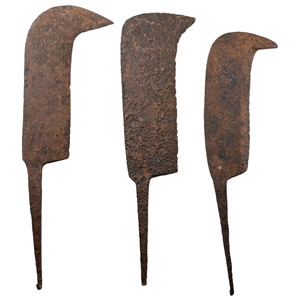
Each with broad hooked blade and square-section tang hooked at the end. 1.79 kg total, 36-39 cm
From the property of a late Lincolnshire, UK, gentleman. -
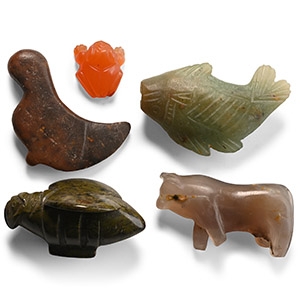
Western Asiatic Style Stone Artefact Group
20th century A.D.Sold for (Inc. bp): £52
Carved in the round fish, bird, ox and other animals in carnelian, onyx and other materials. 40 grams total, 15-40 mm
Acquired on the UK art market. Private collection, London, UK. -
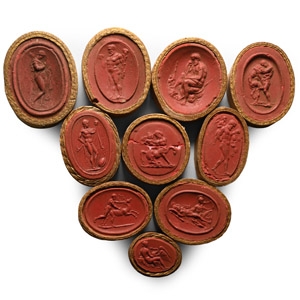
Deity Plaster Cast Collection
Late 19th-early 20th century A.D.Sold for (Inc. bp): £169
Comprising ten impressions showing various characters and scenes including Hercules, cupid teasing a centaur, a hero wrestling a lion, Leda and the swan, and others. 39 grams total, 20-35 mm
From a private Tyneside collection, formed since the early 2000s.
