
Loading, please wait...
LOT 2067
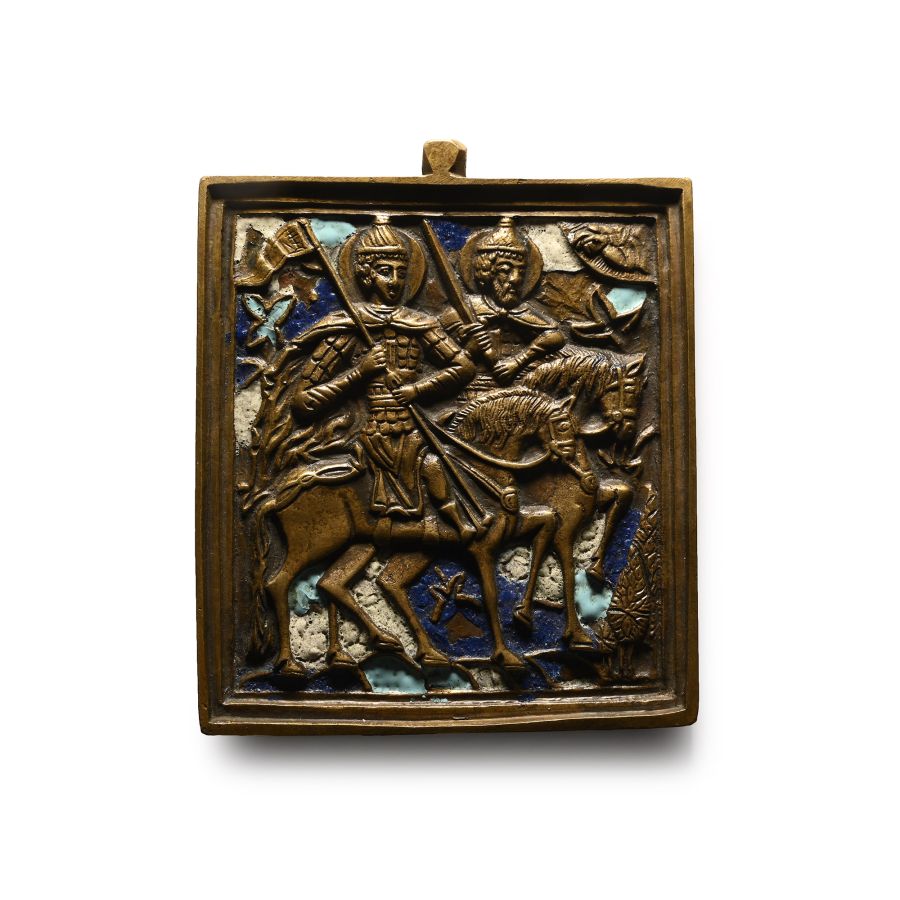
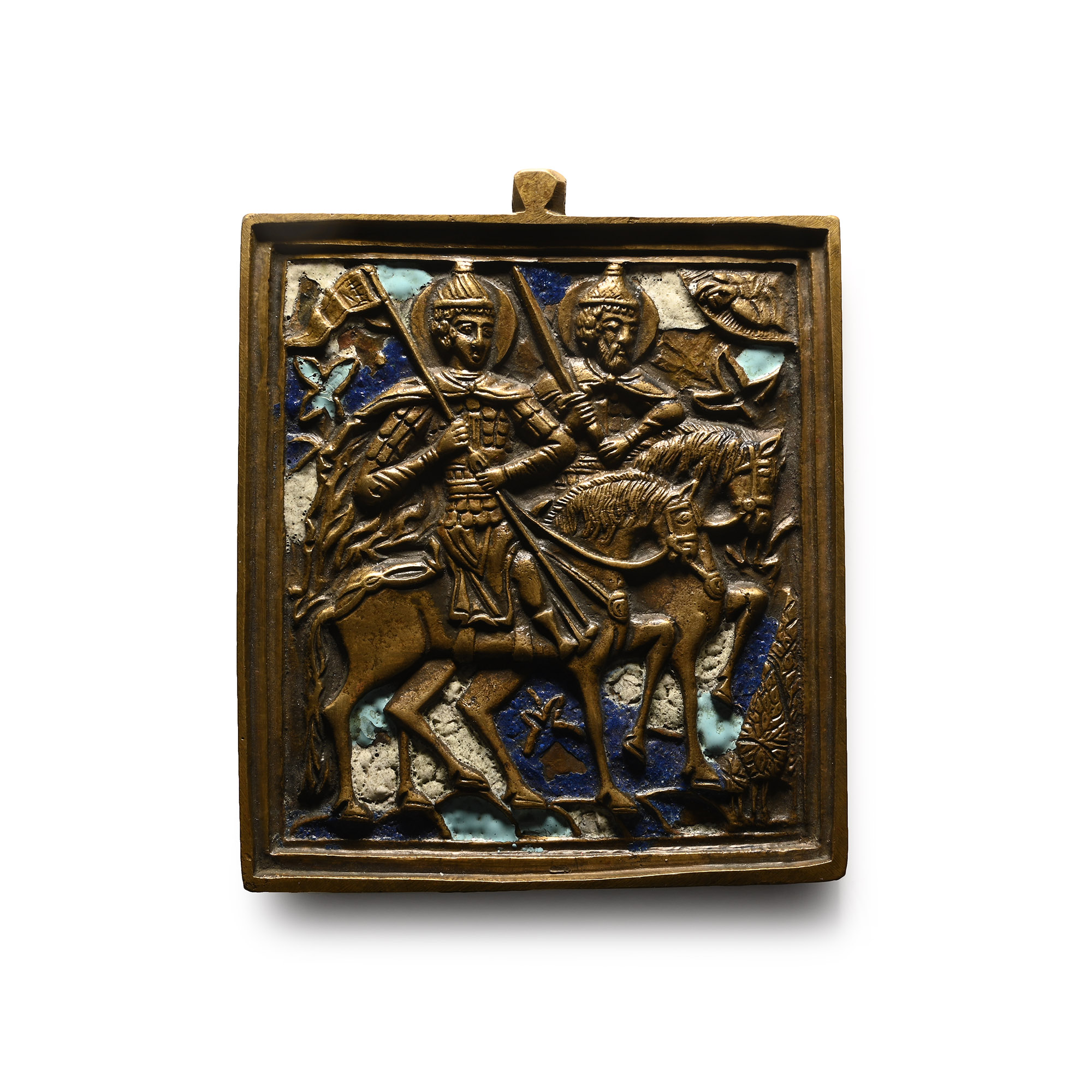
Russian Orthodox Enamelled Bronze Travel Icon with Saints Boris and Gleb
19TH CENTURY A.D.
4 1/4 in. (260 grams, 10.7 cm).
Saint Boris and Saint Gleb depicted on horseback wearing Russian medieval armour, holding a cross standard and a sword, each wearing a conical helmet; on the right upper corner, the hand of God.
ProvenanceAcquired from Chris Martin-Zakheim, Iconastas, 5 Piccadilly Arcade, London SW1.
From the private collection of a West London, UK, gentleman, formed since the early 2000s.
Cf. Iljina, T.W., Arcydzieła Malarstwa Rosyjskiego w Muzeach ZSRR (Masterpieces of Russian Painting in the Museums of the USSR, in Polish), Leningrad, 1989, fig.10, for the prototype of this icon.
FootnotesBoris and Gleb were the sons of Vladimir of Kyiv, the first Christian Prince of Rus; they were killed in 1015 and 1019 in the civil struggles for the succession to the throne, and sanctified for their faith. Standards with their image were worn by the medieval Russian army.
CONDITIONTimeLine Auctions follows a vetting process to ensure the authenticity and legality of all items, reinforcing our commitment to integrity and responsible trading. Each antiquity, antique, and coin lot undergoes thorough examination by a vetting committee of at least ten external specialists, professional trade association members, scientists, and archaeologists: Our Vetting Process
AUCTIONS:
TimeLine is a leading auction house specialising in antiquities, ancient art, collectables, natural history, coins, medals, and books. Our auctions offer museums, collectors, historians, and enthusiasts the opportunity to acquire unique and historically significant pieces.
LOT 2067
Russian Orthodox Enamelled Bronze Travel Icon with Saints Boris and Gleb
Estimate £300 - 400€350 - 460 (for guidance only)$410 - 540 (for guidance only)
-
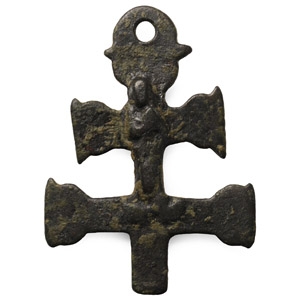
Post Medieval Bronze Cross Pendant
17th-19th century A.D.Sold for (Inc. bp): £13
Flat-section pendant of a two-barred cross with low-relief Corpus Christi to obverse; Mary to reverse. 4.64 grams, 39 mm
Ex P Chapman collection, 1980s-1990s. -
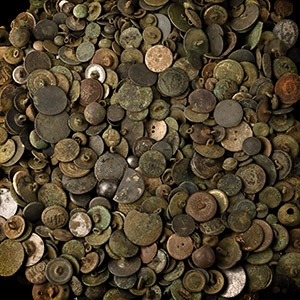
Post Medieval Bronze Button Group
Circa 16th-20th century A.D.Sold for (Inc. bp): £13
Various types including discoid with pierced lug, spherical, domed and other types. 1.75 kg total, 9-27 mm
Found Suffolk, UK. (UK buyers only, not for export) -
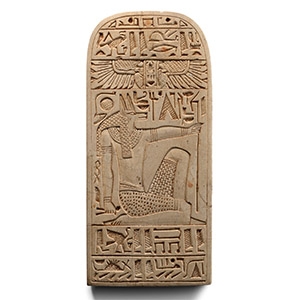
Egyptian Reproduction Tablet with Anubis
20th century A.D.Sold for (Inc. bp): £234
Tongue-shaped unifacial tablet with guilloche to the rim; horizontal bands of cuneiform framing profile image of Anubis seated with hand extended, holding a was sceptre; winged scarab above. 6.85 grams, 21 cm
From a private Tyneside collection, formed since the early 2000s.
