
Loading, please wait...
LOT 1958
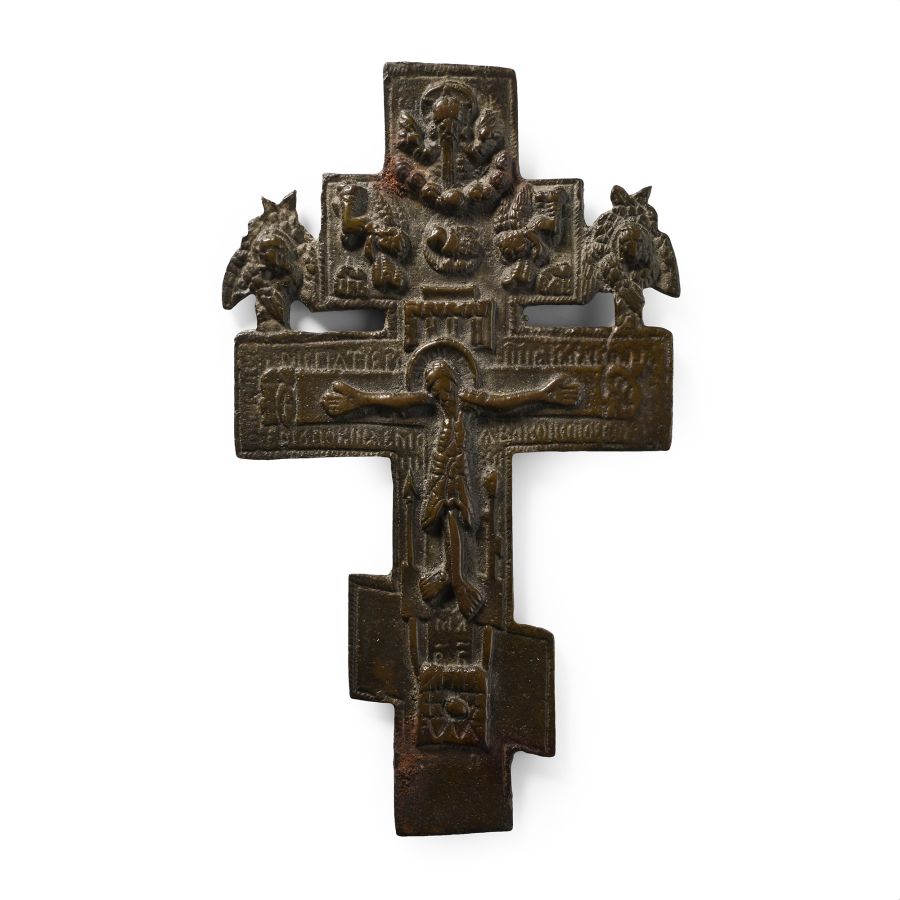
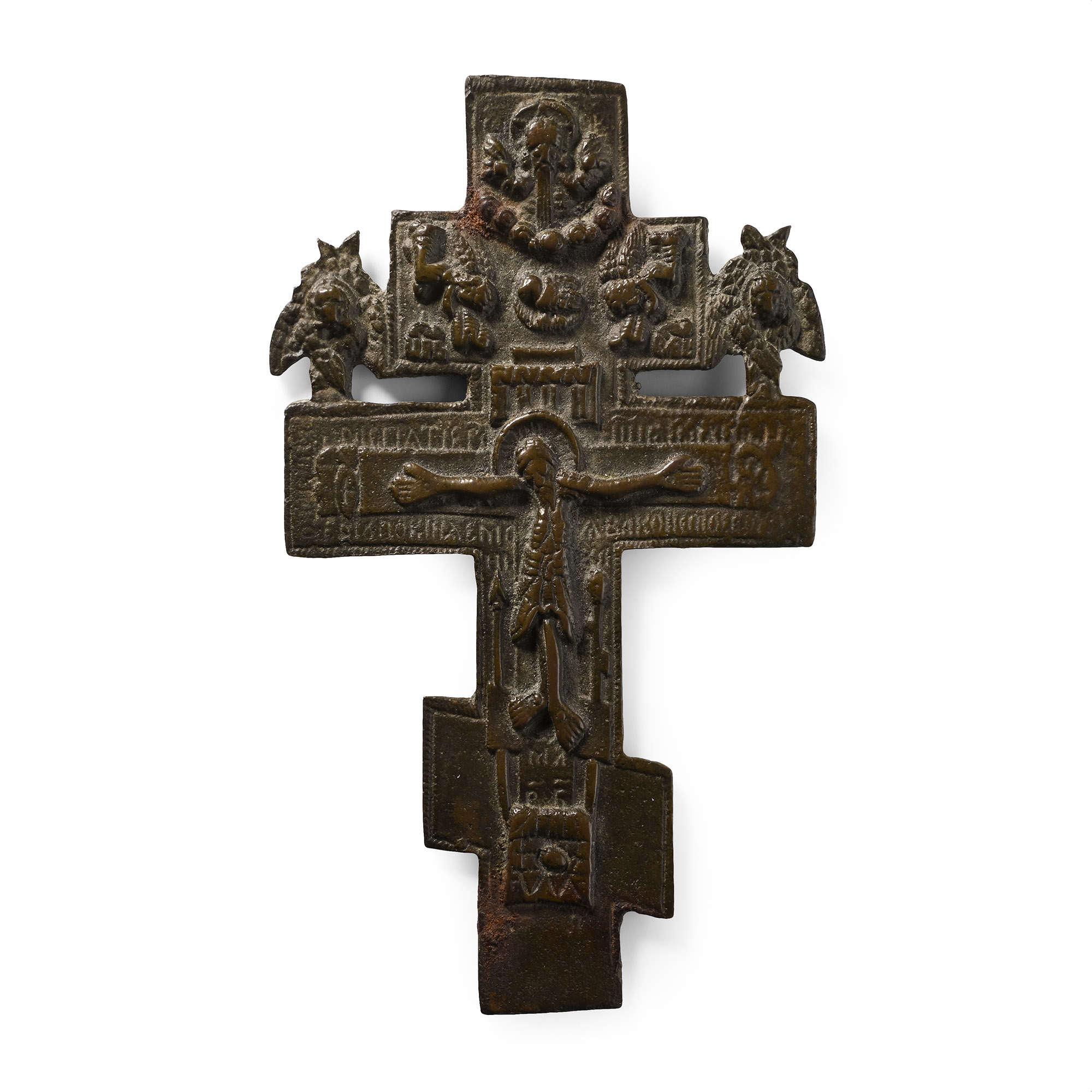
Russian Orthodox Bronze Cross with Prayers
19TH CENTURY A.D.
4 3/8 in. (65.4 grams, 11.1 cm).
Depicting the Saviour on the cross, the titulum inscribed in Cyrillic ‘Jesus of Nazareth, King of the Jews’; long inscriptions in Old Church Slavonic and traditional elements of the ‘Stavrosis’ surrounding the cross: sponge on reed, spear and a skull set on stones marking the site as Golgotha, twisted cords or wire, and the walls of Jerusalem; on the upper part of the cross, angels with cloth-covered hands and over them a frontal view of the torso of God with his arms raised above clouds; inscribed prayers in Old Church Slavonic and file marks on the back of the casting. [No Reserve]
ProvenanceAcquired from Chris Martin-Zakheim, Iconastas, 5 Piccadilly Arcade, London SW1.
From the private collection of a West London, UK, gentleman, formed since the early 2000s.
Cf. Eighme Ahlborn, R., Beaver-Bricken Espinola, V., Russian Copper Icons and crosses from the Kunz Collection: Castings of Faith, Washington, 1991, nos.25819.003-4., p.42, for similar iconography.
FootnotesOrthodox travel icons were used by the faithful to carry a sacred representation with them during their journeys, offering protection and a constant spiritual connection. The icon features meticulous craftsmanship with intricate details of the Passion and Death of the Saviour, according to the Byzantine iconography.
CONDITIONTimeLine Auctions follows a vetting process to ensure the authenticity and legality of all items, reinforcing our commitment to integrity and responsible trading. Each antiquity, antique, and coin lot undergoes thorough examination by a vetting committee of at least ten external specialists, professional trade association members, scientists, and archaeologists: Our Vetting Process
AUCTIONS:
TimeLine is a leading auction house specialising in antiquities, ancient art, collectables, natural history, coins, medals, and books. Our auctions offer museums, collectors, historians, and enthusiasts the opportunity to acquire unique and historically significant pieces.
-
Post Medieval Silver Ring with Maroneia Horse
20th century A.D.Sold for (Inc. bp): £65
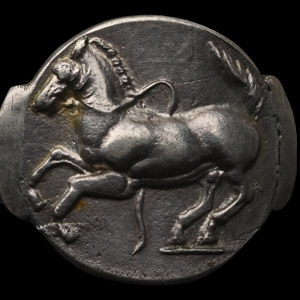
Substantial hoop with overlapping finials, large discoid bezel with low-relief image of a prancing horse, modelled after depictions on ancient Greek coins from the city of Maroneia in Thrace. 9.21 grams, 23.72 mm overall, 20.73 mm internal diameter (approximate size British U, USA 10, Europe 22.52, Japan 21)
Ex German art market, 2000s. Acquired from an EU collector living in London. From the collection of a Surrey, UK, gentleman. -
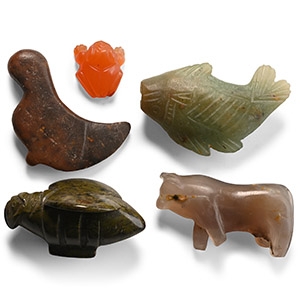
Western Asiatic Style Stone Artefact Group
20th century A.D.Sold for (Inc. bp): £52
Carved in the round fish, bird, ox and other animals in carnelian, onyx and other materials. 40 grams total, 15-40 mm
Acquired on the UK art market. Private collection, London, UK. -
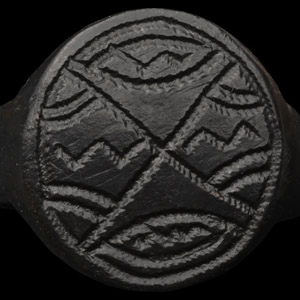
Tudor Period Bronze Ring with Waves
Circa 16th-17th century A.D.Sold for (Inc. bp): £33
Keeled hoop and large discoid bezel with geometric motifs. 7.78 grams, 22.11 mm overall, 18.60 mm internal diameter (approximate size British O 1/2, USA 7 1/4, Europe 15.61, Japan 15)
Ex German art market, 2000s. Acquired from an EU collector living in London. From the collection of a Surrey, UK, gentleman.
