
Loading, please wait...
LOT 1893
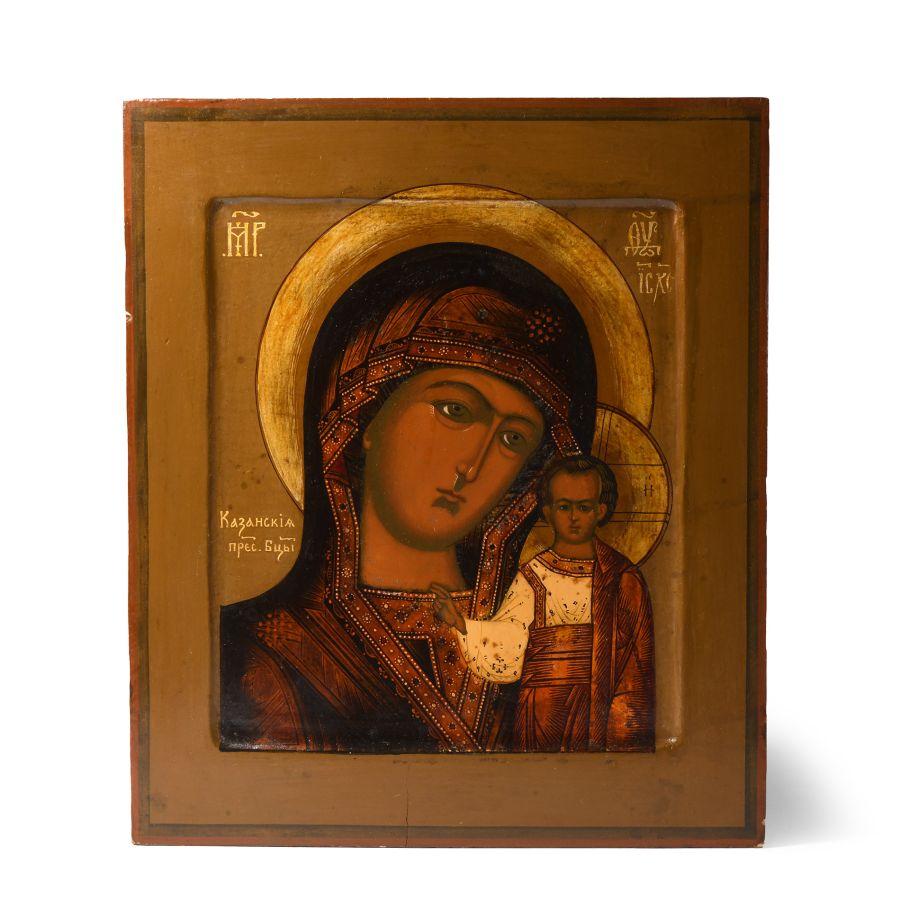
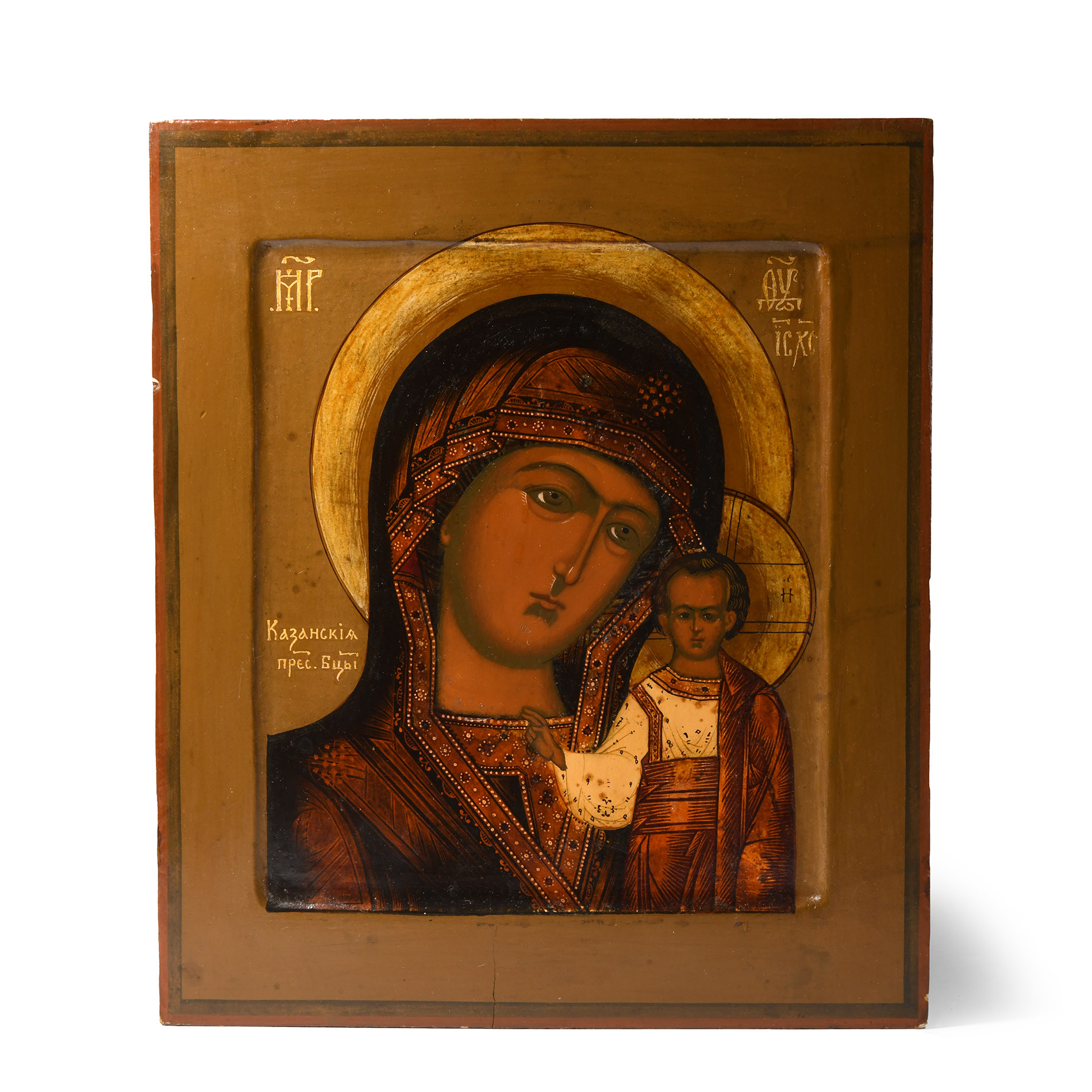
Russian Icon with Virgin of Kazan with the Blessing Child
19TH-20TH CENTURY A.D.
12 1/4 in. (968 grams, 31 cm high).
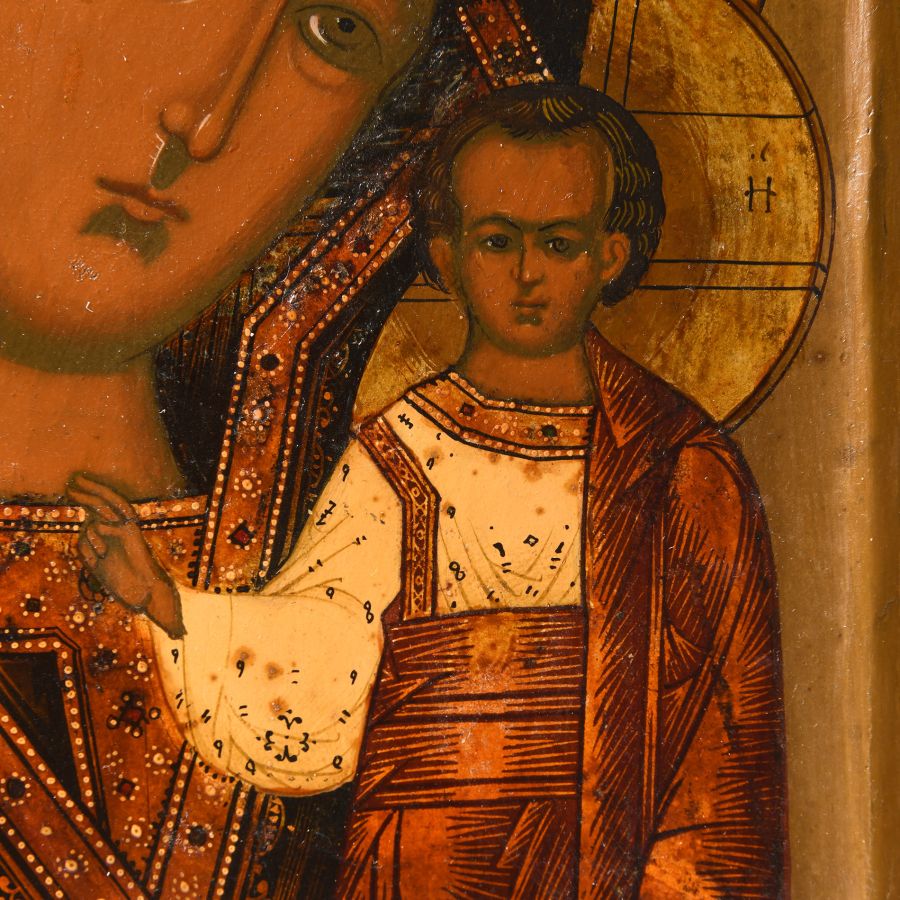
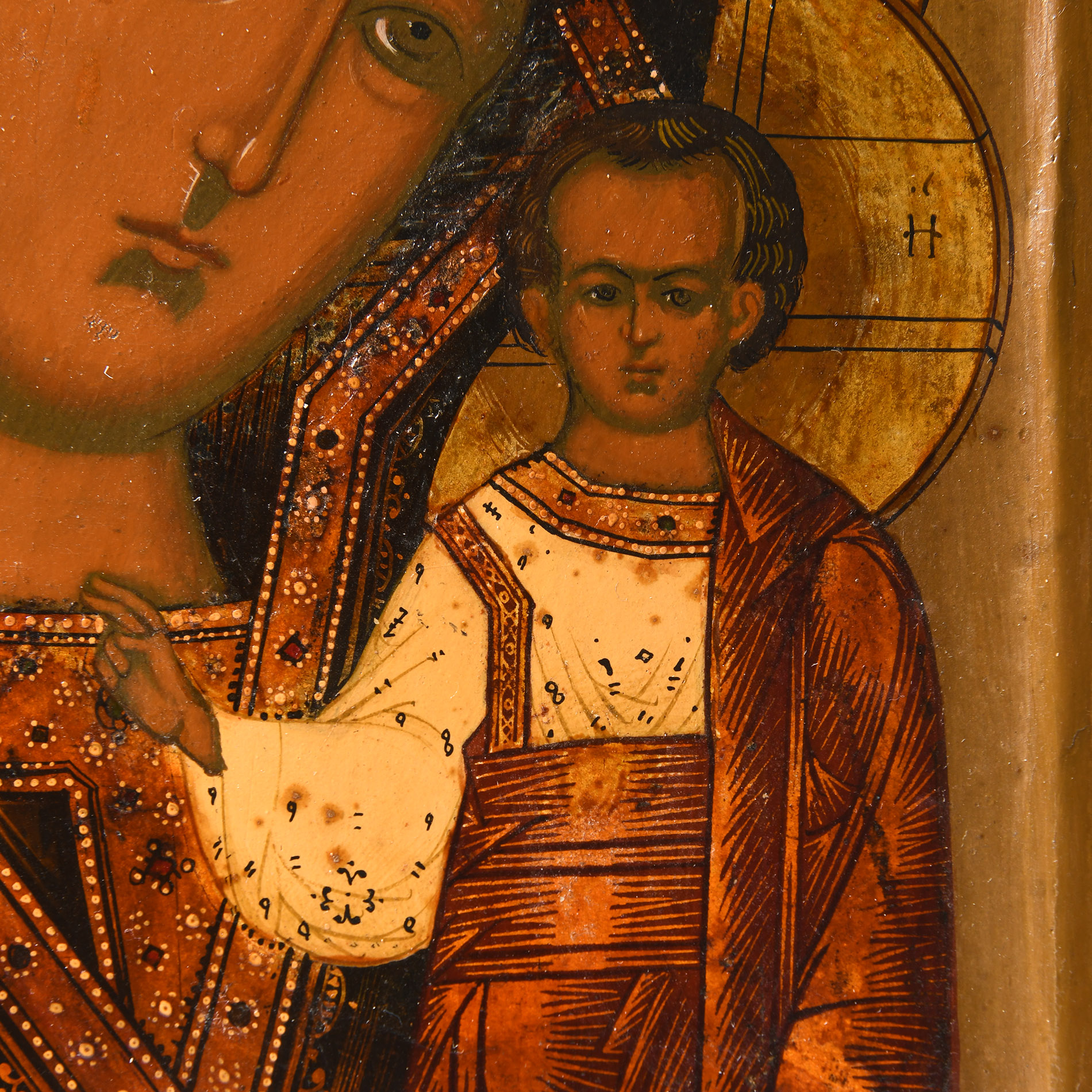
Painted on a wooden board with mounting slots and panels to the reverse, gessoed surface with painting of the Virgin of Kazan, head of Mary with gilded nimbus and russet-coloured veil, standing infant Jesus similarly nimbate with right hand raised in the pax gesture; gilt monograms to the upper corners and title to the lower left corner.
ProvenanceEx property of a London lady, part of her family's collection.
This lot is accompanied by an illustrated lot declaration signed by the Head of the Antiquities Department, Dr Raffaele D'Amato.
See Preobrazhensky, A., ‘The icon of the Virgin of Kazan: new data on the early history of its veneration and the most ancient copies (in Russian)’ in Чудотворный Казанский образ Богородицы в судьбах России и мировой цивилизации. Сборник докладов участников научно-просветительских чтений, (Miraculous Kazan image of the Mother of God in the fate of Russia and world civilization. Collection of reports of participants of scientific and educational readings, in Russian), Казань, 2018, pp.295-429.
FootnotesThe original icon, also known as the Theotokos of Kazan, is thought to have originated in Constantinople in the 13th century before it was taken to Russia. When the Turks took over Kazan in 1438, the icon was most probably hidden to keep it safe. Ivan the Terrible liberated Kazan in 1552, and the town was destroyed by fire in 1579, after which the icon was found and brought to the Church of Saint Nicholas. It was subsequently stolen in 1904 and never found again, though there are many copies in existence.
CONDITIONTimeLine Auctions follows a vetting process to ensure the authenticity and legality of all items, reinforcing our commitment to integrity and responsible trading. Each antiquity, antique, and coin lot undergoes thorough examination by a vetting committee of at least ten external specialists, professional trade association members, scientists, and archaeologists: Our Vetting Process
AUCTIONS:
TimeLine is a leading auction house specialising in antiquities, ancient art, collectables, natural history, coins, medals, and books. Our auctions offer museums, collectors, historians, and enthusiasts the opportunity to acquire unique and historically significant pieces.
LOT 1893
Russian Icon with Virgin of Kazan with the Blessing Child
Sold for (Inc. bp): £351
-
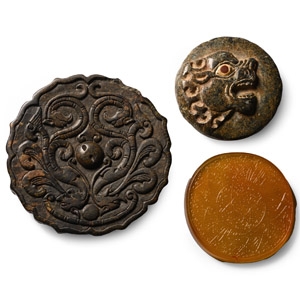
Western Asiatic Style Stone Roundel Group
20th century A.D.Sold for (Inc. bp): £78
Comprising: a round stone disc with a profile image of a roaring lion with inlaid eye; an agate disc with calligraphic decoration; a dark stone disc with low-relief vines and beast heads. 180 grams total, 54-85 mm
From the family collection of a Hampstead gentleman; formerly acquired in the 1980s. This lot is accompanied by an illustrated lot declaration signed by the Head of the Antiquities Department, Dr Raffaele D'Amato. -
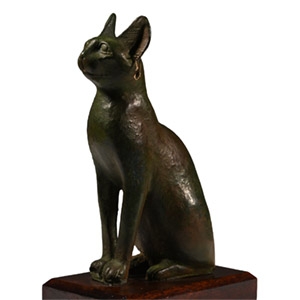
Egyptian Style Cat on Wooden Base
20th century A.D.Sold for (Inc. bp): £312
Modelled in the round in alert pose with gold loop in each ear; bronze or composition on a polished wooden base; after the antique. 1.25 kg total, 20.5 cm including stand
From a private, UK, collection in the 1980s. Property of a London, UK, antiquarian. This lot is accompanied by an illustrated lot declaration signed by the Head of the Antiquities Department, Dr Raffaele D'Amato. -
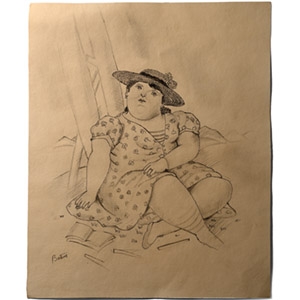
Seated Woman Drawing, Attributed to Fernando Botero (1932-2023)
20th-21st century A.D.Sold for (Inc. bp): £1,560
Pencil on paper, showing a lady seated on grass and leaning against a tree, an open book on the foreground, signed to the lower left hand corner 'Botero'. 22 grams, 34 x 29 cm
Private collection of a London gentleman, acquired between 1965-2020. This lot is accompanied by an illustrated lot declaration signed by the Head of the Antiquities Department, Dr Raffaele D'Amato.
