
Loading, please wait...

LOT 1973
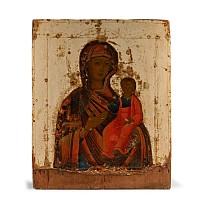
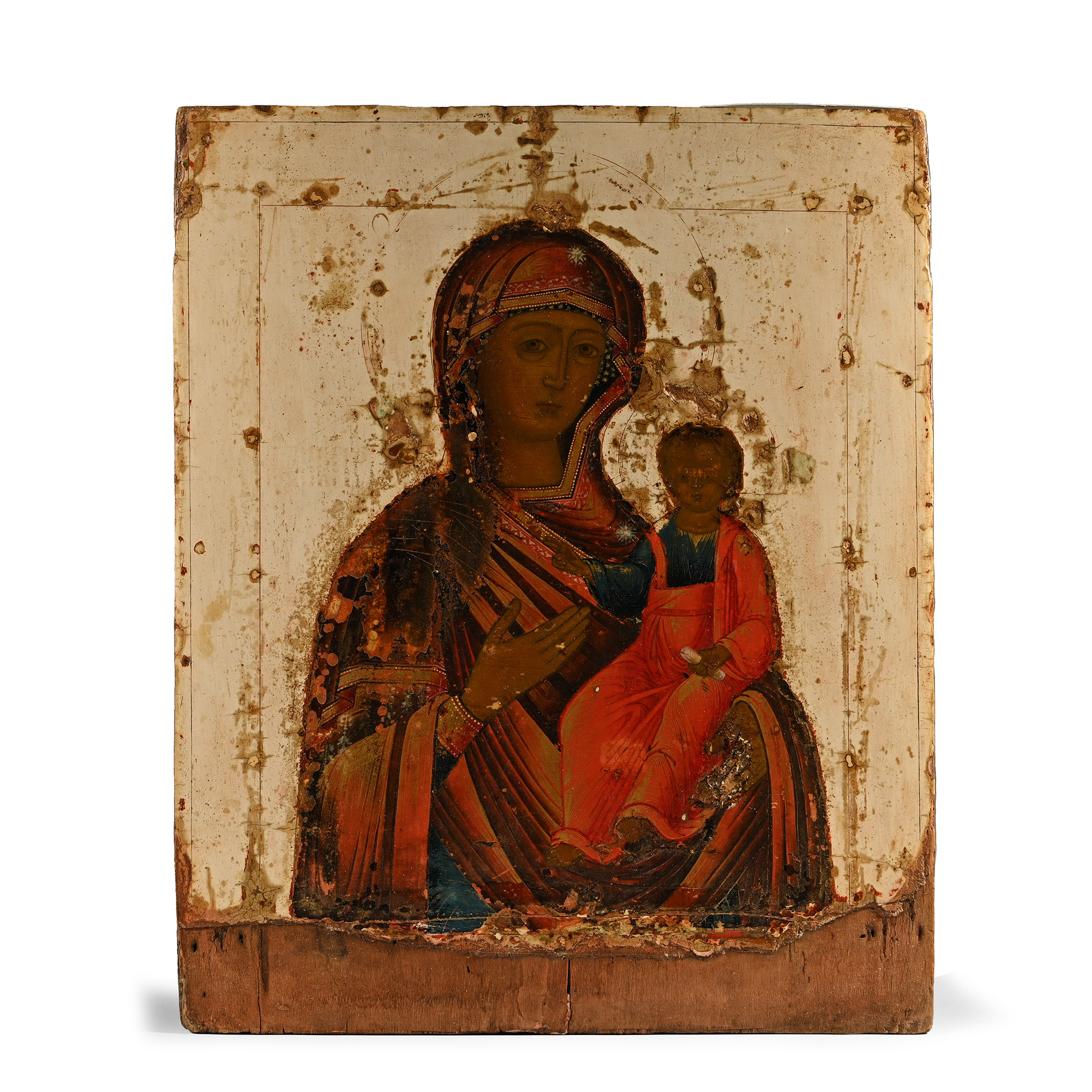
Russian Icon with Mother of God and Christ
SMOLENSKAYA, EARLY 19TH CENTURY A.D.
12 5/8 x 10 1/4 in. (1.12 kg, 32 x 26 cm).
Depicting nimbate Mary Theotokos with veiled head and wearing a red maphorion mantle over a dark blue robe with gold cuffs, inclined towards the infant Jesus supported by her left hand, wearing a bright red mantle and a blue tunic highlighted with gold, his left arm holding a roll and the right hand in a gesture of blessing; white field, tempera on wood, Smolenskaya type.
ProvenanceAcquired from Portobello Road, London, circa 2000.
Property of a London, UK, gentleman collector.
This lot is accompanied by an illustrated lot declaration signed by the Head of the Antiquities Department, Dr Raffaele D’Amato.
This lot is accompanied by an illustrated lot declaration signed by the Head of the Antiquities Department, Dr Raffaele D'Amato.
Cf. Korolev. A.A., 'The Holy Virgin of Smolensk in the 17th century: Catholic Legend of an Orthodox Icon' in Srednie veka, 2022, Vol.83, no.4, pp.142-167.
FootnotesThe model for the icon, painted in a 16th century style, is the Mother of God of Smolensk, associated with the Byzantine icon of the Hodegetria ('She who shows the ways’). According to the legend, the icon of Smolensk received the name after healing two blind men. The original icon of Smolensk was a gift of the Roman Emperor Constantine Monomachus to his daughter Anna when she married the Russian Prince Vsevolod. Later Anna presented the icon to her son Vladimir who displayed it in the Vladimir Cathedral.
CONDITIONTimeLine Auctions follows a vetting process to ensure the authenticity and legality of all items, reinforcing our commitment to integrity and responsible trading. Each antiquity, antique, and coin lot undergoes thorough examination by a vetting committee of at least ten external specialists, professional trade association members, scientists, and archaeologists: Our Vetting Process
AUCTIONS:
TimeLine is a leading auction house specialising in antiquities, ancient art, collectables, natural history, coins, medals, and books. Our auctions offer museums, collectors, historians, and enthusiasts the opportunity to acquire unique and historically significant pieces.
-
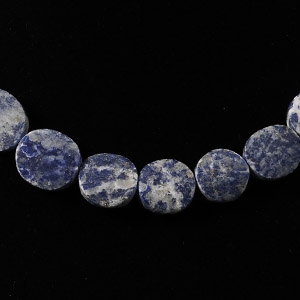
Bactrian Style Lapis Lazuli Large Bead Necklace
20th century A.D.Sold for (Inc. bp): £20
Comprising a graduated series of restrung lentoid-section discoid beads with modern fasteners. 83 grams total, 42.5 cm long
UK gallery, early 2000s. This lot is accompanied by an illustrated lot declaration signed by the Head of the Antiquities Department, Dr Raffaele D'Amato. -
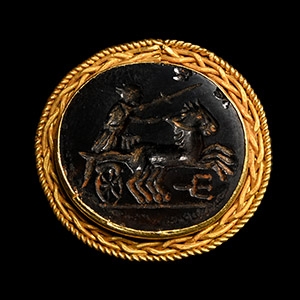
Roman Style Gold Ring with Chariot Gemstone
20th century A.D.Sold for (Inc. bp): £546
Onyx cloison with intaglio image of a biga in profile with trident beneath and driver brandishing a sword. 7.95 grams, 24.62 mm overall, 22.58 mm internal diameter (approximate size British R, USA 8 1/2, Europe 18 3/4, Japan 18)
Acquired on the UK art market before 2000. Property of an Essex, UK, gentleman. This lot is accompanied by an illustrated lot declaration signed by the Head of the Antiquities Department, Dr Raffaele D'Amato. -
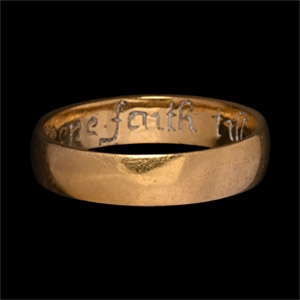
Tudor Gold 'Keepe Faith Till Deaith' Posy Ring
17th century A.D.Sold for (Inc. bp): £780
D-section hoop inscribed to the inner face 'Keepe Faith Till Deaith*'. 4.76 grams, 20.71 mm overall, 17.97 mm internal diameter (approximate size British P, USA 7 1/2, Europe 16.23, Japan 15)
Found whilst searching with a metal detector by Robin Sykes at Sutton on the Forest, Hambleton, North Yorkshire, UK, on 10 October 1999, recorded as Treasure by the finder and disclaimed by the Crown with Treasure case no.MME158. From the private collection of Robin Sykes, Yorkshire, UK, formed since the late 1990s. Accompanied by a copy of the British Museum's Portable Antiquities Scheme (PAS) report no.PAS-743C06. Accompanied by a copy of page 81 of the Treasure Annual Report 1998-1999 where this ring is published. Accompanied by copies of various correspondence relating to this find. Accompanied by an illustrated record card by Jim Halliday dated 11 October 1999. This lot is accompanied by an illustrated lot declaration signed by the Head of the Antiquities Department, Dr Raffaele D'Amato.
