
Loading, please wait...
LOT 1906
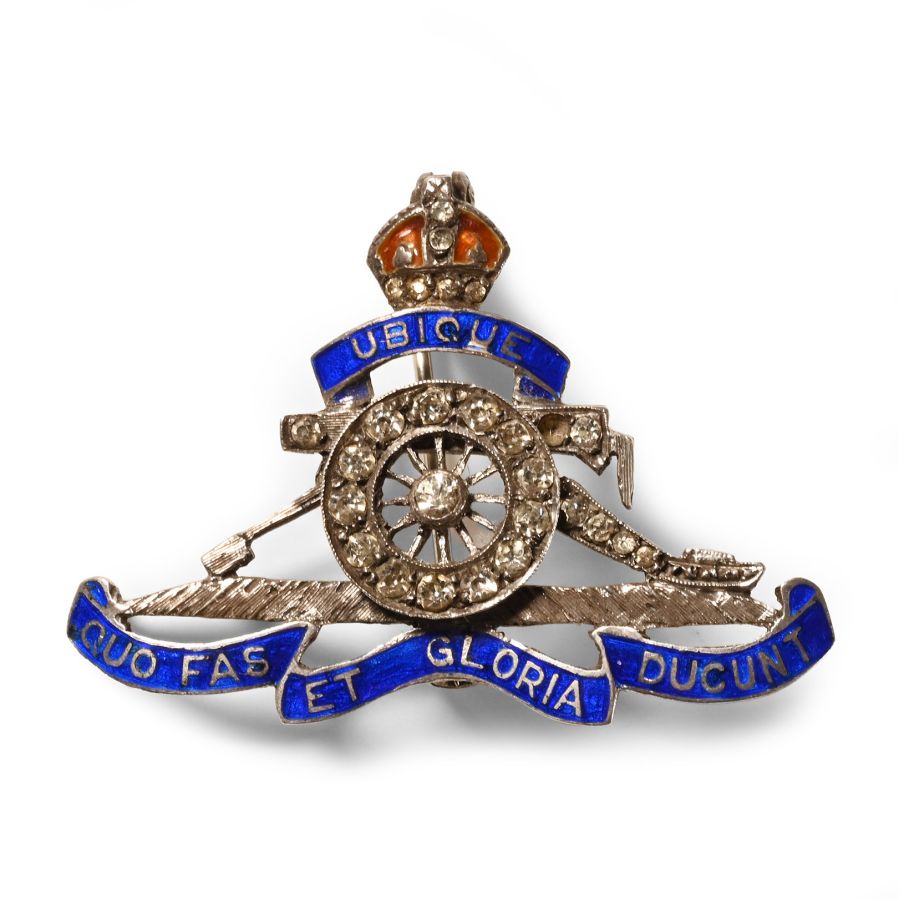
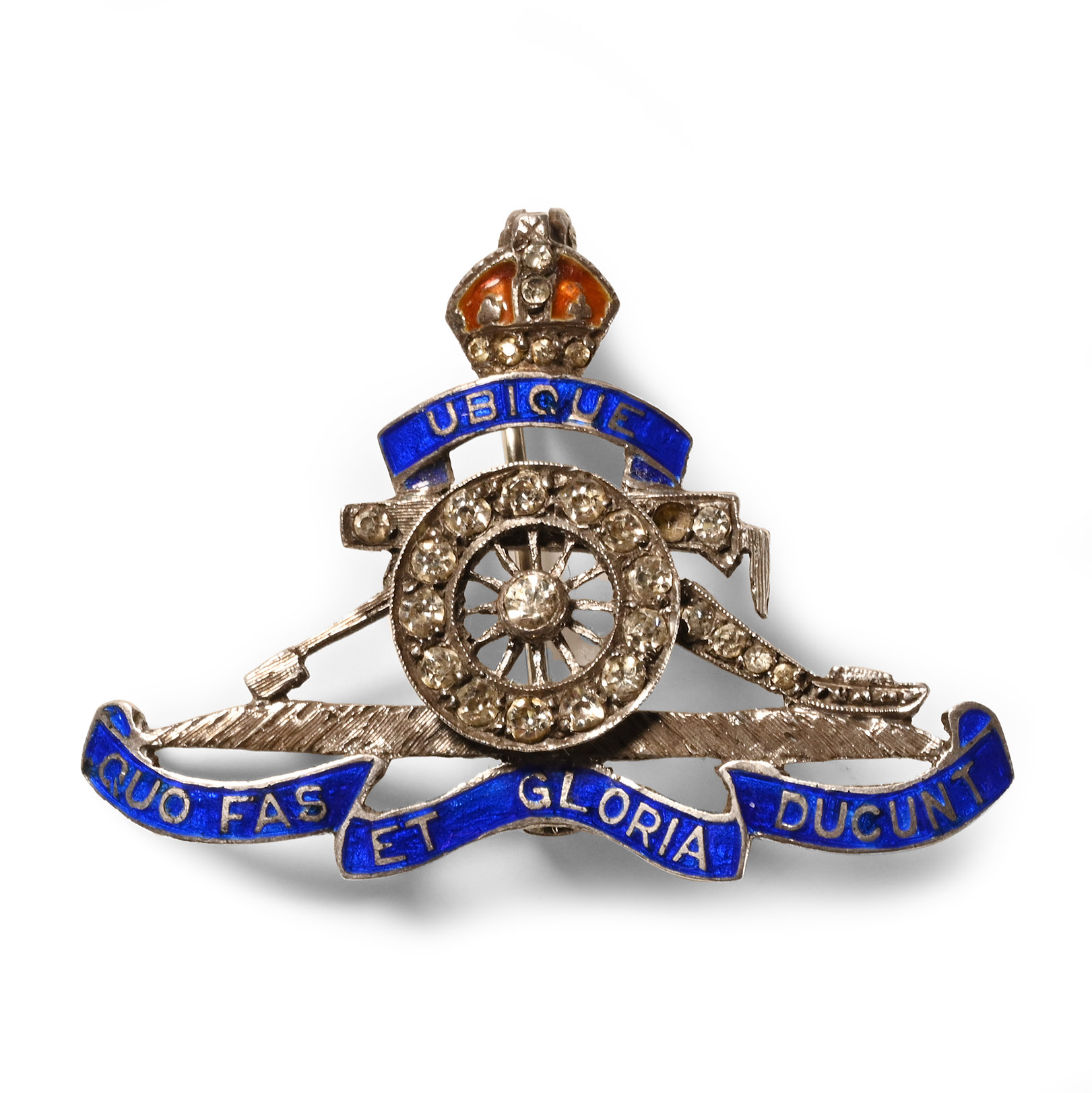
Royal Artillery Silver Military Sweetheart Brooch
1940S A.D.
1 1/2 in. (5.94 grams, 41 mm).
Cap-badge of the Royal Artillery in silver with enamel scroll and inset glass studs. [No Reserve]
ProvenanceAcquired on the UK art market.
From the private collection of Mr G.B., Hampshire, UK.
TimeLine Auctions follows a vetting process to ensure the authenticity and legality of all items, reinforcing our commitment to integrity and responsible trading. Each antiquity, antique, and coin lot undergoes thorough examination by a vetting committee of at least ten external specialists, professional trade association members, scientists, and archaeologists: Our Vetting Process
AUCTIONS:
TimeLine is a leading auction house specialising in antiquities, ancient art, collectables, natural history, coins, medals, and books. Our auctions offer museums, collectors, historians, and enthusiasts the opportunity to acquire unique and historically significant pieces.
-
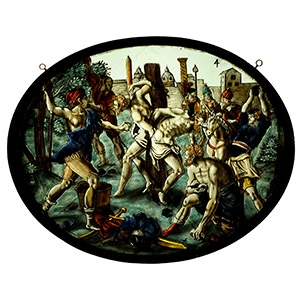
Renaissance Stained Glass Panel with The Stoning of the Elders
Southern Low Countries, circa 1580 A.D.Sold for (Inc. bp): £3,380
Ellipsoid plaque in a lead frame depicting two bearded men tied to posts with other figures around picking up stones to throw at them, discarded weapons on the ground; city wall in the background. 351 grams, 27.5 cm wide
De Baecque Vente, Paris, France, 5 March 2022, no.46. Ex central London gallery. -
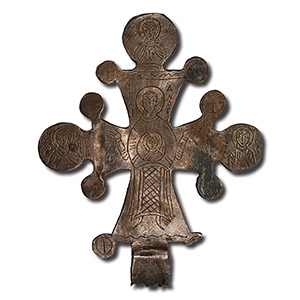
Post Byzantine Silver Cross with Saints
17th-18th century A.D.Estimate: £600 - 800 (+bp*)
Opening Bid: £300
Ornate head from a processional cross formed as a flat-section cross pommee with evangelist symbols in the large roundels, low-relief image of Mary Theotokos and infant Jesus. 119 grams, 15.1 cm
UK private collection before 2000. On the UK art market. Property of a London gentleman. -
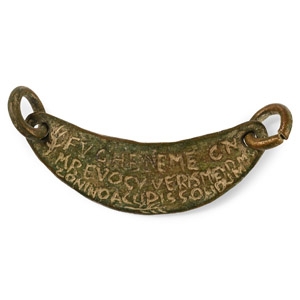
Post Medieval Roman Style Bronze Dedicatory Plaque
20th century A.D.Estimate: £40 - 60 (+bp*)
Opening Bid: £5
Crescent-shaped plaque pierced at each end to accept a mounting ring: enigmatic inscription in three lines following the curve of the edges, in capitals: 'fvcheme cn / mrevocv verismeidm / zonino accidis solidunt'. 12.4 grams, 54 mm
From a collection acquired on the UK art market from various auction houses and collections mostly before 2000. From an important Cambridgeshire estate; thence by descent.
