
Loading, please wait...
LOT 0874
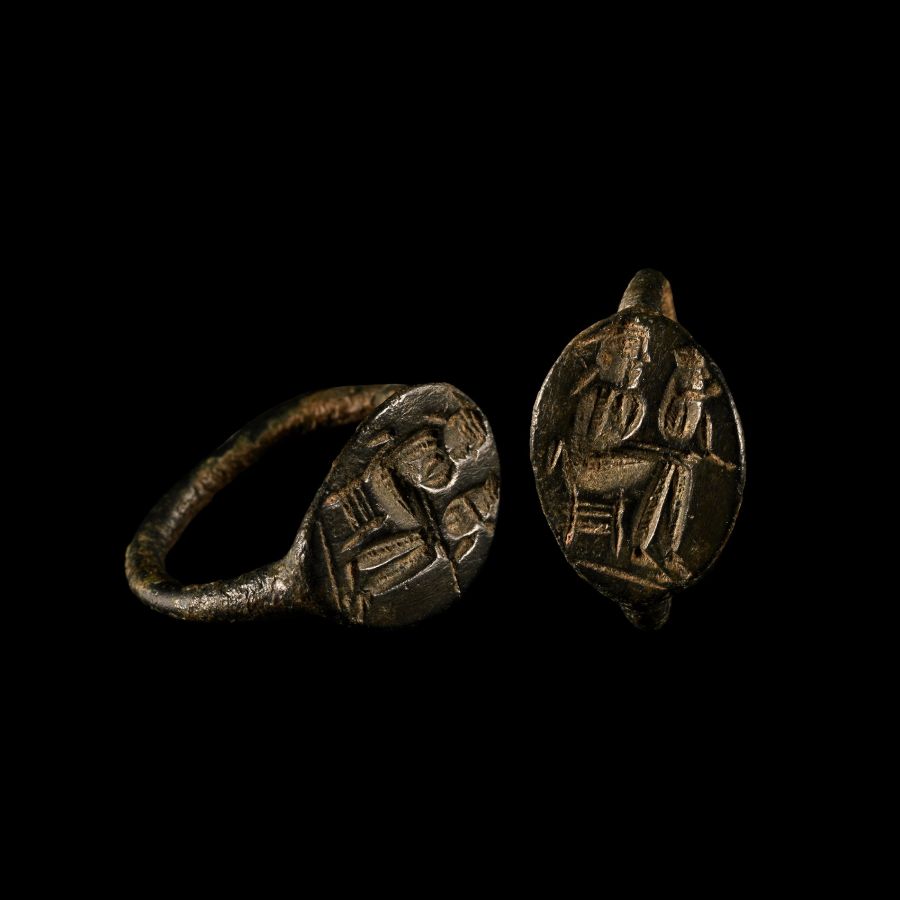
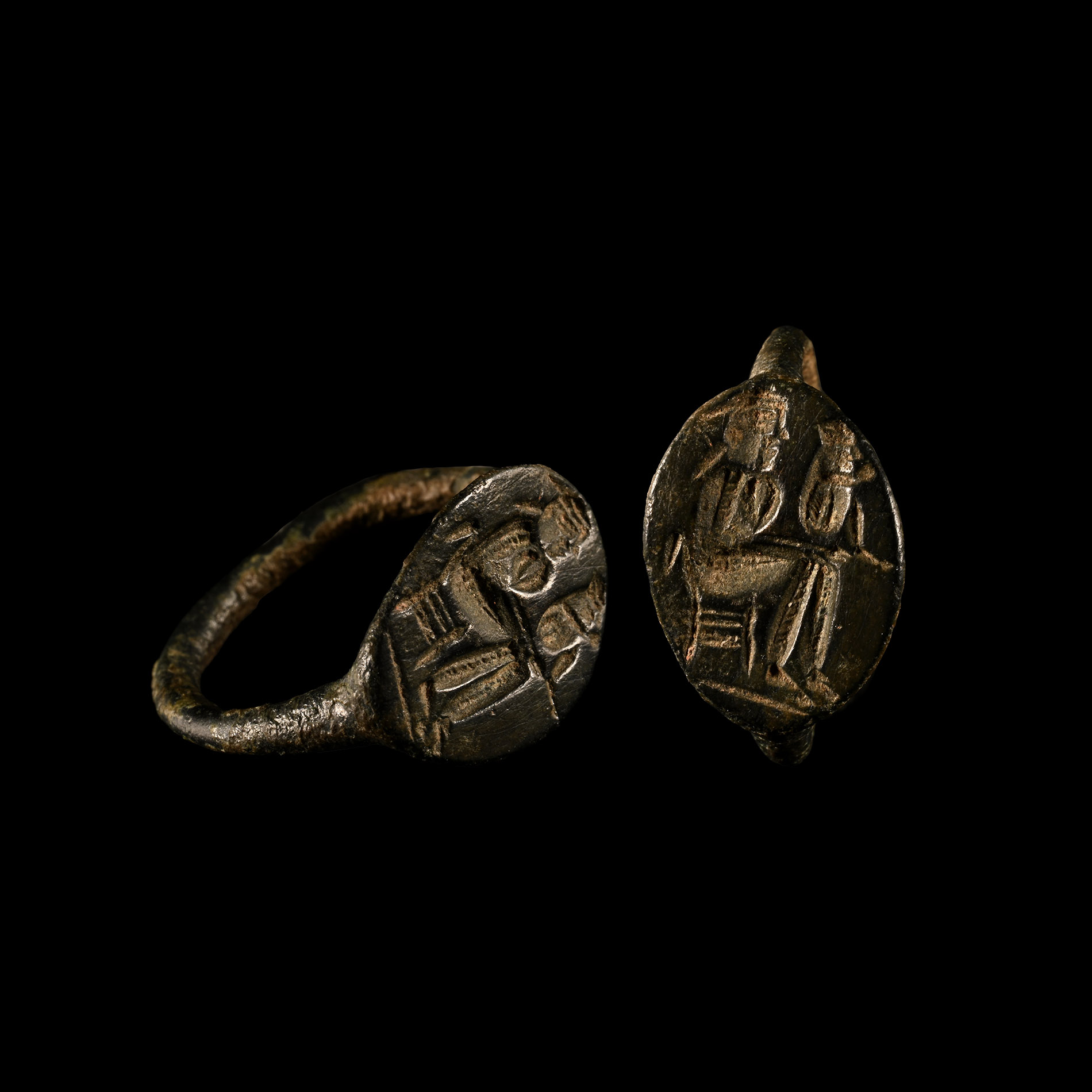
Romano-Parthian Ring with Trader and Seated Child
1ST CENTURY B.C.-1ST CENTURY A.D.
7/8 in. (4.26 grams, 22.90 mm overall, 19.01 x 18.83 mm internal diameter (approximate size British R, USA 8 1/2, Europe 18 3/4, Japan 18)).
With round-section hoop, ellipsoid bezel, intaglio representing a Parthian trader with a child seated. [No Reserve]
ProvenanceUK private collection before 2000.
UK art market.
Property of a London gentleman.
TimeLine Auctions follows a vetting process to ensure the authenticity and legality of all items, reinforcing our commitment to integrity and responsible trading. Each antiquity, antique, and coin lot undergoes thorough examination by a vetting committee of at least ten external specialists, professional trade association members, scientists, and archaeologists: Our Vetting Process
AUCTIONS:
TimeLine is a leading auction house specialising in antiquities, ancient art, collectables, natural history, coins, medals, and books. Our auctions offer museums, collectors, historians, and enthusiasts the opportunity to acquire unique and historically significant pieces.
-
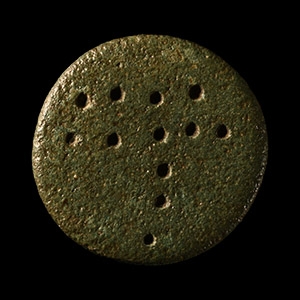
Romano-British 'Published' Bronze Gaming Counter
Circa 1st century A.D. or laterSold for (Inc. bp): £293
Discoid in form with twelve impressed dots, two parallel lines and one perpendicular. 4.5 grams, 18 mm
Found Cirencester, UK, prior to 1999. Acquired 4 February 1999. From the important private collection of dice and gaming pieces of Colin Narbeth, London, UK, collection no.59. Accompanied by a copy of the relevant Celtic & Roman Artefacts book pages where this object is published. -
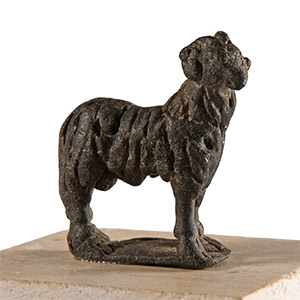
Roman Bronze Ram Statuette
1st-3rd century A.D.Sold for (Inc. bp): £143
Modelled in the round, standing on an irregular base, with shaggy coat and coiled horns; mounted on a custom-made stand. 99 grams, 50 mm including stand
From a collection acquired on the UK art market from various auction houses and collections mostly before 2000. From an important Cambridgeshire estate; thence by descent. -
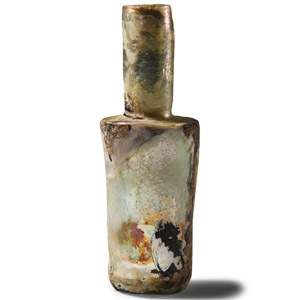
Roman Iridescent Glass Perfume Vessel
1st-4th century A.D.Sold for (Inc. bp): £59
Tall tubular flask with flat shoulder and rim, dimple to the base; iridescent surface. 28 grams, 97 mm
From an old Suffolk, UK, collection, 1990s. Property of an Essex gentleman.
