
Loading, please wait...
LOT 0847
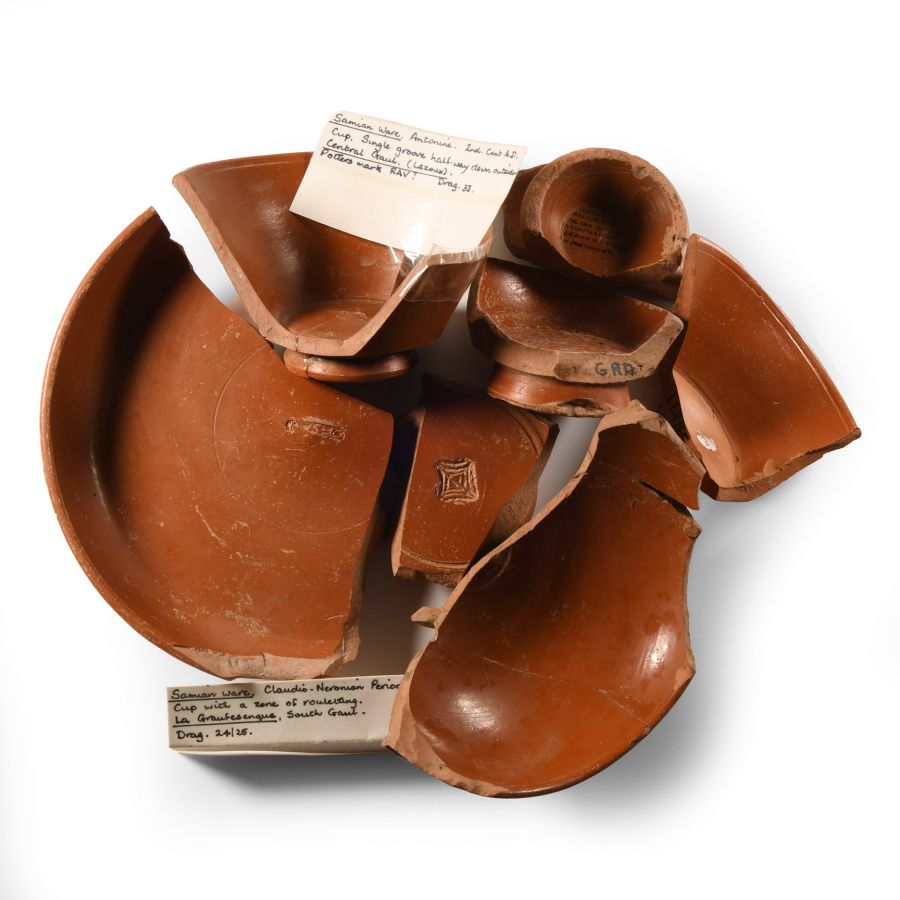
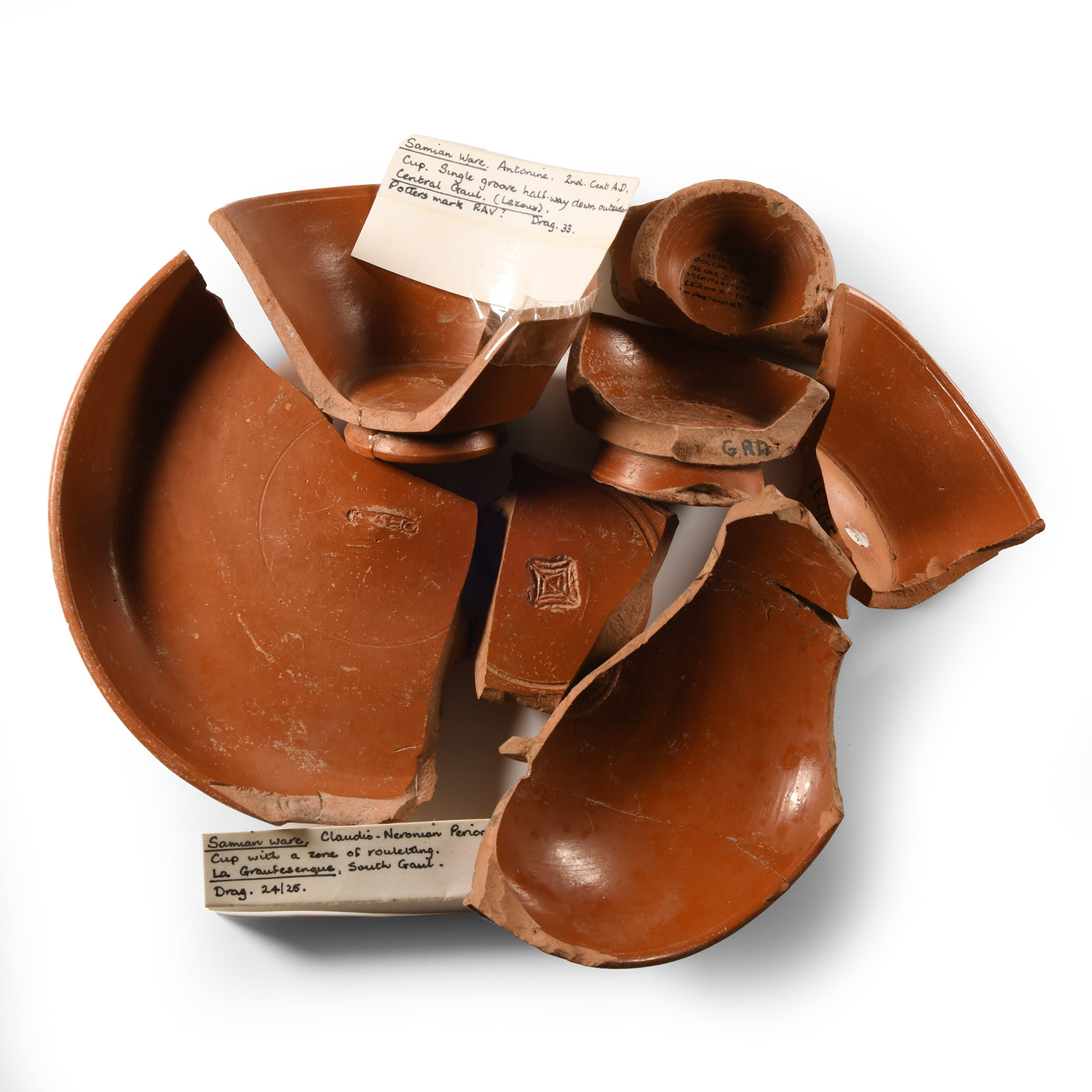
Romano-Gaulish Samian Ware Sherd Group with Makers' Stamps
1ST-2ND CENTURY A.D.
2 1/2 - 6 in. (464 grams total, 6.4-15.2 cm).
Including sherds of rim and base, with impressed marks such as 'GEN.ITOR' and others, two collector's cards. [7, No Reserve]
ProvenanceFrom the collection of a late East Anglian teacher and antiquarian who retired to the Isle of Wight in Hampshire, UK.
He amassed a large collection of objects between the 1960s-1980s.
Accompanied by two old handwritten collection display cards.
TimeLine Auctions follows a vetting process to ensure the authenticity and legality of all items, reinforcing our commitment to integrity and responsible trading. Each antiquity, antique, and coin lot undergoes thorough examination by a vetting committee of at least ten external specialists, professional trade association members, scientists, and archaeologists: Our Vetting Process
AUCTIONS:
TimeLine is a leading auction house specialising in antiquities, ancient art, collectables, natural history, coins, medals, and books. Our auctions offer museums, collectors, historians, and enthusiasts the opportunity to acquire unique and historically significant pieces.
LOT 0847
Romano-Gaulish Samian Ware Sherd Group with Makers' Stamps
Sold for (Inc. bp): £130
-
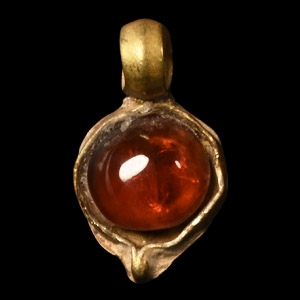
Roman Gold Pendant with Cabochon Garnet
1st-4th century A.D.Sold for (Inc. bp): £182
Discoid pendant with cell, inset cabochon garnet, integral loop above. 0.16 grams, 8 mm
Ex property of a late Japanese collector, 1970s. -
.jpg)
Orange Glass Intaglio
Roman, 3rd-4th century A.D. or laterSold for (Inc. bp): £124
The banded glass imitating banded agate; intaglio scene composed of a crowned figure standing right, holding a cornucopia and wreath, an eagle standing beside. 2.61 grams, 19 mm
From an early 20th century collection, Caernarfon, North Wales, UK.
The gem appears to represent Zeus with a cornucopia on his right arm and a crown in his left hand, with the eagle, his symbol, at his feet. The eagle has its head turned back, and stands looking up towards him. -
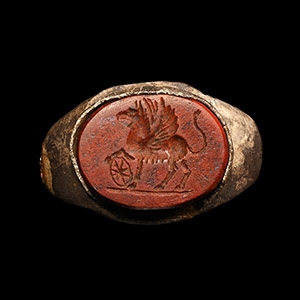
Roman Bronze Ring with Gryphon and Shield Gemstone
Mid 3rd century A.D.Sold for (Inc. bp): £442
With a possibly later inset red jasper plaque with incuse gryphon supporting a shield or spoked wheel. 9.94 grams, 23.87 mm overall, 16.67 mm internal diameter (approximate size British H, USA 3 3/4, Europe 6.18, Japan 6)
Ex German art market, 2000s. Acquired from an EU collector living in London. From the collection of Surrey, UK, gentleman.
