
Loading, please wait...
LOT 0521
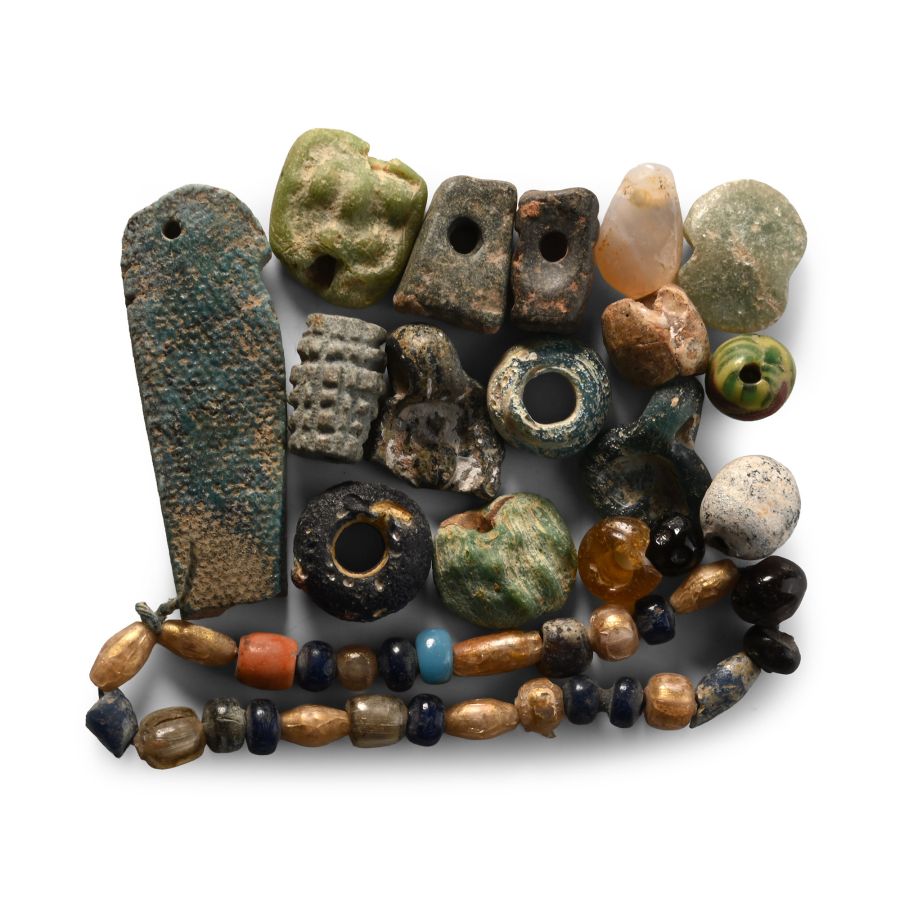
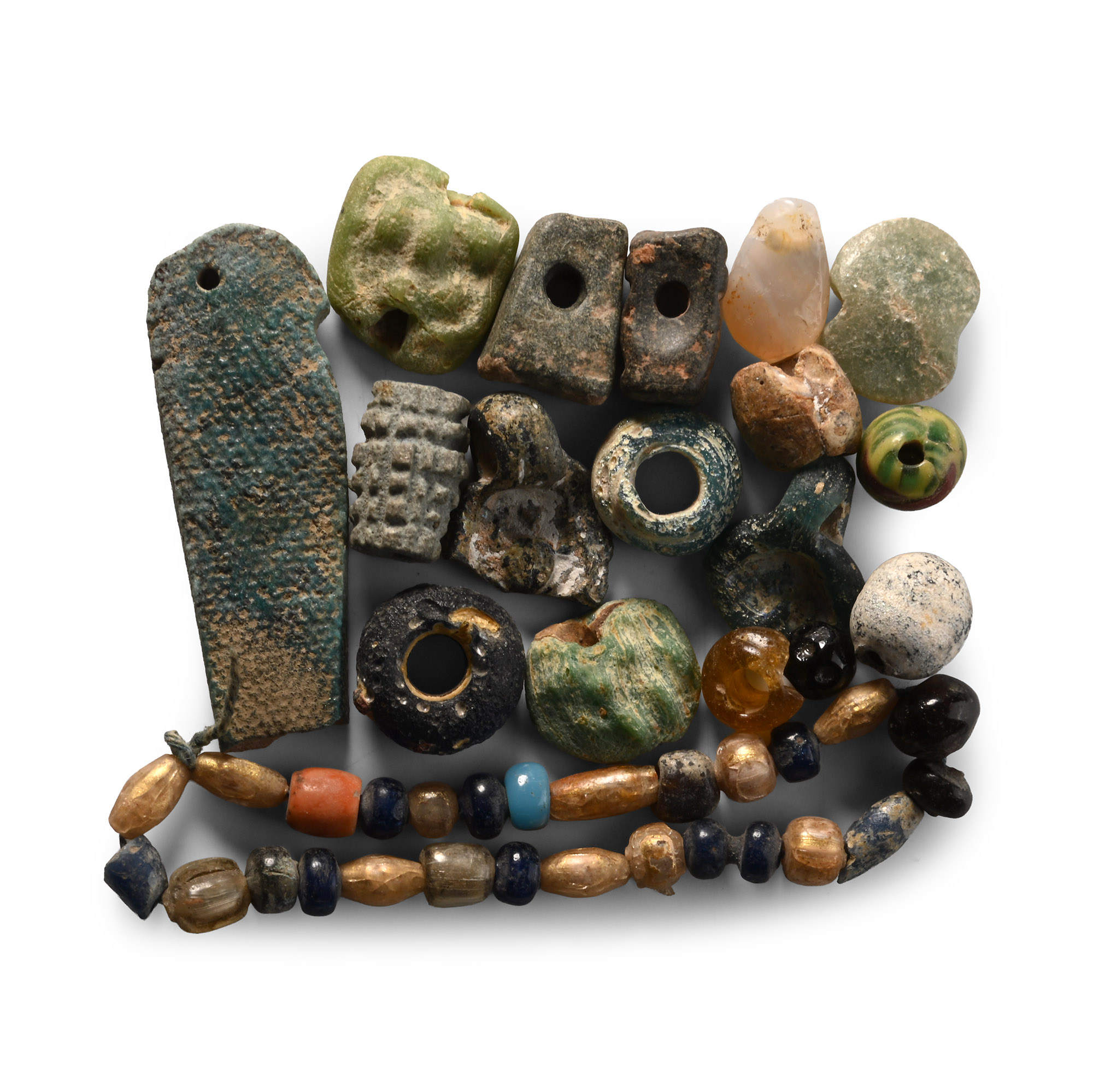
Romano-Egytian Bead and Amulet Collection
LATE 1ST MILLENNIUM B.C.-EARLY 1ST MILLENNIUM A.D. AND LATER
1/4 - 4 3/4 in. (28 grams total, 0.6-12 cm).
Including annular, tubular, tabular and other beads, and other items. [18, No Reserve]
ProvenanceFrom an old deceased estate.
Property of an East London lady collector, acquired at auction before 1995.
TimeLine Auctions follows a vetting process to ensure the authenticity and legality of all items, reinforcing our commitment to integrity and responsible trading. Each antiquity, antique, and coin lot undergoes thorough examination by a vetting committee of at least ten external specialists, professional trade association members, scientists, and archaeologists: Our Vetting Process
AUCTIONS:
TimeLine is a leading auction house specialising in antiquities, ancient art, collectables, natural history, coins, medals, and books. Our auctions offer museums, collectors, historians, and enthusiasts the opportunity to acquire unique and historically significant pieces.
-
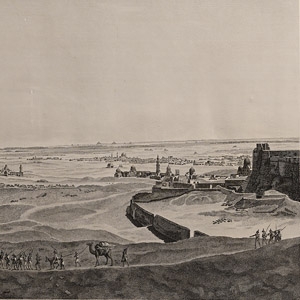
Very Large Egyptian Expedition Lithograph of Kaire
Early 19th century A.D.Estimate: £100 - 140 (+bp*)
Opening Bid: £50
Proof etching on laid paper of plate 61 from Vol .I of Description de l'Égypte : ou, Recueil des observations et des recherches qui ont été faites en Égypte pendant l'expédition de l'armée française. entitled Le Kaire. Vue générale de la ville des tombeaux. 259 grams, 104 x 67 cm
From the collection of a North American priest. Acquired between 1981-1996. Property of a North American collector.
Produced between February 1802 and 1830 on the orders of Napoleon Bonaparte; published between 1809 and 1828. Just 1,000 copies were distributed to various institutions, printed on laid paper with an 'Égypte ancienne et moderne' watermark. The book is subtitled Recueil des observations et des recherches qui ont été faites en Égypte pendant l’expédition de l’Armée française, publié par les ordres de Sa Majesté l’Empereur Napoléon le Grand (Gathering of observations and discoveries which were made in Egypt during the expedition of the French army, published on the orders of His Majesty the Emperor Napoleon the Great). It was the world's first encyclopedia devoted exclusively to the remains of ancient Egypt. The plates of this book are the first to present the archaeological sites of Thebes (Luxor). The papyrus manuscript was recovered from the underground chambers (hypogea). The original papyrus is now held in the Bibliothèque Nationale (1-19), Paris (Papyrus Cadet). -
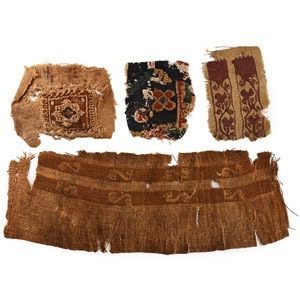
Egyptian Coptic Textile Fragment Group
Circa 4th-5th century A.D.Sold for (Inc. bp): £260
Comprising: a fragment of a double segmenta from the sleeve of a tunic in purple wool on linen, embroidered with vegetal motifs; the fragment of a double segmenta from the hem of a cloak in brown wool on linen, embroidered with S pattern; a tablion with central geometric motif and border embroidered with meanders; a fragment of tapestry in yellow, green and red wool, S torsion, embroidered with floral patterns. 59 grams total including package, 7-24.5 cm
Acquired 1970s-1996. Property of a North American collector. London collection, 2016.
The fragments are decorative parts of tunics and cloaks. These are fabrics of great decorative finesse, with some elements displaying an unusual and extremely well-preserved color palette. The plant designs recall Iranian motifs. -
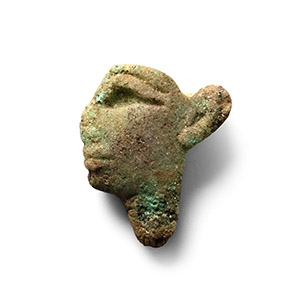
Egyptian Green Glass Pharaonic Face Inlay
Late Period, 664-332 B.C.Sold for (Inc. bp): £234
Formed as the profile of a youthful face with shallow socket to accept an eye-insert. 1.21 grams, 17 mm
Ex French collection, early 20th century. From the collection of a late Japanese gentleman, 1970s onwards.
