
Loading, please wait...
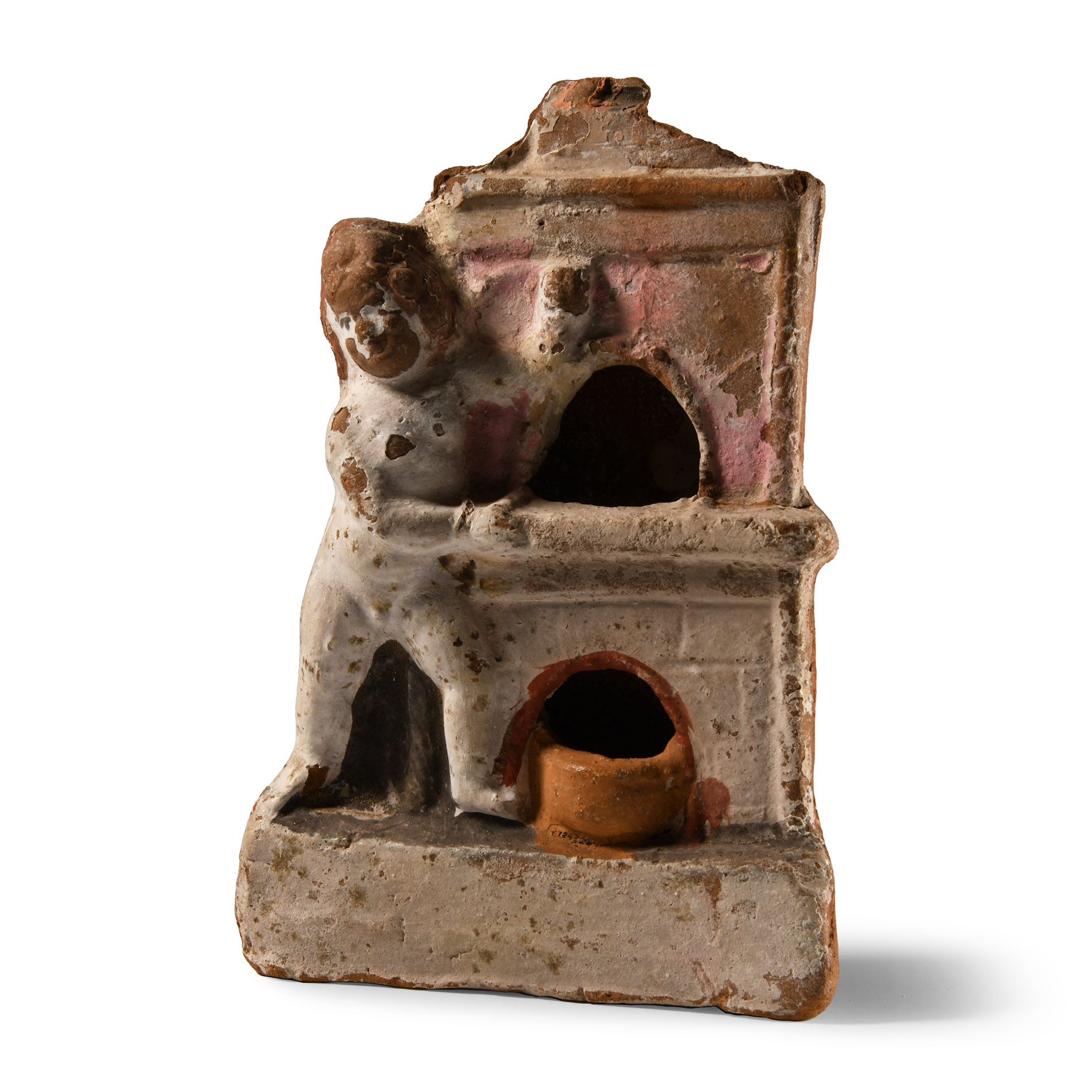
LOT 0023
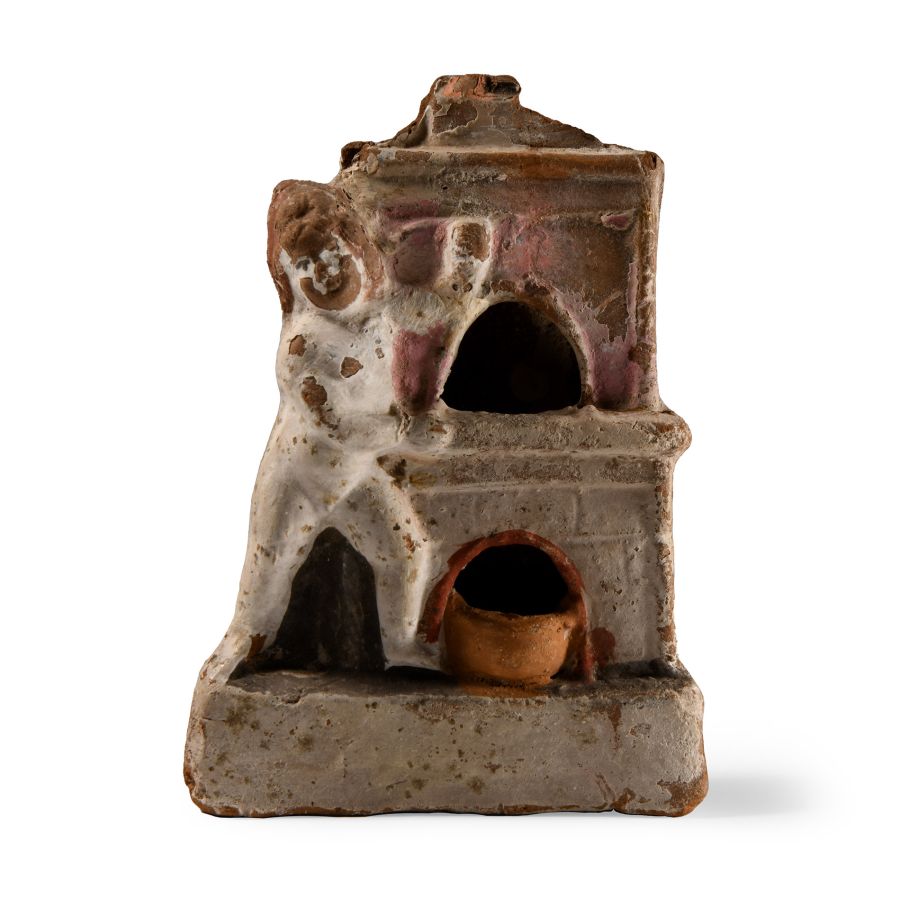
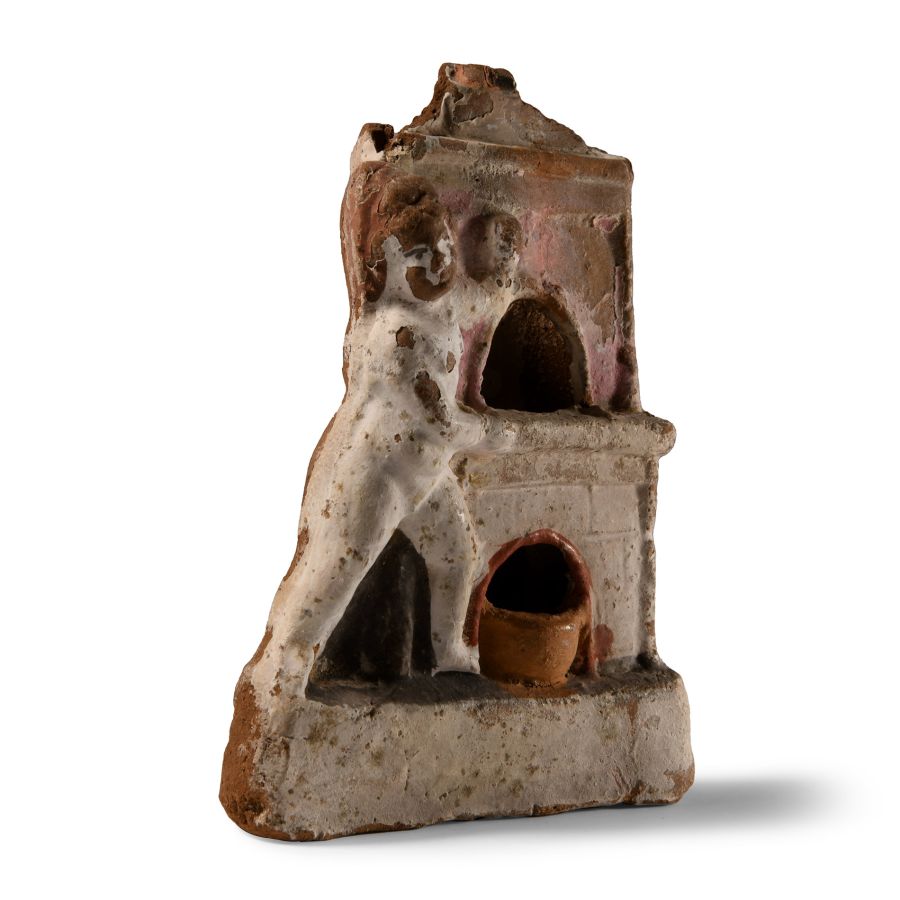
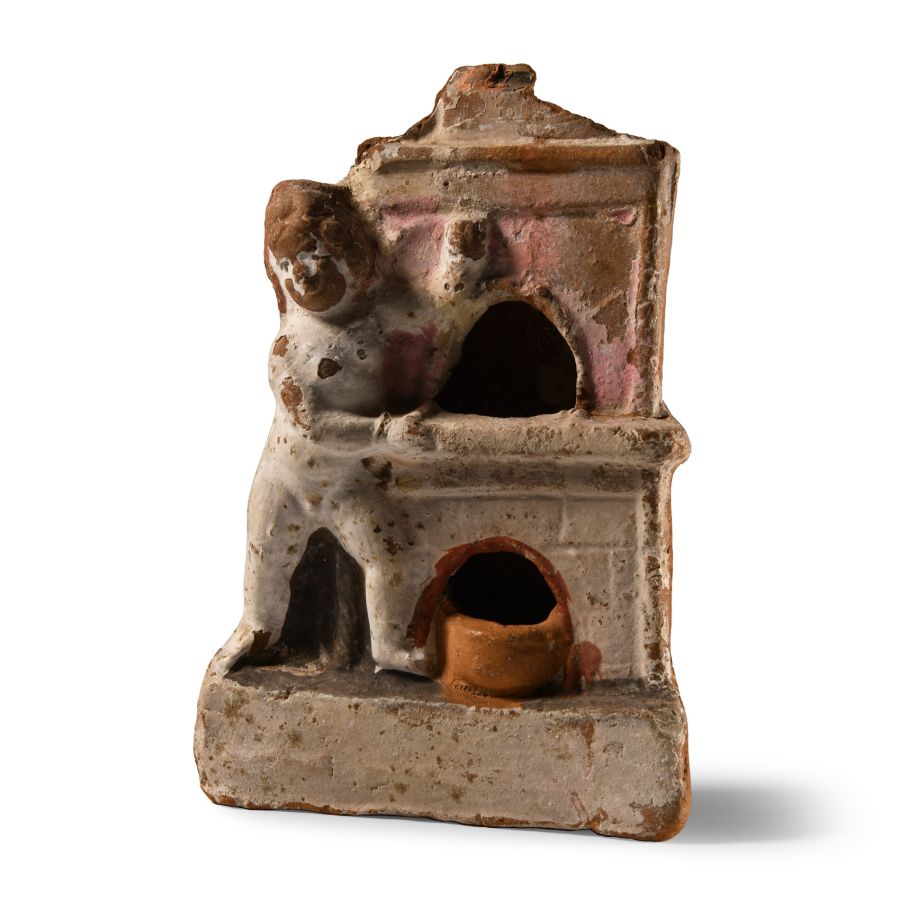
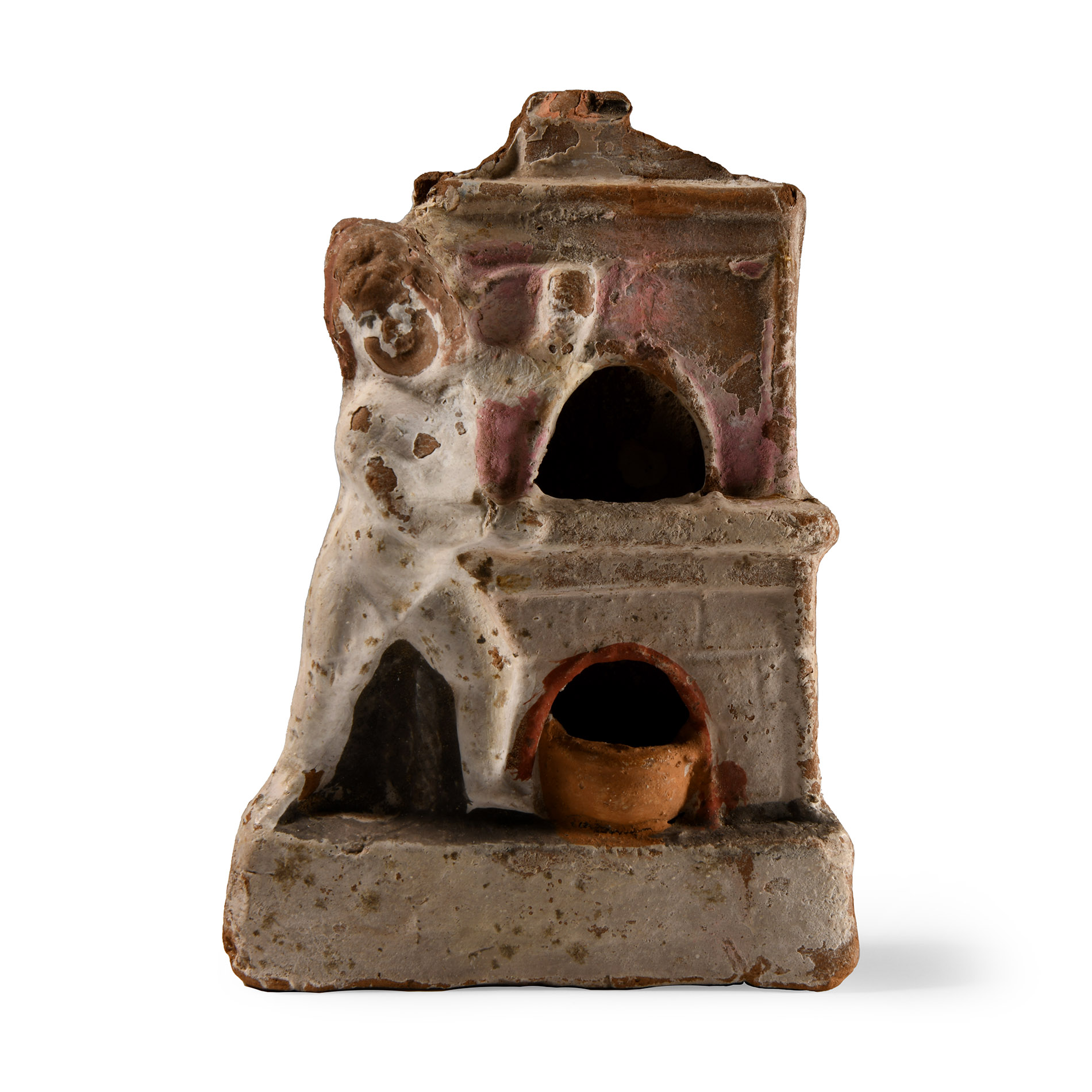
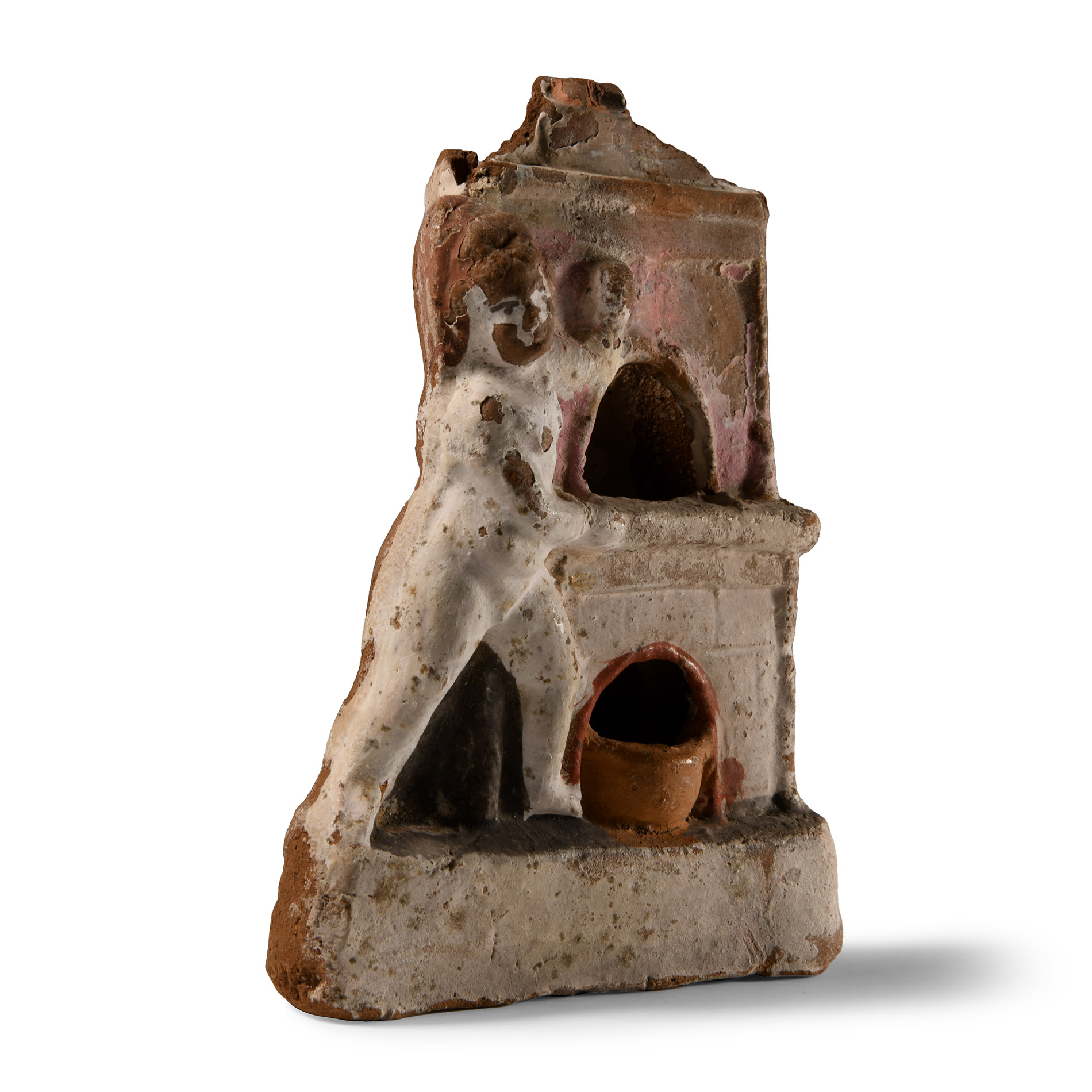
Romano-Egyptian Terracotta Figure of Eros
1ST-2ND CENTURY A.D.
6 in. (232 grams, 15 cm).
Depicted nude in a dynamic pose with his legs apart and the weight of the body upon his right leg, standing in front of a two storey structure, probably an oven; his left arm raised and right arm extended in front of his torso and resting on the edge of the structure; the oven painted pink at the top and white at the bottom with an offering receptacle at floor level.
ProvenanceEx Dr Daniel Marie Fouquet (1859-1914), Cairo.
with Pierre Berge & Associes, Auction, Archaeology 29 November 2014, no.193.
Accompanied by a French cultural export permit, no.161028.
Accompanied by an academic report by Dr Raffaele D'Amato.
Accompanied by a copy of the relevant pages in: Perdrizet, P., Les Terres Cuites Grecques d'Egypt de la Collection Fouquet, Nancy, 1921, where it is published.
This lot has been checked against the Interpol Database of stolen works of art and is accompanied by search certificate no.12000-211884.
Perdrizet, P., Les Terres Cuites Grecques d'Egypt de la Collection Fouquet, Nancy, 1921, Bd 1, 96, Nr. 245, Bd. 2, Tafel LII.
LiteratureSee Higgings, R.A., Greek Terracottas, London, 1967, for the study of the various Erote subjects; Chesterman, J., Classical Terracotta Figures, New York, 1975, pp.76-78, for a general approach to style and production of Roman terracotta; for the characteristics and interpretation of the figure of Eros in Roman Age see Mattei, M., La favola di Amore e Psiche, Roma, 2012.
FootnotesThe image of the ‘Eros Baker’ is part of a wide production of Roman terracotta imitating Greek models, although in somewhat crude way. In the Roman age, designs tended to be commonplace and were often indifferent copies of Greek originals. However, the production of terracotta in Hellenistic Egypt continued without interruption and the most subjects of these votive statuettes (in this case probably a baker invoking the blessing of the god upon his activity) were religious, Eros being one of the favourites.
CONDITIONTimeLine Auctions follows a vetting process to ensure the authenticity and legality of all items, reinforcing our commitment to integrity and responsible trading. Each antiquity, antique, and coin lot undergoes thorough examination by a vetting committee of at least ten external specialists, professional trade association members, scientists, and archaeologists: Our Vetting Process
AUCTIONS:
TimeLine is a leading auction house specialising in antiquities, ancient art, collectables, natural history, coins, medals, and books. Our auctions offer museums, collectors, historians, and enthusiasts the opportunity to acquire unique and historically significant pieces.
-
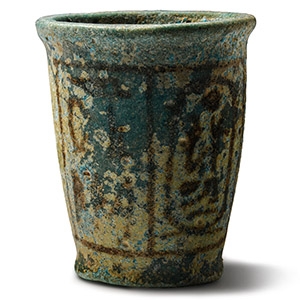
Egyptian Faience Ramesses II Offering Cup
New Kingdom, 19th Dynasty, 1279-1213 B.C.Sold for (Inc. bp): £1,690
Glazed blue and painted with two conjoined rectangular panels, one containing the king's cartouche, the other with the epithet 'beloved of Osiris'. 31 grams, 45 mm
Acquired in Europe before 1994.
Also known as Ramses the Great, famed for his building projects and military achievements, this king was the second longest reigning in Egyptian history, ascending the throne at age 13 and remaining there for around 67 years. -
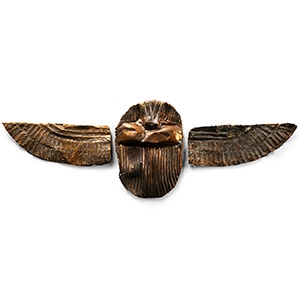
Egyptian Gold Heart Scarab with Wings
Late Period-Ptolemaic Period, 664-30 B.C.Estimate: £2,000 - 3,000 (+bp*)
Opening Bid: £5
With repousse striations to the wing case, details of the feathers to the wings; pierced for attachment to mummy wrappings; mounted in a glass-fronted case. 4.09 grams, 18.2 cm wide total (504 grams including case)
Fine condition. Rare.
From a German gallery in the 1970s. From an important European collection. This lot has been checked against the Interpol Database of stolen works of art and is accompanied by search certificate no.12125-211120. -
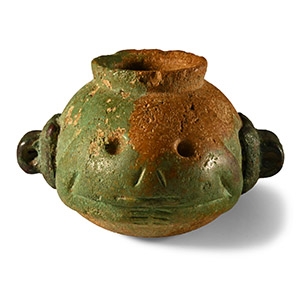
Egyptian Indurated Limestone Frog-Shaped Cosmetic Vessel
Predynastic Period, Late Naqada I-Naqada II, circa 3700-3300 B.C.Sold for (Inc. bp): £9,750
Squat ovoid in profile, modelled with the legs folded beneath the body, with hollow socket eyes, flared rim to mouth; copper lug on either side. 165 grams, 63 mm
Ex collection of Madame Kismet Pilati, acquired in Vienna and London in 1976. with Bonhams, London, 24th October 2012, no.284 (£30,000-£50,000). Property of a London lady, part of her family's Swiss collection. Accompanied by an academic report by Egyptologist Paul Whelan. Accompanied by copies of the relevant Bonhams catalogue pages. This lot has been checked against the Interpol Database of stolen works of art and is accompanied by search certificate no.12101-213115.
