
Loading, please wait...
LOT 0579
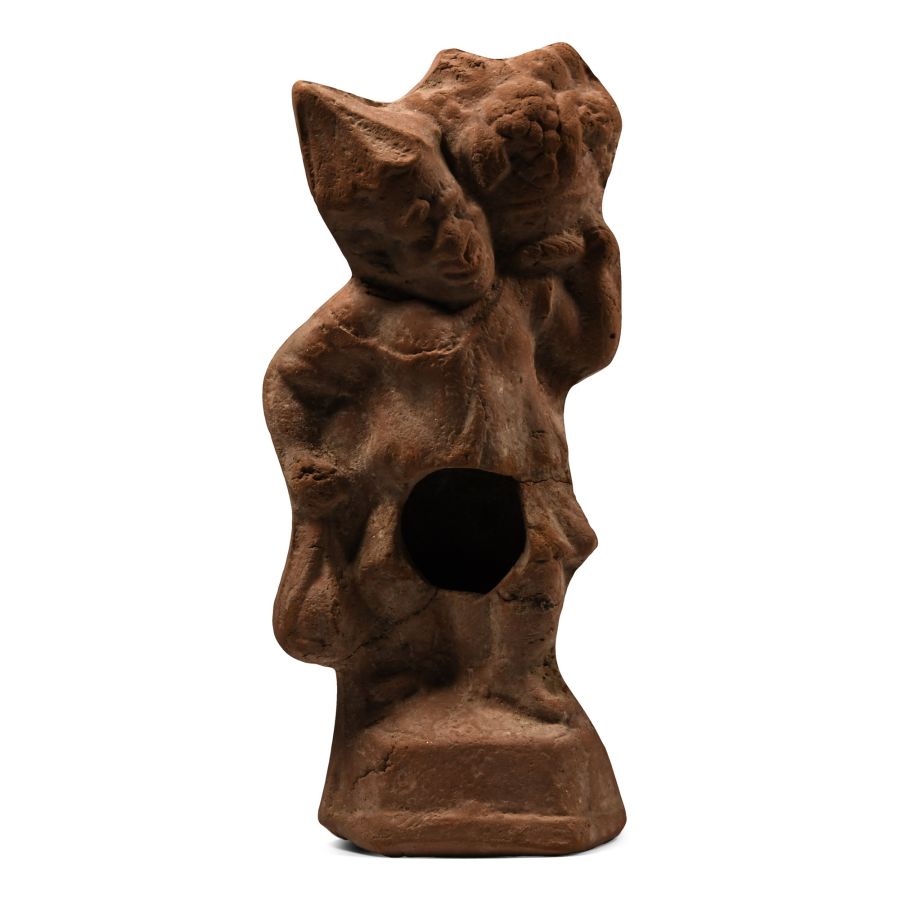
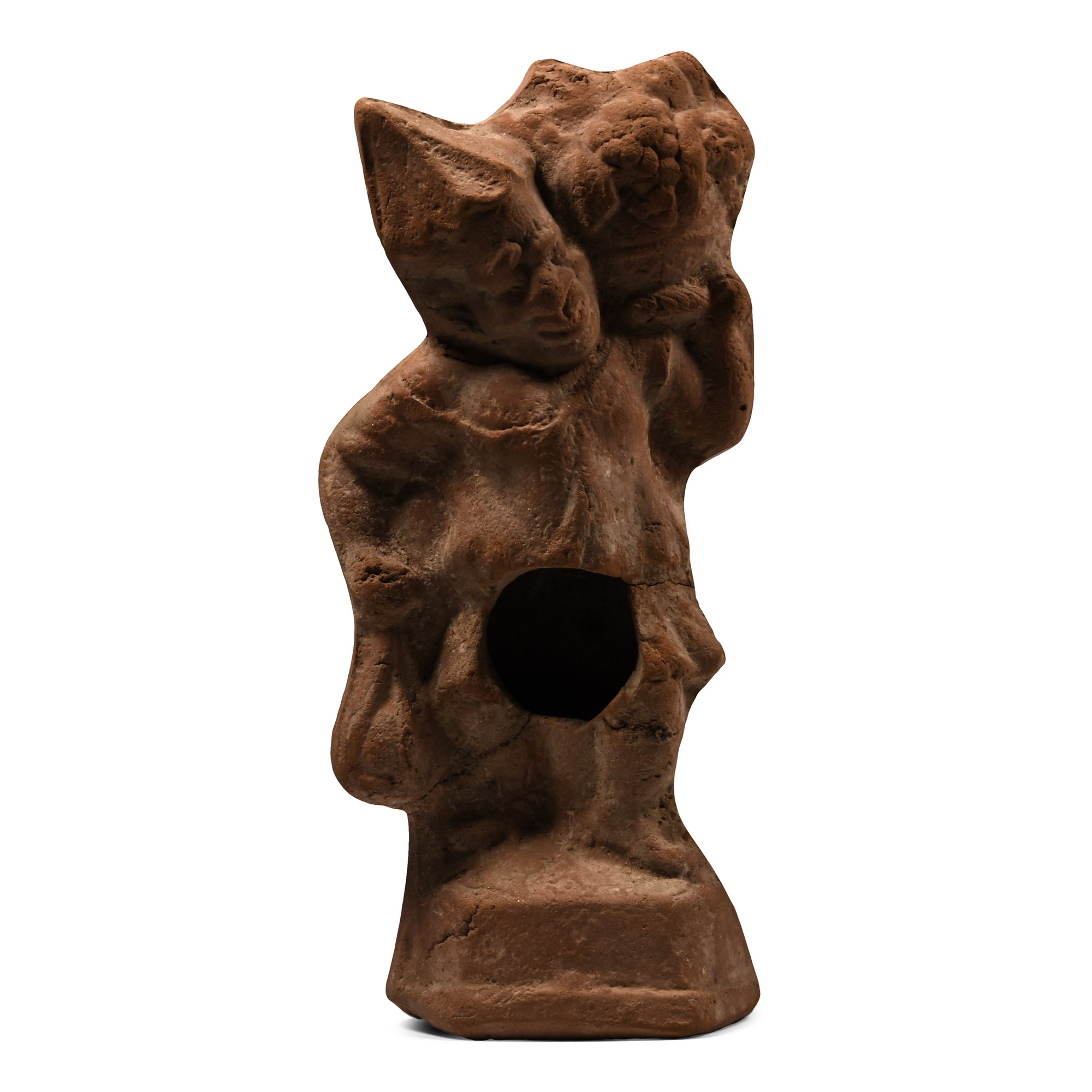
Romano-Egyptian Terracotta Figure of a Slave with Fruit Basket
1ST CENTURY A.D.
6 7/8 in. (286 grams, 17.5 cm).
Hollow-formed figure of a servant with grotesque facial features, pointed cap and a short tunic, carrying a pouch in the right hand and shoulders an overflowing fruit basket on the left; a large recess between his legs may be for the insertion of an oversized model phallus; pierced lug to rear of neck for suspension.
ProvenanceAcquired from Galerie Puhze, Freiburg, between 2002 and 2010.
From the collection of R. L., Lower Saxony.
Ex Gorny & Mosch, auction 300, Munich, no.75.
Accompanied by a certificate from Galerie Günter Puhze and a German export licence.
This lot is accompanied by an illustrated lot declaration signed by the Head of the Antiquities Department, Dr Raffaele D'Amato.
See Gods, Tombs & Grotesques - Clay Figures from Everyday Life in Roman Egypt, Exhibition Hamburg, 1991, no.104.
CONDITIONTimeLine Auctions follows a vetting process to ensure the authenticity and legality of all items, reinforcing our commitment to integrity and responsible trading. Each antiquity, antique, and coin lot undergoes thorough examination by a vetting committee of at least ten external specialists, professional trade association members, scientists, and archaeologists: Our Vetting Process
AUCTIONS:
TimeLine is a leading auction house specialising in antiquities, ancient art, collectables, natural history, coins, medals, and books. Our auctions offer museums, collectors, historians, and enthusiasts the opportunity to acquire unique and historically significant pieces.
LOT 0579
Romano-Egyptian Terracotta Figure of a Slave with Fruit Basket
Estimate £300 - 400€350 - 460 (for guidance only)$410 - 540 (for guidance only)
-
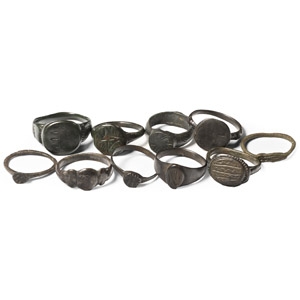
Roman to Medieval Bronze Ring Collection
1st-16th century A.D.Sold for (Inc. bp): £117
Comprising ten rings with bezels, including one with a dagger-shaped bezel. 41.93 grams total, 21-26 mm
Ex German art market, 2000s. Acquired from an EU collector living in London. From the collection of a Surrey, UK, gentleman. This lot is accompanied by an illustrated lot declaration signed by the Head of the Antiquities Department, Dr Raffaele D'Amato. -
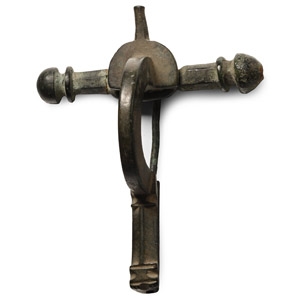
Roman Bronze Crossbow Brooch
3rd-4th century A.D.Sold for (Inc. bp): £85
With deep slender bow and domed knop to each end of the crossbar, D-shaped plate with spike to accept a third knop (absent), foot with chamfered sides and catch to reverse; pin and spring. 37 grams, 66.5 mm
From the private collection of John Fox, Nottingham, Nottinghamshire, UK, antiquarian and archaeologist; his collection assembled in the 1950s-1970s. This lot is accompanied by an illustrated lot declaration signed by the Head of the Antiquities Department, Dr Raffaele D'Amato. -
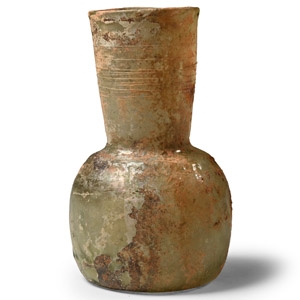
Roman Glass Flask with Everted Spout
1st-4th century A.D.Estimate: £100 - 140 (+bp*)
Opening Bid: £50
Piriform in profile in aqua glass with broad flared neck; applied trails to the neck, dimple base; areas of iridescence. 38 grams, 98 mm
From a London, UK, collection, 1990s. This lot is accompanied by an illustrated lot declaration signed by the Head of the Antiquities Department, Dr Raffaele D’Amato. This lot is accompanied by an illustrated lot declaration signed by the Head of the Antiquities Department, Dr Raffaele D'Amato.
