
Loading, please wait...
LOT 1949
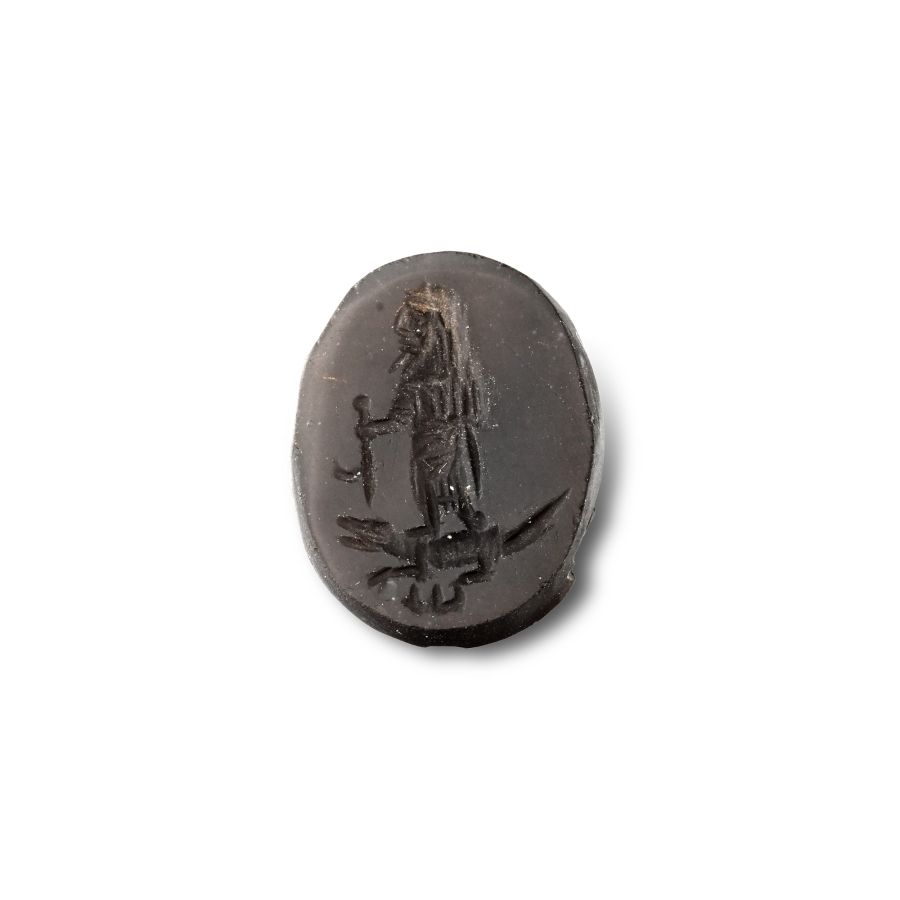
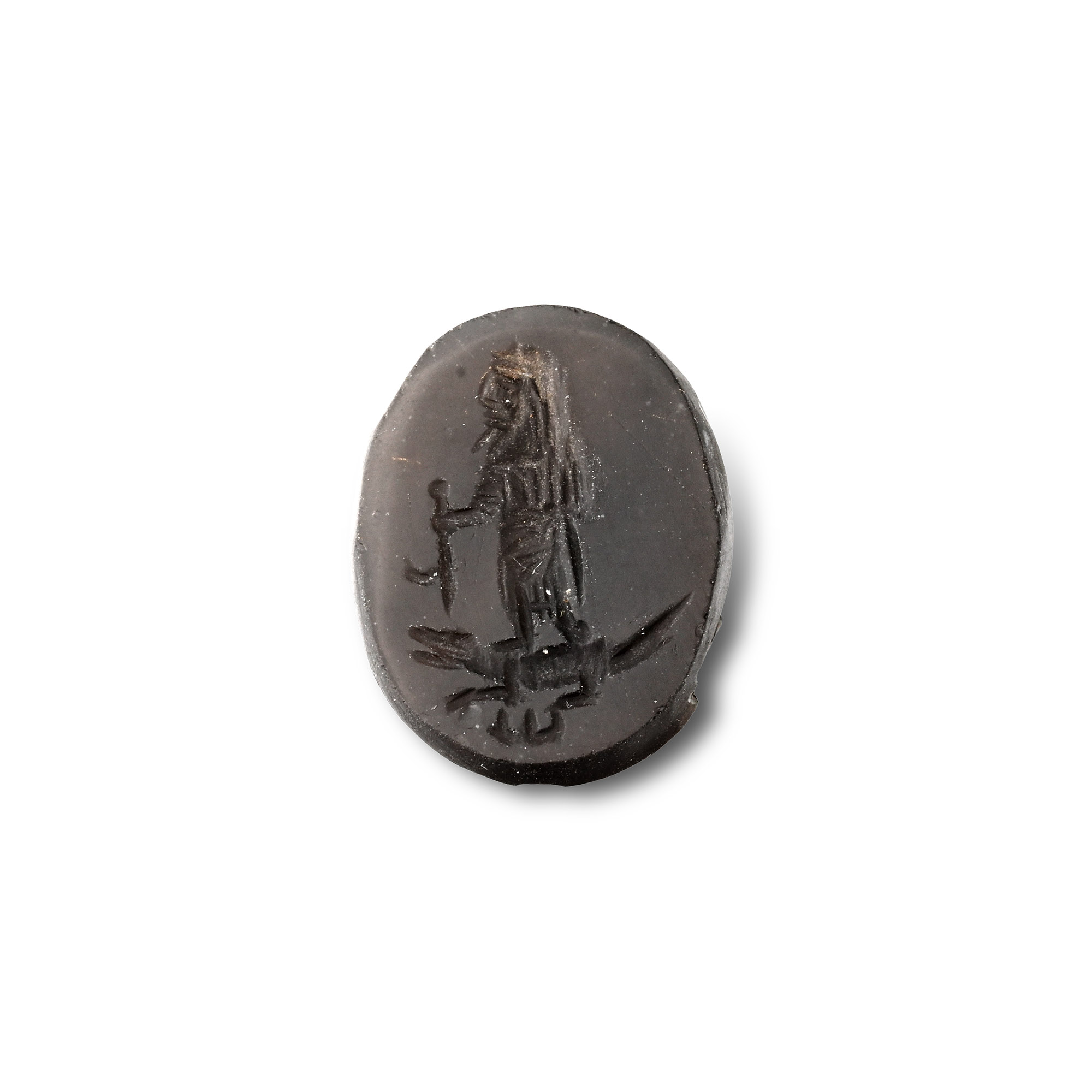
Romano-Egyptian Style Blackstone Intaglio Depicting a God with Crocodile
20TH CENTURY A.D. OR EARLIER
3/4 in. (1.78 grams, 20 mm).
Plaque with incuse image, bearded figure in calf-length robe wielding a harpe, standing on the back of a crocodile.
ProvenanceFrom the private collection of Mr K.A., acquired in the 1990s-early 2000s.
CONDITIONTimeLine Auctions follows a vetting process to ensure the authenticity and legality of all items, reinforcing our commitment to integrity and responsible trading. Each antiquity, antique, and coin lot undergoes thorough examination by a vetting committee of at least ten external specialists, professional trade association members, scientists, and archaeologists: Our Vetting Process
AUCTIONS:
TimeLine is a leading auction house specialising in antiquities, ancient art, collectables, natural history, coins, medals, and books. Our auctions offer museums, collectors, historians, and enthusiasts the opportunity to acquire unique and historically significant pieces.
LOT 1949
Romano-Egyptian Style Blackstone Intaglio Depicting a God with Crocodile
Sold for (Inc. bp): £117
-
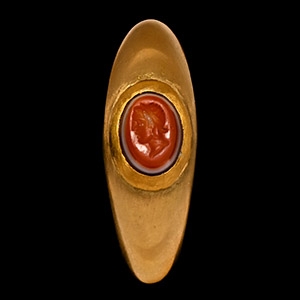
Heavy Roman Style Gold Ring with Gemstone
20th century A.D.Sold for (Inc. bp): £2,600
Comprising a lentoid-section tapering hoop, raised border to the cell, inset cameo with incuse profile bust. 13.4 grams, 26.37 mm overall, 18.31 mm internal diameter (approximate size British Q, USA 8, Europe 17.49, Japan 16)
Private collection of Mr W.N., Switzerland. Acquired from the above, 2009. with Galerie Rhéa, Zurich, Switzerland. -
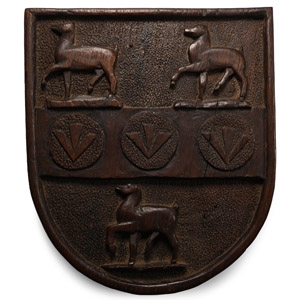
Post Medieval 'Parker Family' Oak Heraldic Shield
Circa 19th century A.D.Sold for (Inc. bp): £8
With raised border, comprising three advancing hinds, fess with three broad arrow heads, pointing downwards, possibly for the Parker family. 287 grams, 21 cm
Acquired on the UK art market. Property of a Nottinghamshire, UK, gentleman. This lot is accompanied by an illustrated lot declaration signed by the Head of the Antiquities Department, Dr Raffaele D'Amato. -
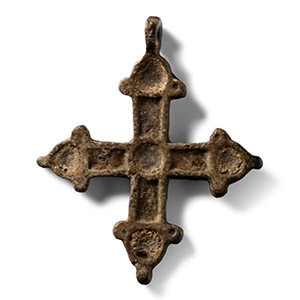
Orthodox Enamelled Bronze Cross Pendant
Circa 1750 A.D.Sold for (Inc. bp): £20
Cruciform pendant with cells to both faces for cloisonné enamel detailing. 4.88 grams, 41 mm
Acquired from Chris Martin-Zakheim, Iconastas, 5 Piccadilly Arcade, London SW1. From the private collection of a West London, UK, gentleman, formed since the early 2000s.
