
Loading, please wait...
LOT 0488
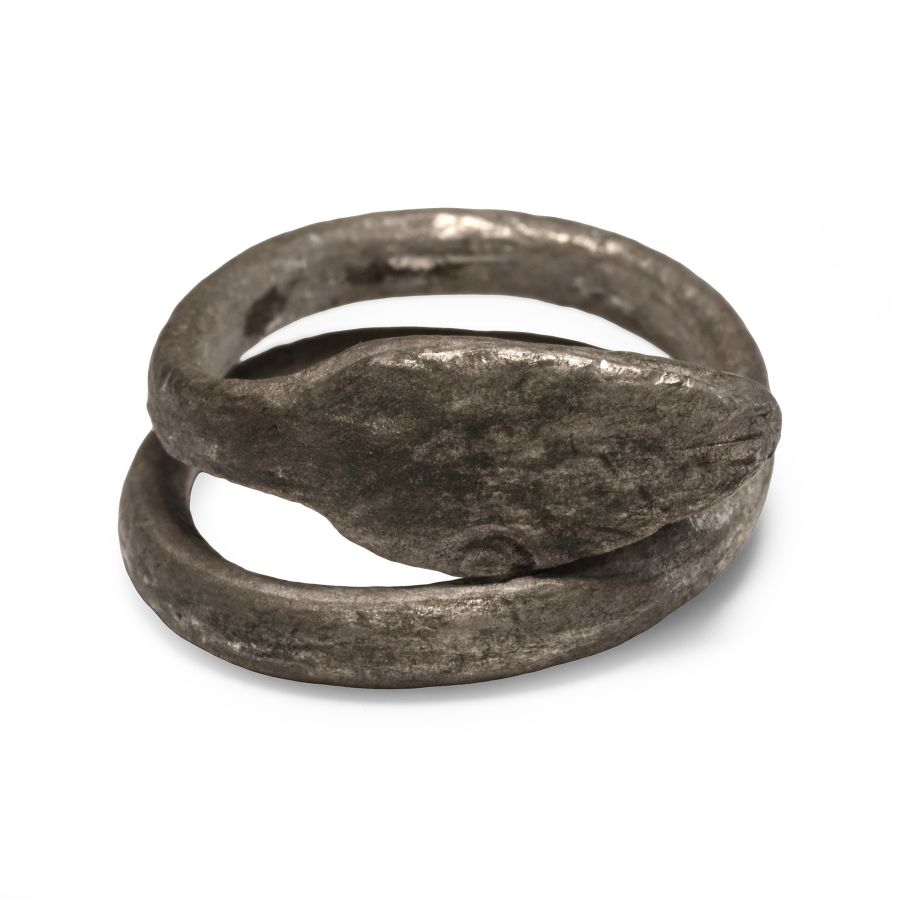
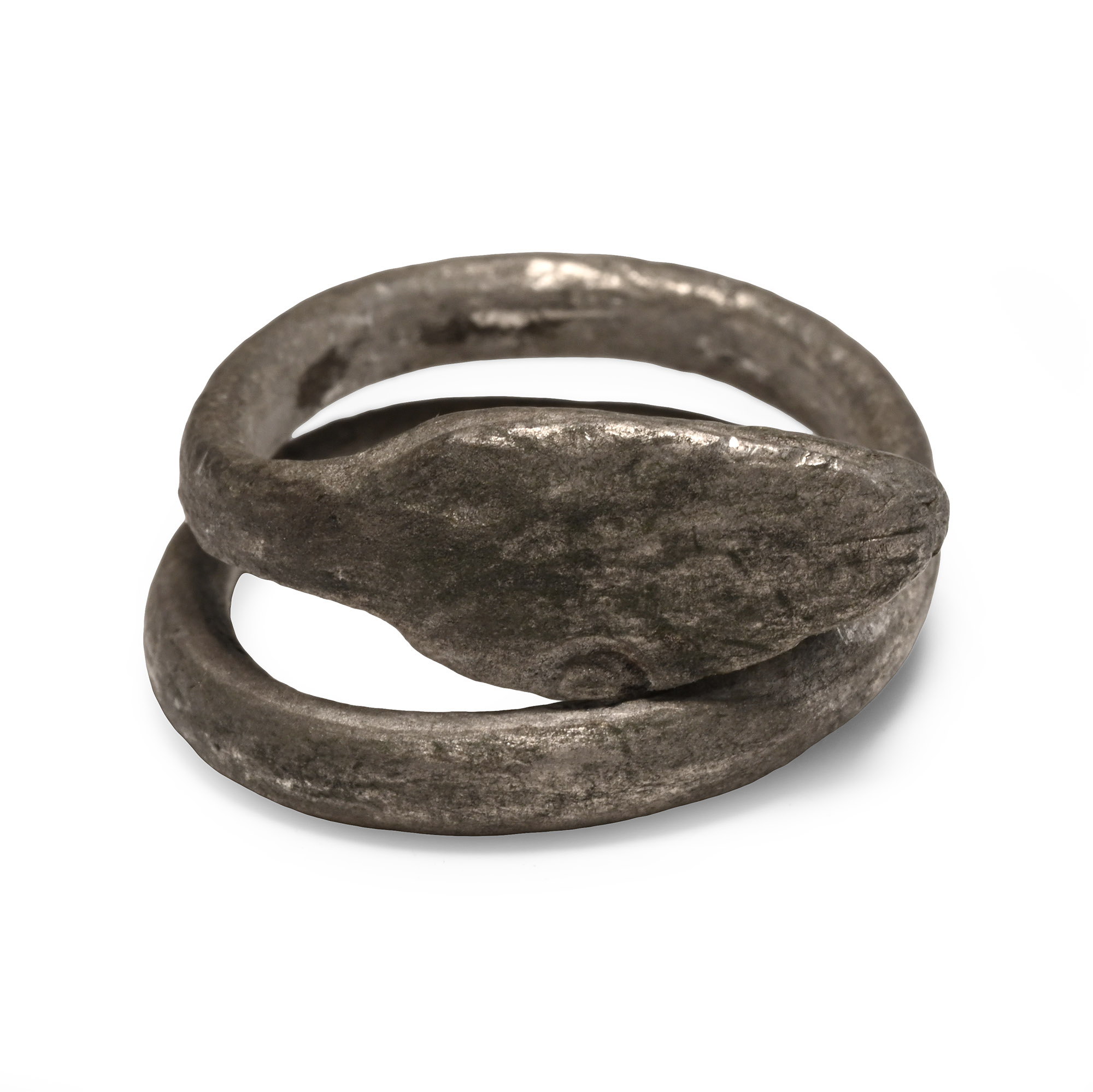
Romano-Egyptian Silver Snake Ring
ROMAN PERIOD, 30 B.C.-323 A.D
3/4 in. (4.02 grams, 20.64 mm overall, 14.29 mm internal diameter (approximate size British G 1/2, USA 3 1/2, Europe 5.55, Japan 5)).
Comprising a coiled D-section body and a snake-head finial. [No Reserve]
ProvenanceEx German art market, 2000s.
Acquired from an EU collector living in London.
From the collection of a Surrey, UK, gentleman.
TimeLine Auctions follows a vetting process to ensure the authenticity and legality of all items, reinforcing our commitment to integrity and responsible trading. Each antiquity, antique, and coin lot undergoes thorough examination by a vetting committee of at least ten external specialists, professional trade association members, scientists, and archaeologists: Our Vetting Process
AUCTIONS:
TimeLine is a leading auction house specialising in antiquities, ancient art, collectables, natural history, coins, medals, and books. Our auctions offer museums, collectors, historians, and enthusiasts the opportunity to acquire unique and historically significant pieces.
-
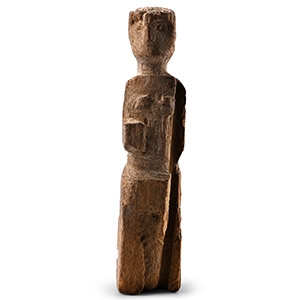
Coptic Wooden Standing Figure
Circa 4th-5th century A.D.Sold for (Inc. bp): £208
With drum-shaped head and incised eyes, slender neck, reserved breasts, right arm bent with hand extended, trim waist, full hips, seated on a rectangular throne(?); deep vertical slot to the left side. 214 grams, 25cm
Fair condition, usage wear.
From an important central London collection formed since the mid 1960s; thence by descent. From the private collection of John Meredith, acquired since the 1990s; thence by descent. -
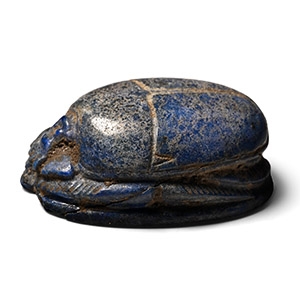
Egyptian Lapis Lazuli Scarab
Late Period, 664-332 B.C.Estimate: £400 - 600 (+bp*)
Opening Bid: £200
Carved in the round with longitudinal piercing, ellipsoid base. 12.8 grams, 30 mm
Ex early 20th century collection. -
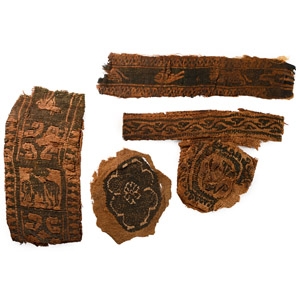
Egyptian Coptic Textile Fragment Group
Circa 6th-7th century A.D.Sold for (Inc. bp): £208
Comprising a fragment of a clavus in white and purple linen and wool, S torsion, borders embroidered with pilasters, the central scene representing eagles alternating with geometric elements; a small fragment of another clavus, ornamented with running lions and fishes, borders with geometric patterns; a third fragment of a clavus, ornamented with vegetal patterns. 20 grams total including package, 6.1-15.6 cm
Acquired 1970s-1996. Property of a North American collector. London collection, 2016.
The clavi are realised in tapestry technique, and the one with prominent figures has a rounded end. They were part of a tunic decoration and the presence of the Imperial eagle, not a common pattern, could refer to a military tunic.
