Loading, please wait...
LOT 0776
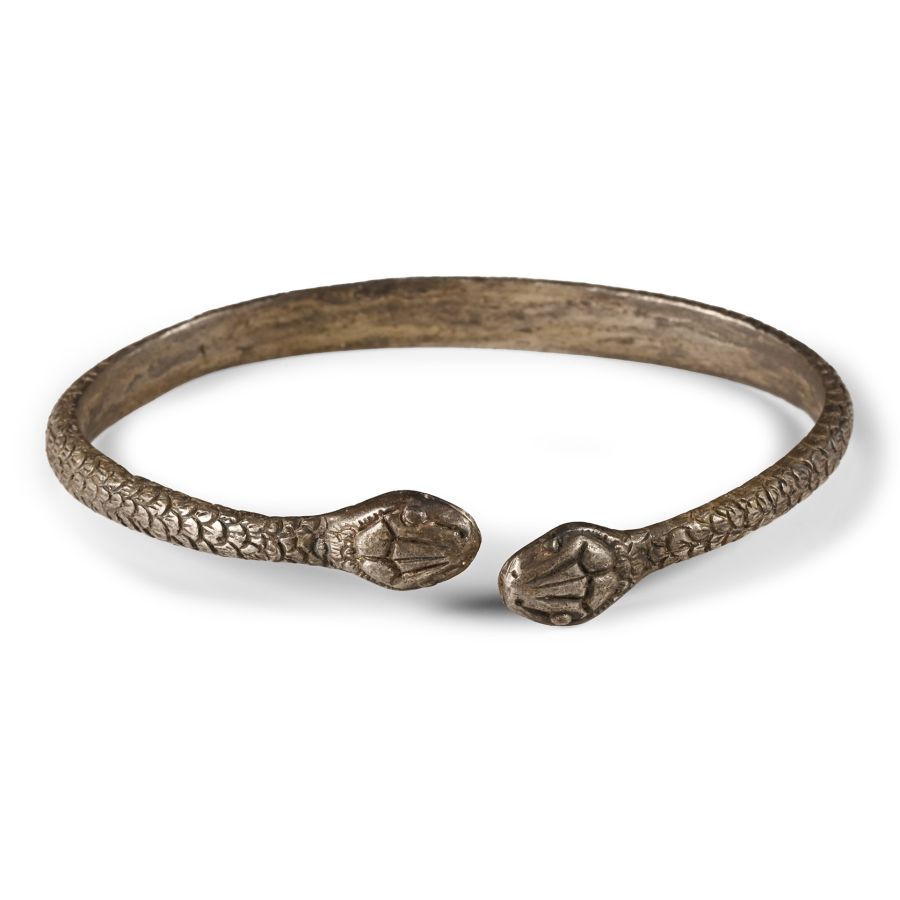
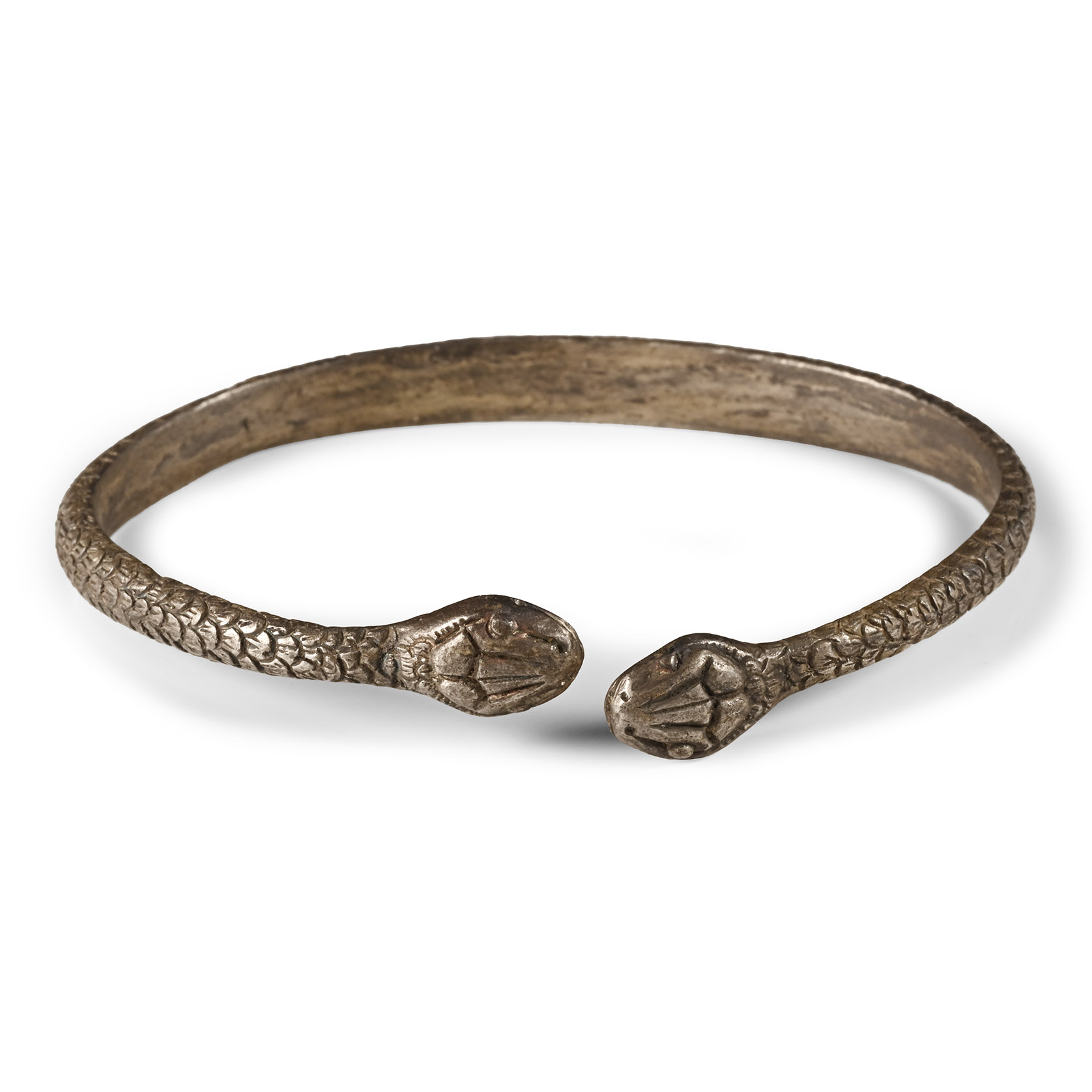
Romano-Egyptian Silver Snake Bracelet
30 B.C.-323 A.D.
2 7/8 in. (25.4 grams, 74 mm).
Penannular type with serpent-head ends, scale detailing.
ProvenanceEx German art market, 2000s.
Acquired from an EU collector living in London.
From the collection of Surrey, UK, gentleman.
TimeLine Auctions follows a vetting process to ensure the authenticity and legality of all items, reinforcing our commitment to integrity and responsible trading. Each antiquity, antique, and coin lot undergoes thorough examination by a vetting committee of at least ten external specialists, professional trade association members, scientists, and archaeologists: Our Vetting Process
AUCTIONS:
TimeLine is a leading auction house specialising in antiquities, ancient art, collectables, natural history, coins, medals, and books. Our auctions offer museums, collectors, historians, and enthusiasts the opportunity to acquire unique and historically significant pieces.
-
Roman Marble Foot
1st-3rd century A.D.Sold for (Inc. bp): £338
Carved in the round, right foot from a figurine or statue with well-defined nails and ankle. 154 grams, 11.5 cm
Acquired in the mid 1980s-1990s. From the family collection of Mr S.A., Switzerland, thence by descent. Private collection since the late 1990s. -
Roman Lead Statuette of Mercury
1st-2nd century A.D.Sold for (Inc. bp): £221
Standing in contrapposto pose, wearing a cloak draped from the right shoulder and tucked around the left arm supporting a caduceus with snake-head finials; broad-brimmed petasos with wings on the crown; the right arm held vertically at the side supporting the marsupium coin-purse; mounted on a custom-made display stand. 111 grams total, 88 mm including stand
From a collection acquired on the UK art market from various auction houses and collections mostly before 2000. From an important Cambridgeshire estate; thence by descent.
Mercury was the god of trade and industry, whose principle shrine in the city of Rome was at the Circus Maximus. The draped mantle is typical for statuary of Mercury from the 1st-2nd century A.D. (Boucher, pl.40, 43) as is the caduceus (Boucher, pl.46 (211)). -
Roman Veined Marble Torso of an Athlete
1st-2nd century A.D.Sold for (Inc. bp): £48,100
Standing contrapposto with his weight on his right leg and the left leg brought slightly forward; the musculature of the torso displaying well-defined pectoral muscles, prominent abdominal muscles and wide shoulders, the back with equally toned musculature and well-formed rounded buttocks; the veining of the marble accentuating the idealised anatomy; the now-absent head was most probably turned towards the supporting leg and the left arm would have been raised; mounted on a custom-made display stand. 42.95 kg total, 64 cm high including stand
Formerly in a French private collection in Compiègne, since the 1960s. Acquired from Galerie Chenel, 2015. Accompanied by a copy of a French cultural passport no.166817. Accompanied by an academic report by Dr Laura Maria Vigna.
The model of the sculpture recalls the Polykleitian tradition. In particular, the tension of the muscles of the athletic body recalls the Doryphoros of Polykleitos, a famous bronze sculpture erected in Argos in around 450-440 B.C., as evidenced by a stele found there. The statue represented a hero, perhaps Achilles, or a winning athlete. Many Hellenistic and Roman copies of this sculpture are preserved, most notably in marble. These include the Tiberian-era Doryphoros in the National Museum of Naples, from Pompeii, the nude male statue, a copy of the Doryphoros of Polykleitos, in the Doria Pamphilj Collection, dated to the end of the 1st century A.D. The raised left shoulder is reminiscent of the Diadumenos, a work by the same artist made in Argos in around 430-420 B.C., depicting an athlete girding his head with ribbons or fillets, a symbol of victory, known from many copies. The Polykleitos original and the subsequent copies were enormously popular and became canonical representations of physical perfection and refinement.