
Loading, please wait...
LOT 0514
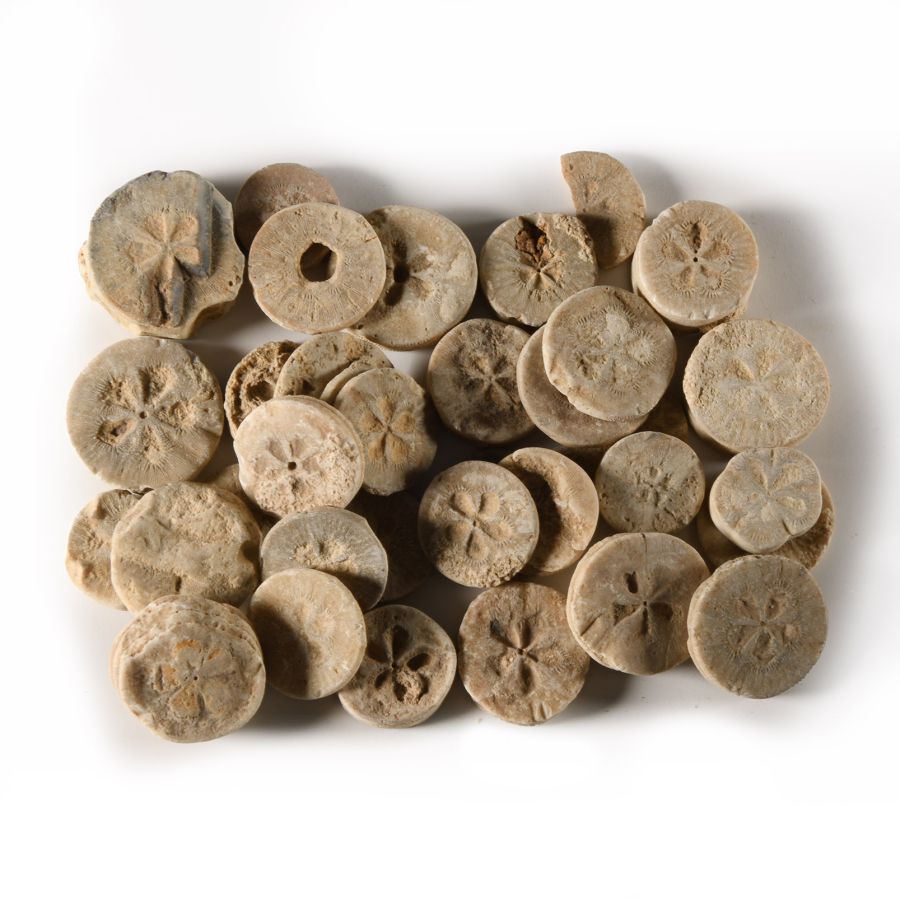
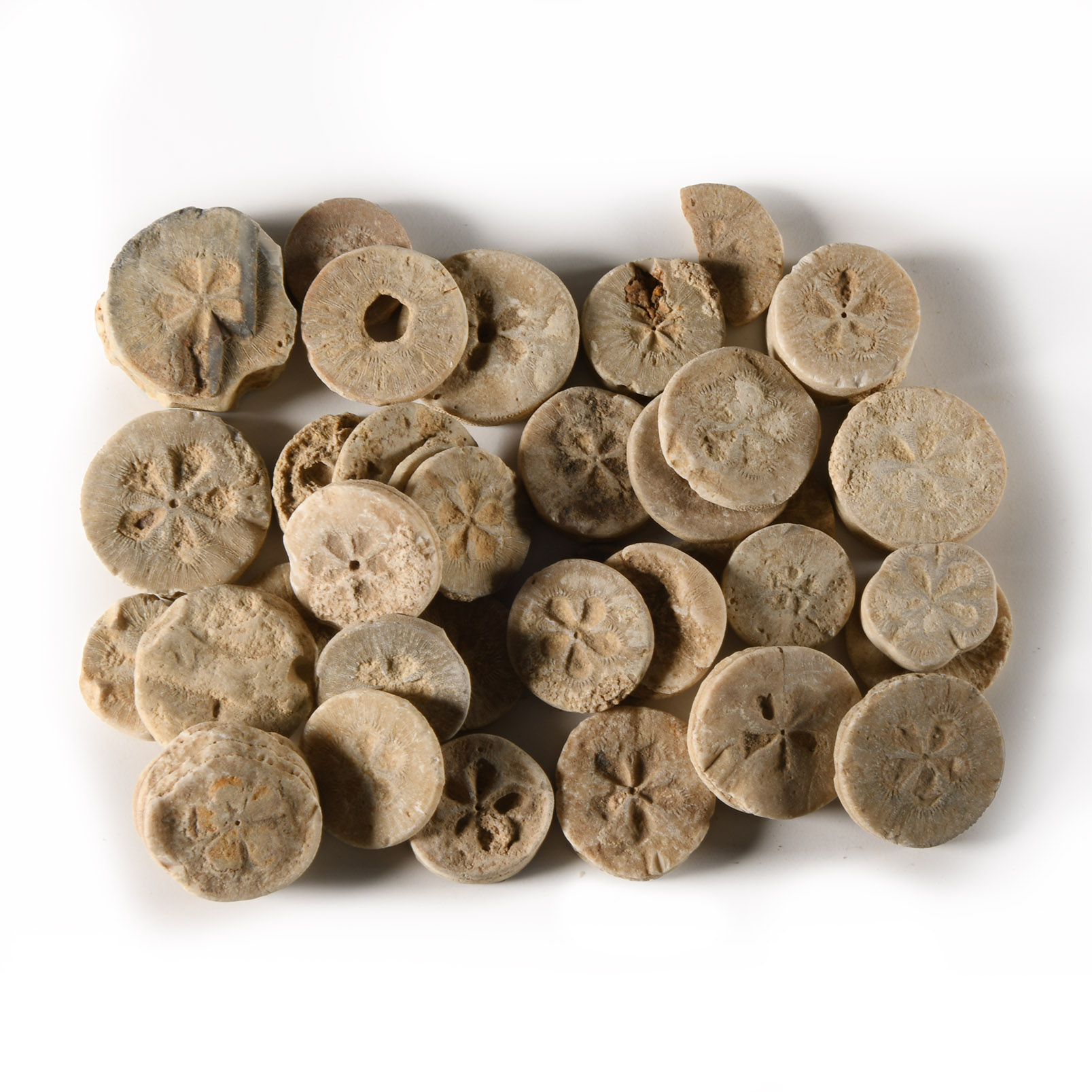
Romano-Egyptian Limestone 'Floral' Inlay Group
ROMAN PERIOD, 30 B.C.-323 A.D.
1/2 - 3/4 in. (55 grams total, 13-19 mm).
Group of discoid inlay plaques or gaming counters, crinoids with cinquefoil motif. [34]
ProvenanceFrom a central London ADA member's gallery, 1990s.
CONDITIONTimeLine Auctions follows a vetting process to ensure the authenticity and legality of all items, reinforcing our commitment to integrity and responsible trading. Each antiquity, antique, and coin lot undergoes thorough examination by a vetting committee of at least ten external specialists, professional trade association members, scientists, and archaeologists: Our Vetting Process
AUCTIONS:
TimeLine is a leading auction house specialising in antiquities, ancient art, collectables, natural history, coins, medals, and books. Our auctions offer museums, collectors, historians, and enthusiasts the opportunity to acquire unique and historically significant pieces.
-
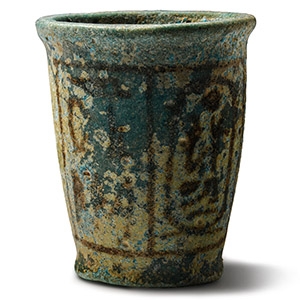
Egyptian Faience Ramesses II Offering Cup
New Kingdom, 19th Dynasty, 1279-1213 B.C.Sold for (Inc. bp): £1,690
Glazed blue and painted with two conjoined rectangular panels, one containing the king's cartouche, the other with the epithet 'beloved of Osiris'. 31 grams, 45 mm
Acquired in Europe before 1994.
Also known as Ramses the Great, famed for his building projects and military achievements, this king was the second longest reigning in Egyptian history, ascending the throne at age 13 and remaining there for around 67 years. -
.jpg)
Egyptian Faience Bead Necklace String with Amulets
Amarna Period, 1353-1336 B.C.Estimate: £800 - 1,000 (+bp*)
Opening Bid: £400
Restrung using mainly annular and tubular beads with a large central heart amulet, interspersed with various amulets including: poppy seed, rosette, lotus flower, two Thoth baboons, djed pillar, Bes, and others. 10.4 grams, 40 cm
From the vendor's grandfather's collection, formed in the 1950s; thence by family descent circa 1974. -
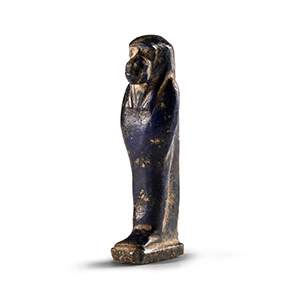
Egyptian Lapis Lazuli Son of Horus Amulet
Late Period, 664-332 B.C.Estimate: £800 - 1,000 (‡+bp*)
Opening Bid: £400
Carved amulet of the baboon-headed mummiform figure of Hapy shown standing with dorsal pillar, pierced for suspension. 2.52 grams, 28 mm
Private collection of Mr S.A., Switzerland, 1990s, thence by descent.
The Four Sons of Horus were deities responsible for protecting the internal organs of the deceased. The baboon-headed Hapy protected the lungs.
