
Loading, please wait...
LOT 0457
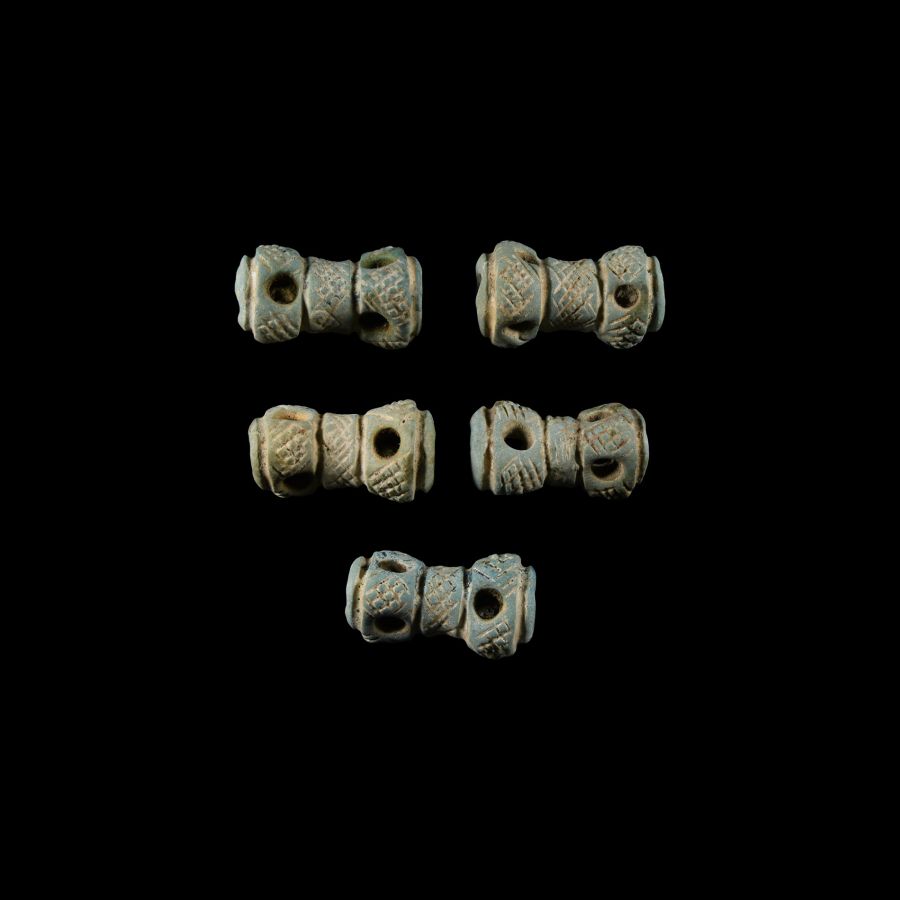
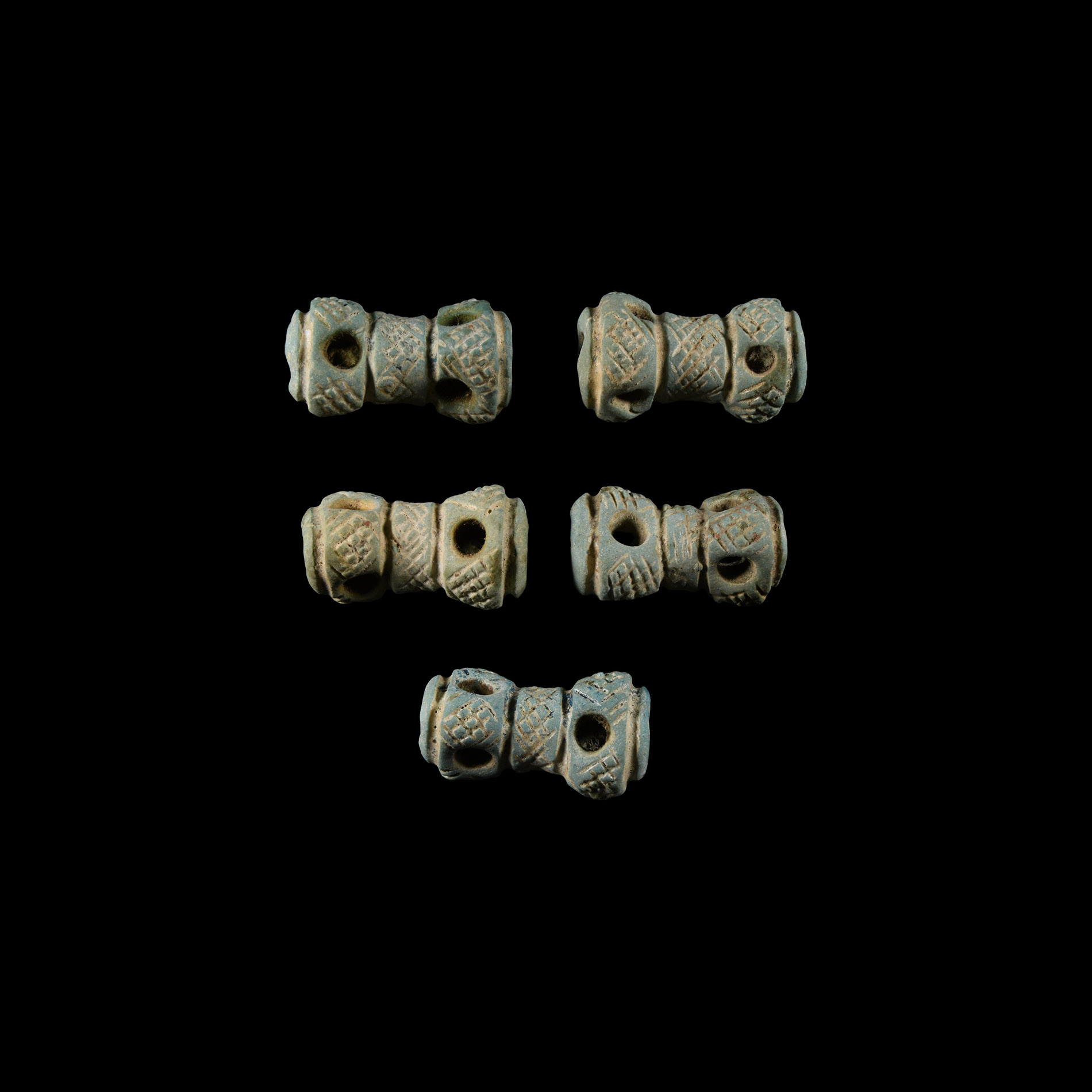
Romano-Egyptian Light Blue Faience Bead Group
CIRCA 1ST-2ND CENTURY A.D.
1 3/8 in. (54 grams total, 34-36 mm).
Composed of five collared beads with decorative piercing and hatching, possibly from further east. [5, No Reserve]
ProvenanceLondon private collection, 1979-1983.
CONDITIONTimeLine Auctions follows a vetting process to ensure the authenticity and legality of all items, reinforcing our commitment to integrity and responsible trading. Each antiquity, antique, and coin lot undergoes thorough examination by a vetting committee of at least ten external specialists, professional trade association members, scientists, and archaeologists: Our Vetting Process
AUCTIONS:
TimeLine is a leading auction house specialising in antiquities, ancient art, collectables, natural history, coins, medals, and books. Our auctions offer museums, collectors, historians, and enthusiasts the opportunity to acquire unique and historically significant pieces.
-
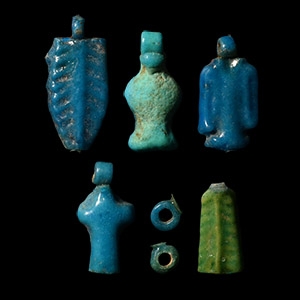
Egyptian Faience Amulet Group
New Kingdom, Amarna Period, 1353-1336 B.C.Sold for (Inc. bp): £169
Composed of polychrome amulets of various types, with suspension loops, including fruits and a feathered plume. 0.78 grams total, 3-13 mm
From an early 20th century collection, Surrey, UK. -
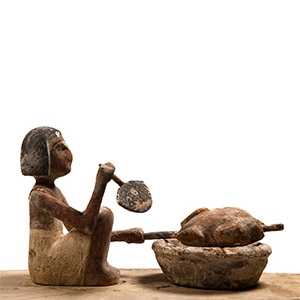
Egyptian Wooden Fowl-Roasting Scene
11th-12th Dynasty, 2010-1960 B.C.Sold for (Inc. bp): £5,200
The scene comprising: a thick rectangular base with gessoed surface; squatting male figure in a white kilt with modelled hair and painted facial details, the hands drilled to accept the handles of tools; a wooden spit with impaled carcass of a roasting fowl in the left hand; a small fan in the right hand; a squat fire-bowl with rounded rim and recess to the upper edge. 980 grams total, 31 cm wide
Acquired in the 1960s. From the collection of the late Egyptologist Surgeon Commander PHK Gray RN. From a Surrey, UK, collection. Accompanied by a scholarly note from Egyptologist Paul Whelan. This lot has been checked against the Interpol Database of stolen works of art and is accompanied by search certificate number no.202932.
Crafted for the tomb to accompany the deceased and provide for him in the afterlife. -
.jpg)
Egyptian Bronze Amun-Min-Kamutef Statuette
Late Period, 664-332 B.C.Sold for (Inc. bp): £1,755
Modelled in the round as a votive ithyphallic figure wearing a double-plumed crown with a sun disc, holding a flail in his outstretched right hand and his erect phallus in the left; mounted on a custom-made display base. 538 grams total, 21 cm high including stand
Acquired on the London art market. Ex 'K' collection, 1990-2020s.
Amun-Min-Kamutef was a syncretic deity combining the attributes of Amun, the supreme god of the Egyptian pantheon, and Min who represents sexual procreativity. The iconography of Amun's ithyphallic form Kamutef is essentially that of Min, and serves to emphasise the sexual prowess of the god. Kamutef means 'bull of his mother' and appears to refer both to Amun's sky-goddess mother in her cow form and to the bull's sexual prowess and strength.
