
Loading, please wait...
LOT 0471
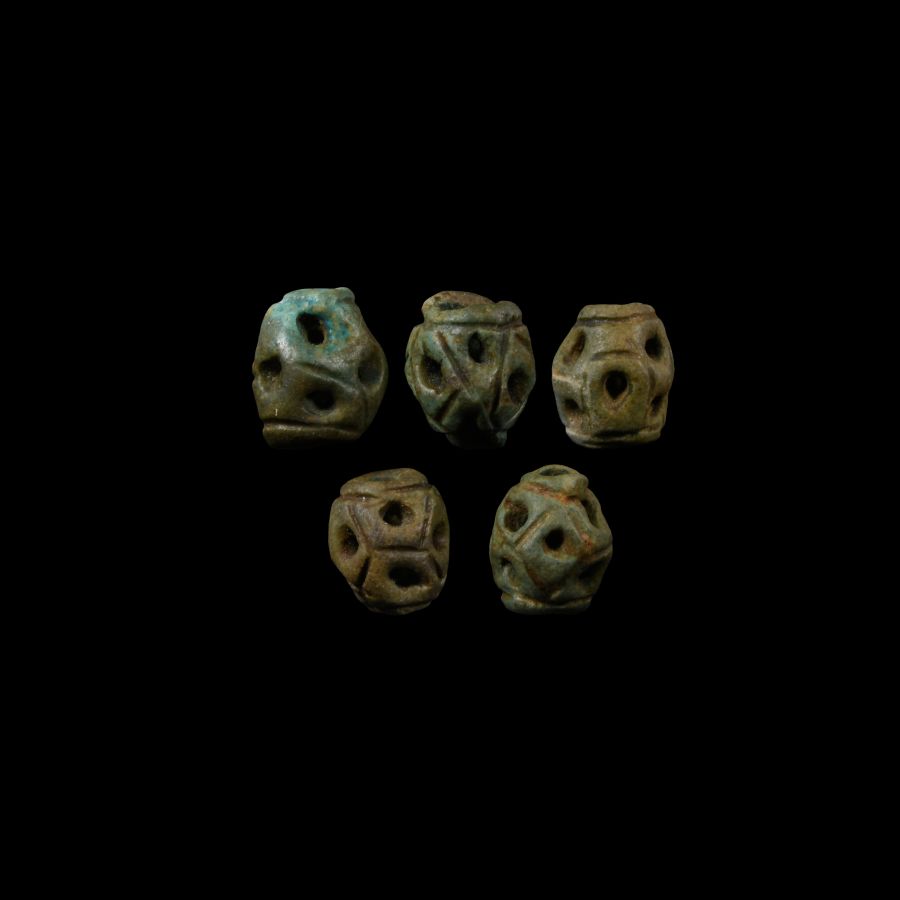
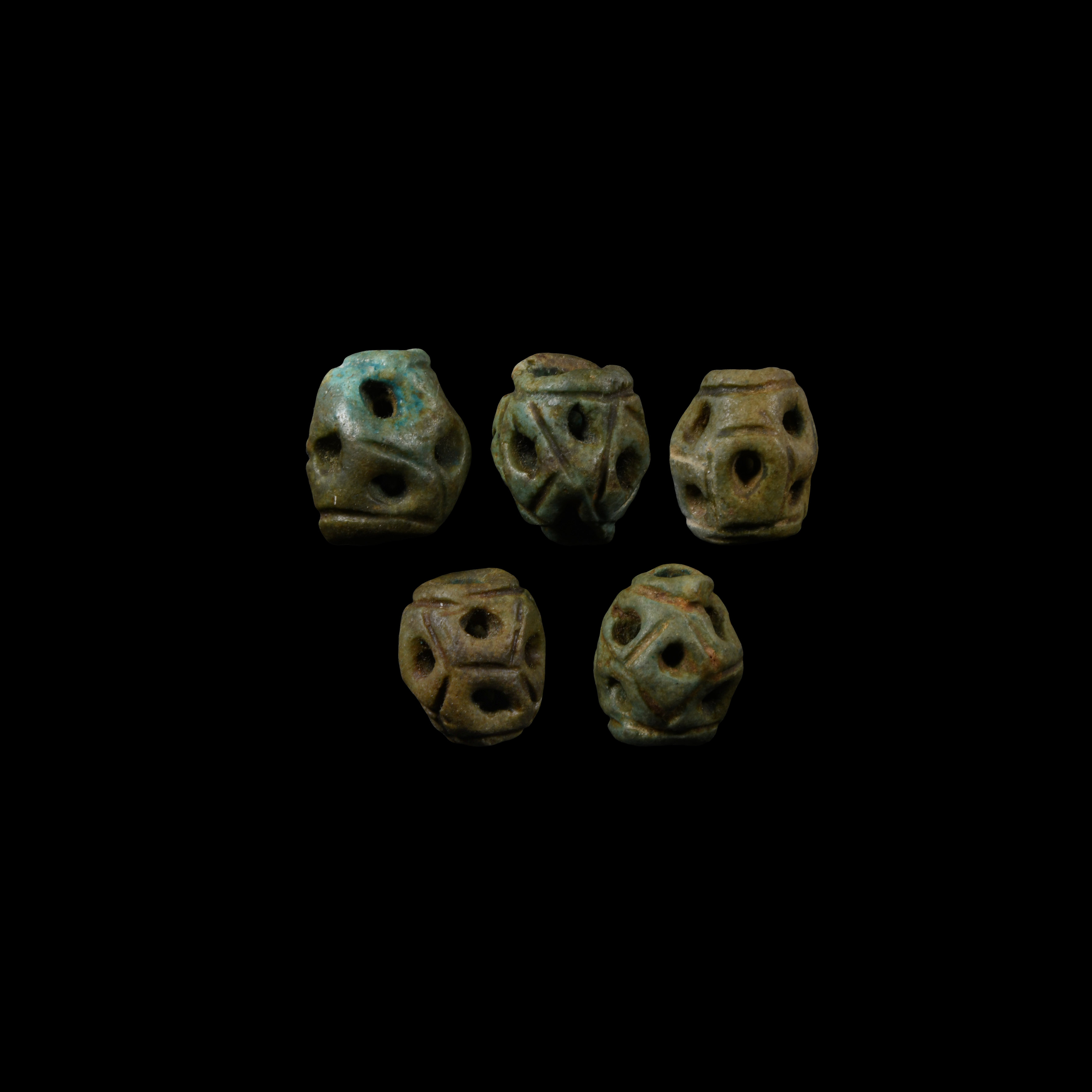
Romano-Egyptian Green Faience Bead Group
CIRCA 1ST-2ND CENTURY A.D.
1 in. (41.7 grams total, 25-27 mm).
Comprising five broadly barrel-shaped beads with decorative piercing to each facetted face; decorative incised lines demarcating the faces. [5, No Reserve]
ProvenanceLondon private collection, 1979-1983.
CONDITIONTimeLine Auctions follows a vetting process to ensure the authenticity and legality of all items, reinforcing our commitment to integrity and responsible trading. Each antiquity, antique, and coin lot undergoes thorough examination by a vetting committee of at least ten external specialists, professional trade association members, scientists, and archaeologists: Our Vetting Process
AUCTIONS:
TimeLine is a leading auction house specialising in antiquities, ancient art, collectables, natural history, coins, medals, and books. Our auctions offer museums, collectors, historians, and enthusiasts the opportunity to acquire unique and historically significant pieces.
-
.jpg)
Egyptian Hardstone Scarab with Horus
1st millennium B.C.Estimate: £600 - 800 (+bp*)
Opening Bid: £300
Carved with naturalistic anatomical detailing, the base with incused sun-disk and Horus falcon holding a flail, above neb hieroglyph; drilled for suspension. 2.51 grams, 17 mm
From an early 20th century Home Counties, UK, collection.
The sign group reads: 'Lord Ra-Horakhty'. -
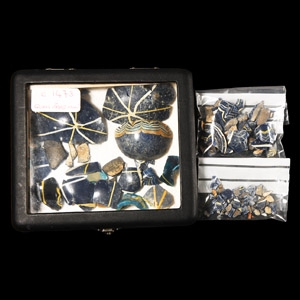
Egyptian Glass Fragment Collection
New Kingdom, 18th Dynasty, 1550-1292 B.C. and laterSold for (Inc. bp): £5,720
Comprising fragments of mainly opaque blue glass displaying polychrome motifs; held in a clear-topped presentation case with clasp. 319 grams total, 14.5 x 13.5 cm including box
Ex Japanese art market. London art market, 1996. -
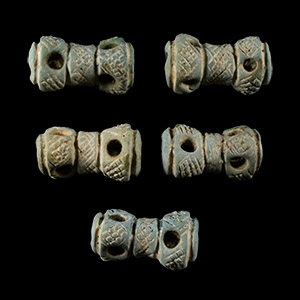
Romano-Egyptian Light Blue Faience Bead Group
Circa 1st-2nd century A.D.Sold for (Inc. bp): £65
Composed of five collared beads with decorative piercing and hatching, possibly from further east. 54 grams total, 34-36 mm
London private collection, 1979-1983.
