
Loading, please wait...
LOT 0475
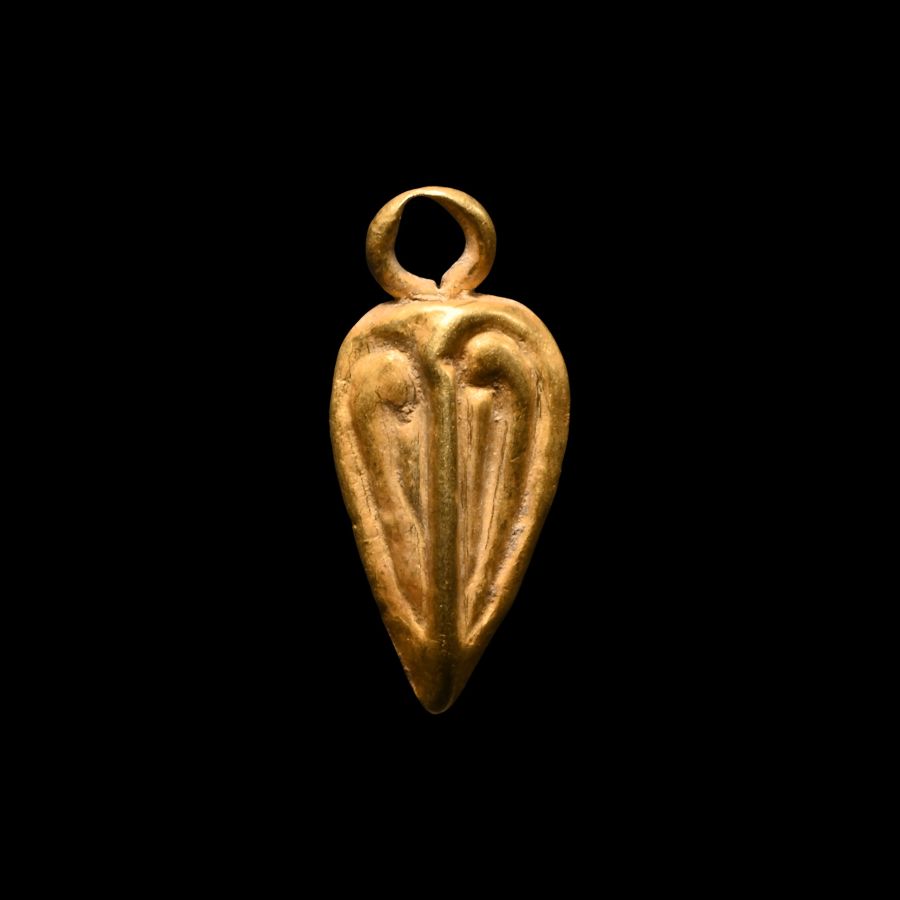
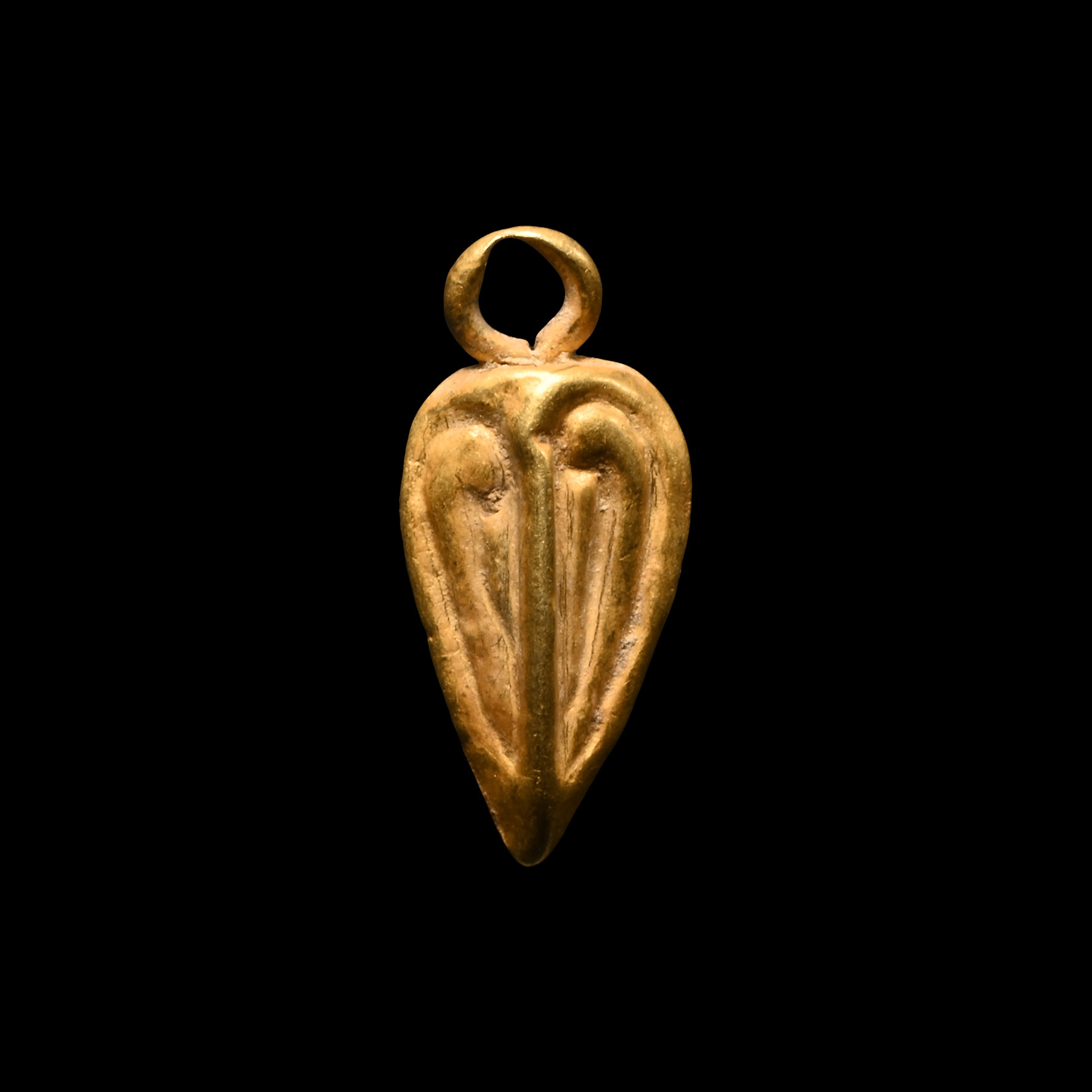
Romano-Egyptian Gold Ribbed Fruit Pendant
ROMAN PERIOD, 30 B.C.-323 A.D.
5/8 in. (0.57 grams, 15 mm).
Hollow-formed piriform drop with repoussé tendrils. [No Reserve]
ProvenanceFrom a late Japanese specialist collector, 1970-2000s.
CONDITIONTimeLine Auctions follows a vetting process to ensure the authenticity and legality of all items, reinforcing our commitment to integrity and responsible trading. Each antiquity, antique, and coin lot undergoes thorough examination by a vetting committee of at least ten external specialists, professional trade association members, scientists, and archaeologists: Our Vetting Process
AUCTIONS:
TimeLine is a leading auction house specialising in antiquities, ancient art, collectables, natural history, coins, medals, and books. Our auctions offer museums, collectors, historians, and enthusiasts the opportunity to acquire unique and historically significant pieces.
-
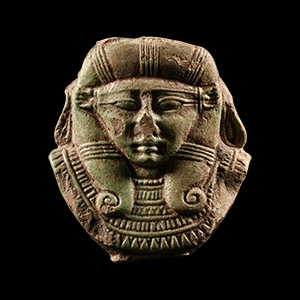
Egyptian Faience Sistrum Fragment with Hathor Head
Late Period, 664-332 B.C.Sold for (Inc. bp): £1,170
Pale blue-green bifacial bust of Hathor with D-shaped face, characteristic banded hair with curled ends, cow's ears, broad collar of radiating segments; circular attachment point beneath for handle. 44.4 grams, 50 mm
Acquired in the 1970s. European private collection.
This fragment is the central element of a highly decorative sistrum. The sistrum was a rattle-like instrument played exclusively by women in religious ceremonies. The sound produced by the sistrum was believed to drive away evil and soothe a god's anger. Hathor is the daughter of the sun god Re, and in her role as a mother goddess is often depicted as a cow or with bovine characteristics as here. Hathor is also associated with love, music and dancing, and the sistrum is one of her sacred symbols. -
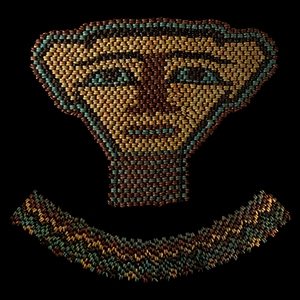
Egyptian Faience Bead Mummy Mask and Collar with Good Colour
Ptolemaic Period, 332-30 B.C.Sold for (Inc. bp): £1,170
Comprising a restrung panel of small glazed composition beads in various colours representing a mummy face mask with false beard and collar; framed and glazed. 556 grams, 27.5 x 28.5 cm
Ex collection of Mr & Ms François & Marion Reber - Burki, Rue des Beaux-Arts 10, Neuchâtel, Switzerland. Collected in the first part of 20th century by Mr F. Burki, father of Ms Marion Reber. -
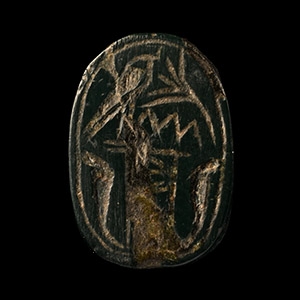
Phoenicio-Egyptian Hardstone Scarab with Hieroglyphs
Circa 6th-4th century B.C.Estimate: £400 - 600 (+bp*)
Opening Bid: £200
Haematite scarab with underside incised Horus falcon and lotus flower atop a fire-altar(?) flanked by uraei. 2.21 grams, 16 mm
Collected from 1969-1999. From the collection of the late Mr S.M., London, UK.
