
Loading, please wait...
LOT 0879
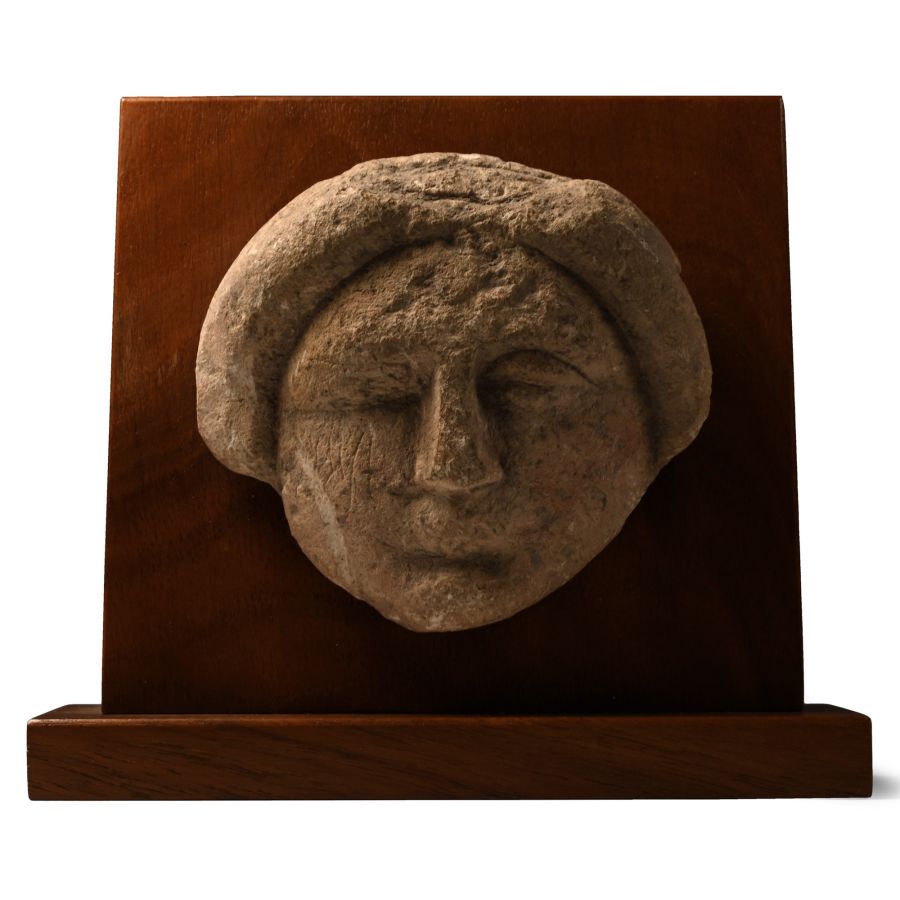
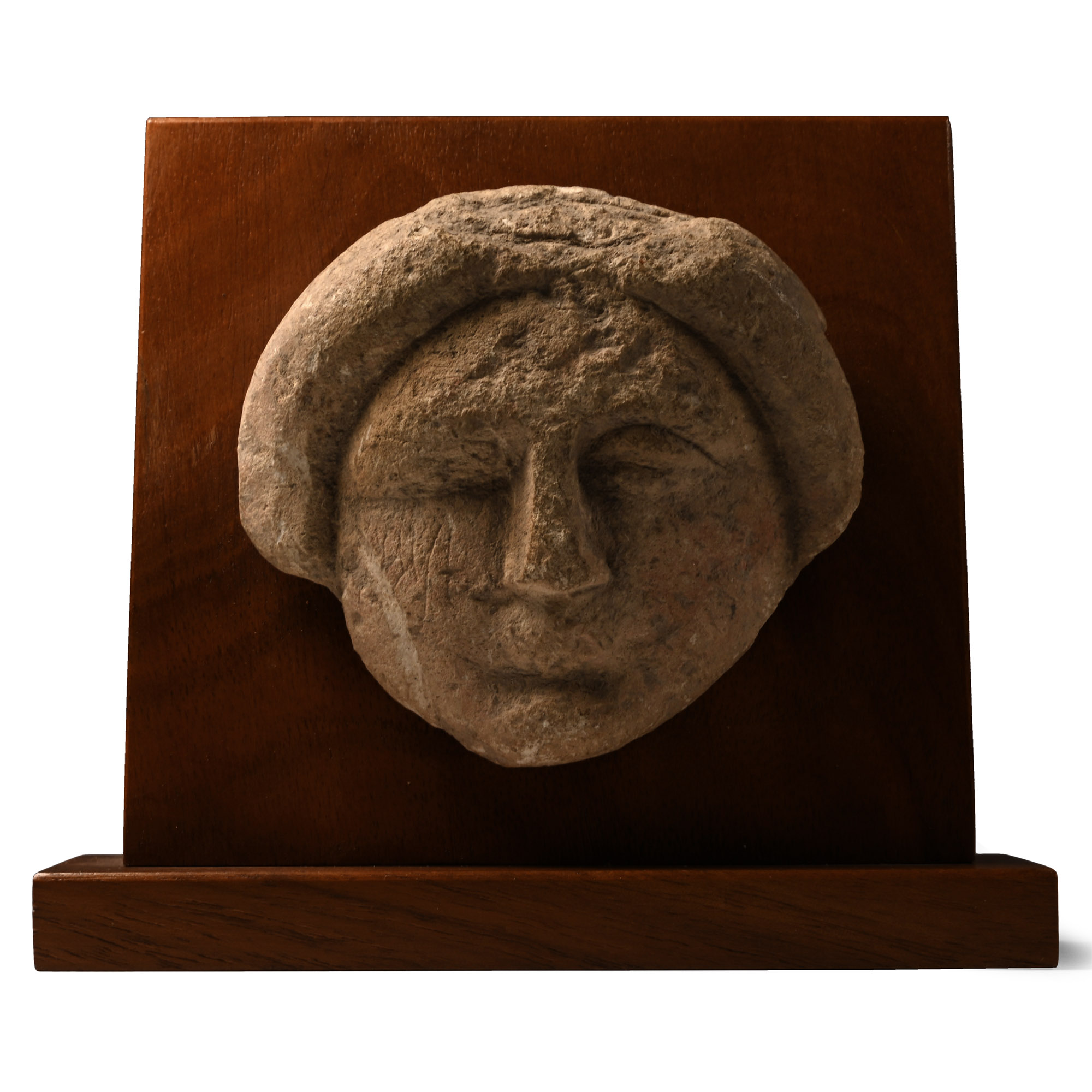
Romano-Celtic Terracotta Face of a Goddess
1ST CENTURY A.D.
4 1/2 in. (211 grams total, 11.5 cm wide including stand).
Broad D-shaped mask with low-relief facial detailing and crescent of hair above; mounted on a custom-made wooden stand. [No Reserve]
ProvenanceAcquired prior to 1971.
Ex Fridolin (1903-1969) and Halina (1907-1989) Schwitter-Lagutt collection, Basel, Switzerland.
with Christie's, London, UK, sale 21014, no.115 (part).
Accompanied by a copy of the Christie's listing and invoice.
This lot is accompanied by an illustrated lot declaration signed by the Head of the Antiquities Department, Dr Raffaele D'Amato.
On loan to the Antikenmuseum, Basel, Switzerland, 1971-2022.
CONDITIONTimeLine Auctions follows a vetting process to ensure the authenticity and legality of all items, reinforcing our commitment to integrity and responsible trading. Each antiquity, antique, and coin lot undergoes thorough examination by a vetting committee of at least ten external specialists, professional trade association members, scientists, and archaeologists: Our Vetting Process
AUCTIONS:
TimeLine is a leading auction house specialising in antiquities, ancient art, collectables, natural history, coins, medals, and books. Our auctions offer museums, collectors, historians, and enthusiasts the opportunity to acquire unique and historically significant pieces.
-
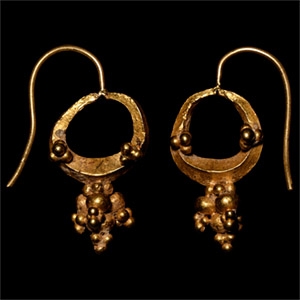
Roman Heavy Gold Earring Pair
1st-2nd century A.D.Estimate: £1,500 - 2,000 (+bp*)
Opening Bid: £750
Matched pair of earrings, each a square-section crescent with later hook at the apex, two applied granule clusters; at the lower edge, a cluster of four large granules with smaller granule clusters beneath. 13.07 grams total, 30-31 mm
Acquired on the UK art market. Private collection, UK. This lot has been cleared against the Art Loss Register database, and is accompanied by an illustrated lot declaration signed by the Head of the Antiquities Department, Dr Raffaele D'Amato. -
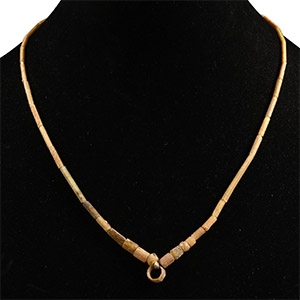
Roman Pale Yellow Glass Bead Necklace String
1st-4th century A.D. and laterSold for (Inc. bp): £46
Restrung group of tubular, lentoid-section, drum-shaped and other beads. 7.25 grams, 45.5 cm
Ex London, UK, collection, 1990s. This lot is accompanied by an illustrated lot declaration signed by the Head of the Antiquities Department, Dr Raffaele D'Amato. -
.jpg)
Roman Gemstone Collection
2nd-3rd century A.D. and laterSold for (Inc. bp): £546
Including a rock crystal insert with intaglio hoplite and two other intaglio warriors, a later cameo with female bust. 2.16 grams total, 11-15 mm
Norfolk family collection, 1940s-1960s; thence by descent. This lot is accompanied by an illustrated lot declaration signed by the Head of the Antiquities Department, Dr Raffaele D'Amato.
