
Loading, please wait...
LOT 1559
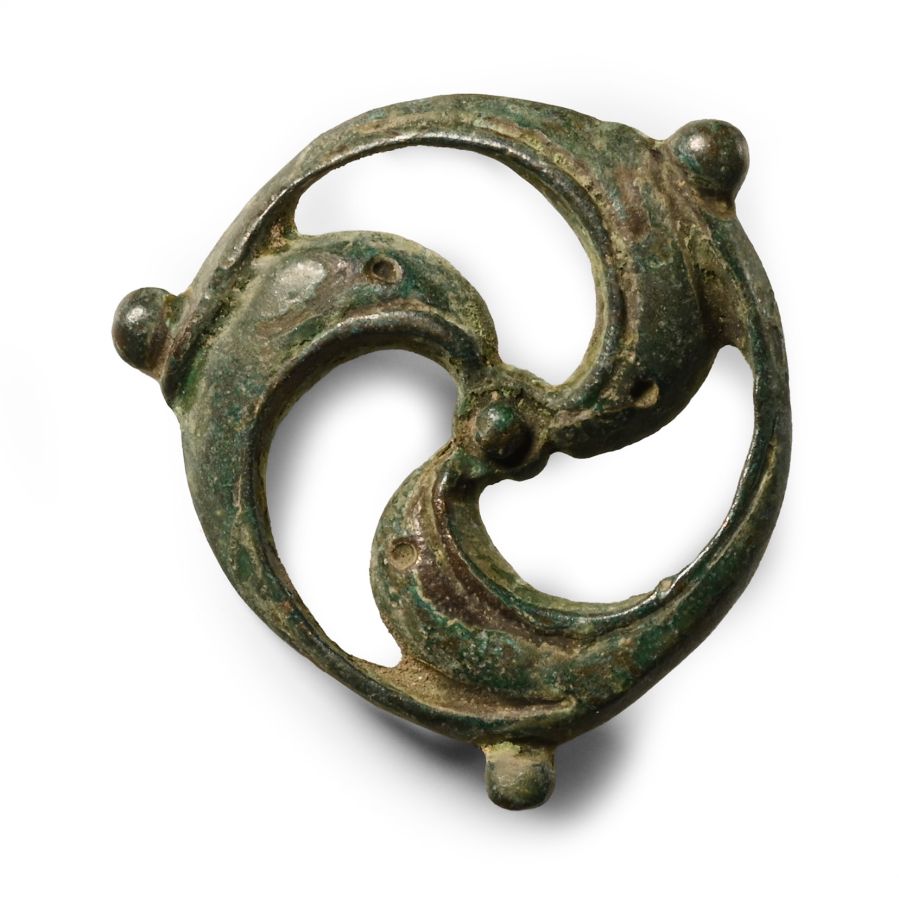
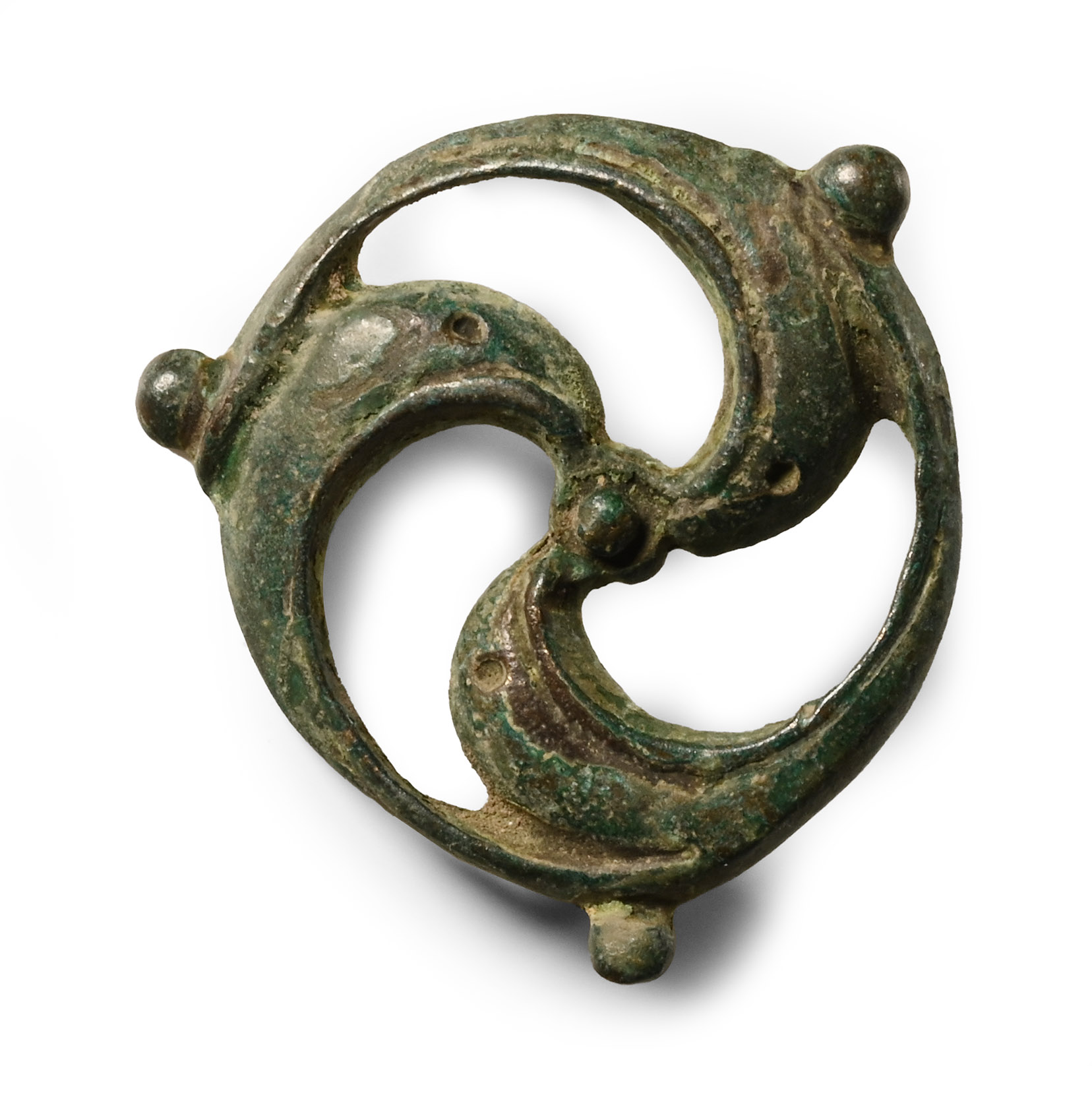
Romano-Celtic Bronze Dolphin Whorl Brooch
1ST-2ND CENTURY A.D.
1 1/4 in. (7.53 grams, 31 mm).
Openwork plate brooch, La Tène swirl with pellets to centre and rim; catch and pin-lug to reverse. [No Reserve]
ProvenanceEx German art market, 2000s.
Acquired from an EU collector living in London.
From the collection of Surrey, UK, gentleman.
TimeLine Auctions follows a vetting process to ensure the authenticity and legality of all items, reinforcing our commitment to integrity and responsible trading. Each antiquity, antique, and coin lot undergoes thorough examination by a vetting committee of at least ten external specialists, professional trade association members, scientists, and archaeologists: Our Vetting Process
AUCTIONS:
TimeLine is a leading auction house specialising in antiquities, ancient art, collectables, natural history, coins, medals, and books. Our auctions offer museums, collectors, historians, and enthusiasts the opportunity to acquire unique and historically significant pieces.
-
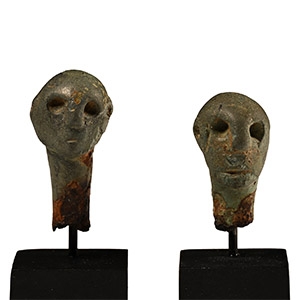
Iron Age Bronze Chariot Lynch Pin Finial Pair
1st century B.C.-1st century A.D.Sold for (Inc. bp): £715
Each a youthful male head with slit mouth and socketed eyes to accept organic inlay; stub neck developing to a sturdy pin; both mounted on a custom-made display stand. 75 grams total, 51-56 mm including stand
Found East Anglia, UK. From a collection acquired on the UK art market from various auction houses and collections mostly before 2000. From an important Cambridgeshire estate; thence by descent. -
.jpg)
Iron Age Celtic 'Dorset' Stone Head
Circa 2nd century B.C.-1st century A.D.Sold for (Inc. bp): £910
Carved stone male head with almond-shaped eyes, snub nose, prominent moustache; surface abraded due to prolonged immersion in a river; mounted on a custom-made display stand. 262 grams total, 10.7 cm including stand
Found Dorset, UK. From a collection acquired on the UK art market from various auction houses and collections mostly before 2000. From an important Cambridgeshire estate; thence by descent. -
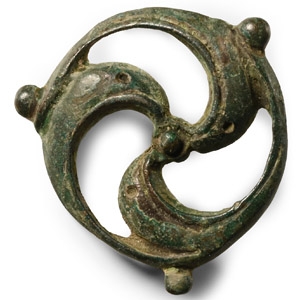
Romano-Celtic Bronze Dolphin Whorl Brooch
1st-2nd century A.D.Sold for (Inc. bp): £312
Openwork plate brooch, La Tène swirl with pellets to centre and rim; catch and pin-lug to reverse. 7.53 grams, 31 mm
Ex German art market, 2000s. Acquired from an EU collector living in London. From the collection of Surrey, UK, gentleman.
