
Loading, please wait...
LOT 1555
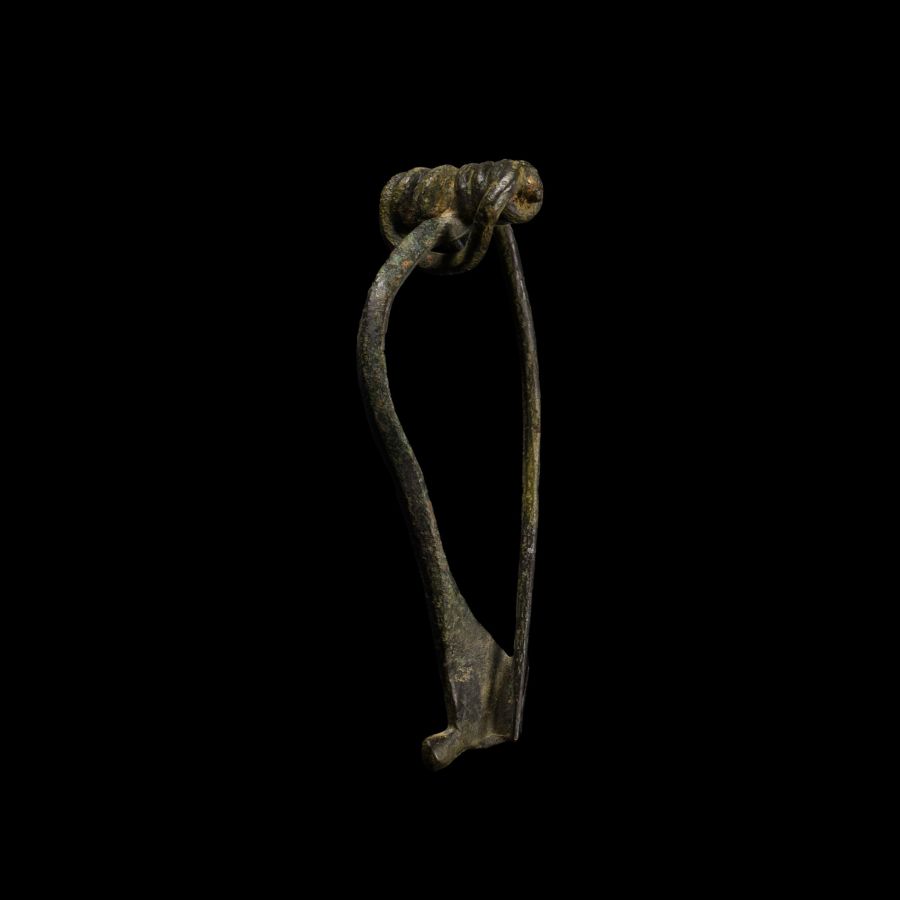
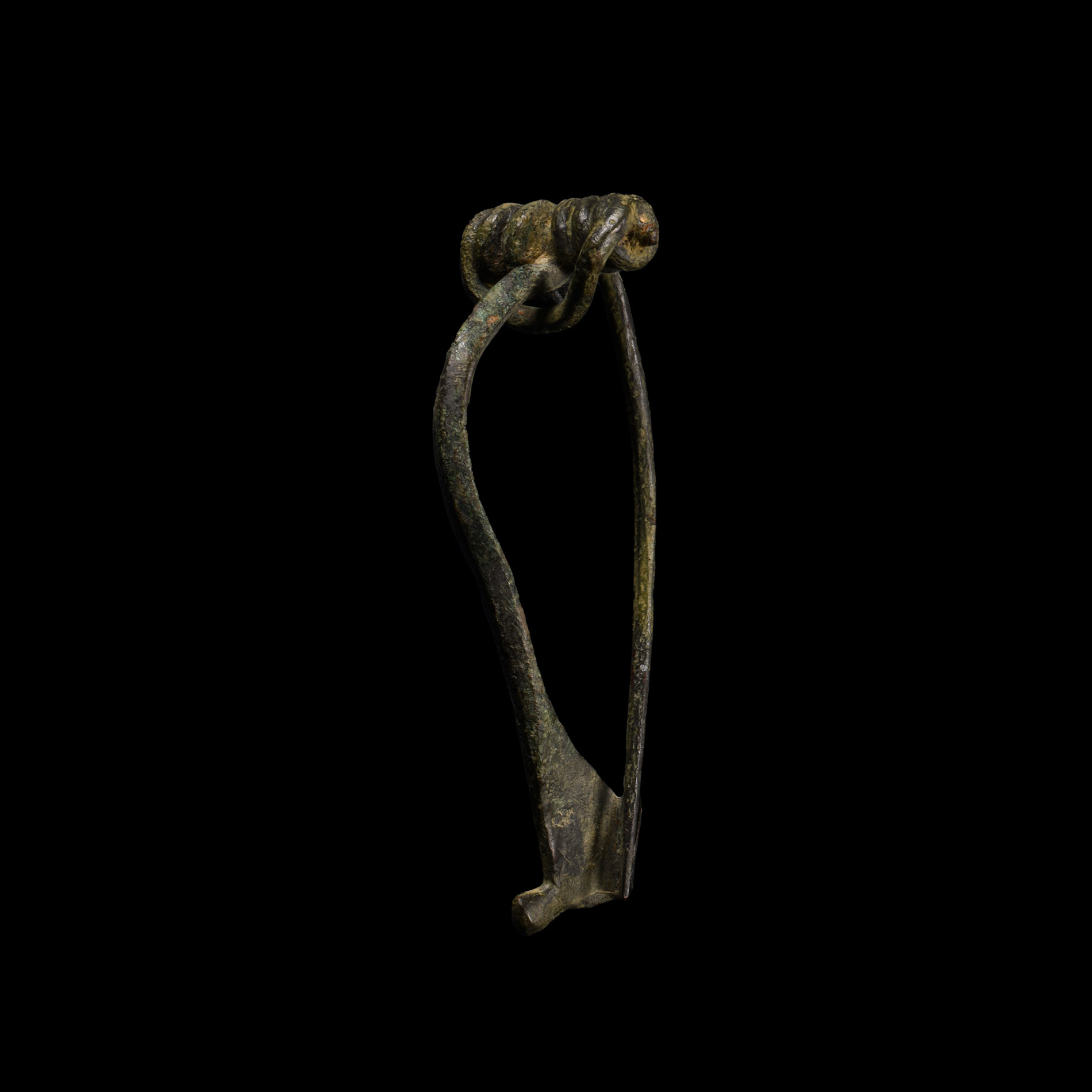
Romano-Celtic Bronze Bow Brooch
1ST CENTURY B.C.-1ST CENTURY A.D.
2 5/8 in. (11.8 grams, 68 mm).
Gorica-type bronze bow-brooch with knop to the forward edge of the catchplate. [No Reserve]
ProvenanceEx ArtAncient Ltd, London, SW6, with item id.16186.
From the private collection of Mr A Hills, Kent, UK.
Cf. Hattatt, R., Brooches of Antiquity, Oxford, 1987, item 745.
CONDITIONTimeLine Auctions follows a vetting process to ensure the authenticity and legality of all items, reinforcing our commitment to integrity and responsible trading. Each antiquity, antique, and coin lot undergoes thorough examination by a vetting committee of at least ten external specialists, professional trade association members, scientists, and archaeologists: Our Vetting Process
AUCTIONS:
TimeLine is a leading auction house specialising in antiquities, ancient art, collectables, natural history, coins, medals, and books. Our auctions offer museums, collectors, historians, and enthusiasts the opportunity to acquire unique and historically significant pieces.
-
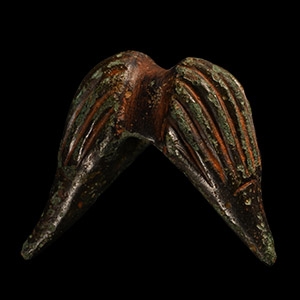
Iron Age Celtic Bronze Moustache Chape
2nd century B.C.-1st century A.D.Sold for (Inc. bp): £156
Formed as two lateral conical bulbs connected at the base by a plain gusset; each cone with swept profile, the surface of the bulb with heavy facetting; socket to the centre. 23.2 grams, 34 mm
Found Hertfordshire, UK.
Fittings of this type are known as 'moustache mounts'. Their exact function is unknown but use as the chape of a scabbard has been suggested. -
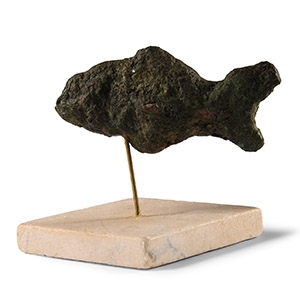
Iron Age Celtic Bronze Fish Statuette
Circa 1st century B.C.-1st century A.D.Sold for (Inc. bp): £85
Modelled in the round with dorsal and lateral fins; mounted on a custom-made stand. 110 grams total, 61 mm wide including stand
From a collection acquired on the UK art market from various auction houses and collections mostly before 2000. From an important Cambridgeshire estate; thence by descent. -
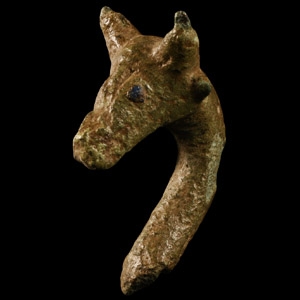
Iron Age Celtic Bronze Votive Horse's Head
Circa 1st century B.C.-1st century A.D.Sold for (Inc. bp): £111
With carinated arching neck, crescent 'horns' above the forehead, inset blue glass eyes. 12 grams, 34 mm
From a collection acquired on the UK art market from various auction houses and collections mostly before 2000. From an important Cambridgeshire estate; thence by descent.
