Loading, please wait...

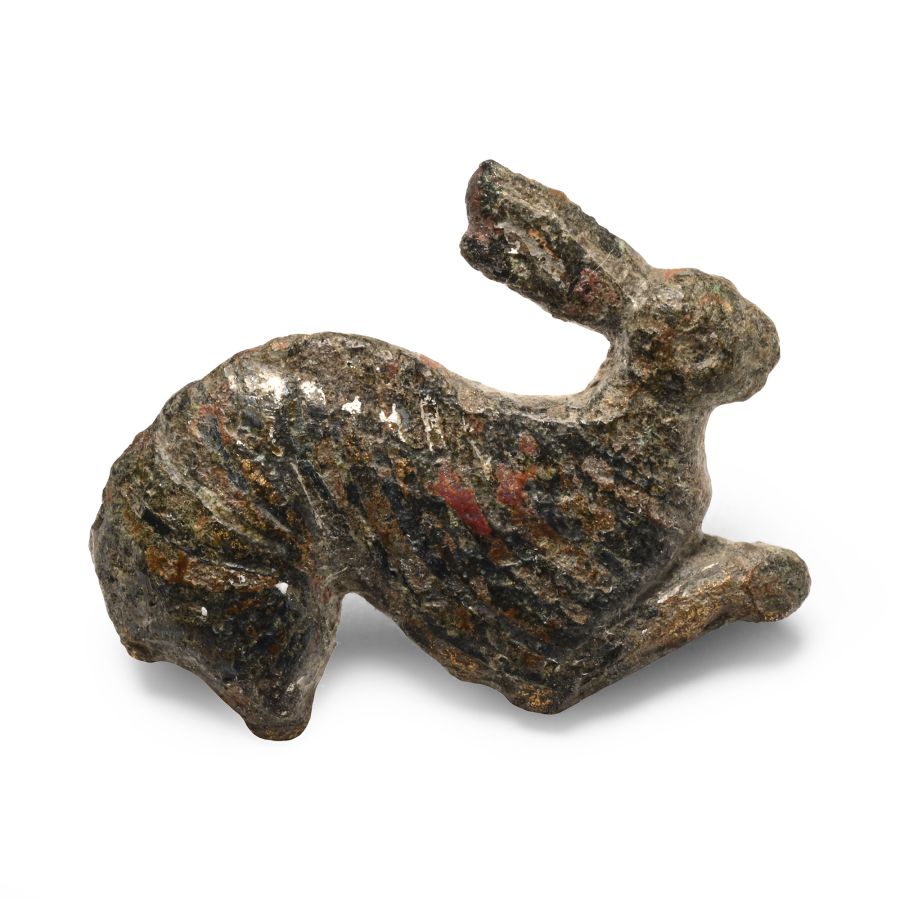
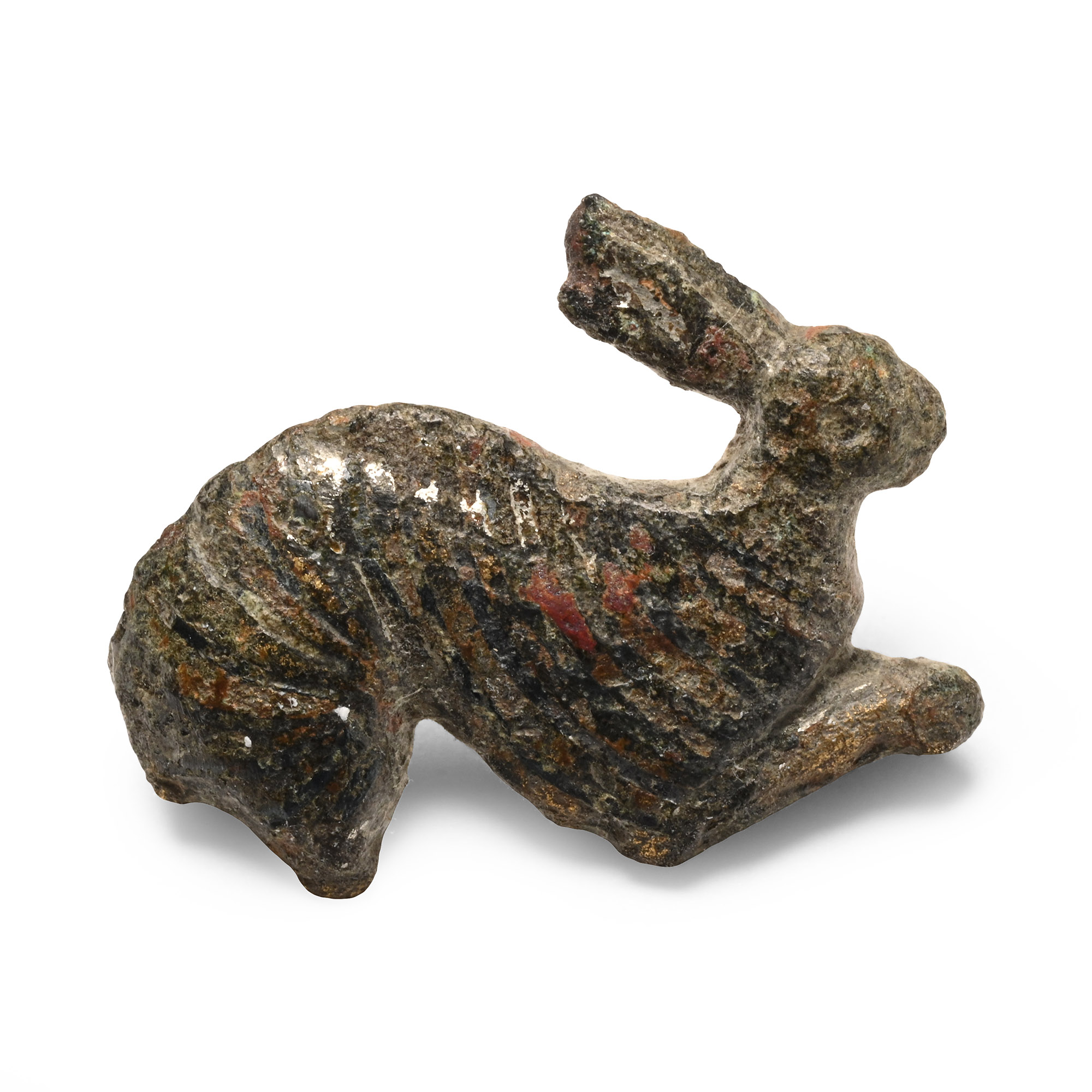
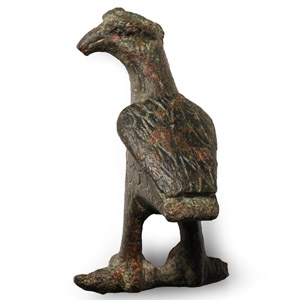
Romano-British Tinned Bronze Hare Brooch Romano-British Tinned Bronze Hare Brooch Romano-British Tinned Bronze Hare Brooch
Use mousewheel to zoom in and out, click to enlarge
Details

LOT 0700

Romano-British Tinned Bronze Hare Brooch

2ND CENTURY A.D.

7/8 in. (3.89 grams, 23 mm).

In the form of a crouching hare with remains of red niello on the body; remains of pin-lugs and catchplate on the verse. [No Reserve]

Provenance

Found East Anglia, UK.
From a Kent collection formed in the 1990s.

Literature

Cf. Hattatt, R., Brooches of Antiquity, Oxford, 1987, item 1192.

CONDITION
VETTING:

TimeLine Auctions follows a vetting process to ensure the authenticity and legality of all items, reinforcing our commitment to integrity and responsible trading. Each antiquity, antique, and coin lot undergoes thorough examination by a vetting committee of at least ten external specialists, professional trade association members, scientists, and archaeologists: Our Vetting Process


AUCTIONS:

TimeLine is a leading auction house specialising in antiquities, ancient art, collectables, natural history, coins, medals, and books. Our auctions offer museums, collectors, historians, and enthusiasts the opportunity to acquire unique and historically significant pieces.

LOT 0700

Romano-British Tinned Bronze Hare Brooch

Sold for (Inc. bp): £98

Print page

RELATED LOTS
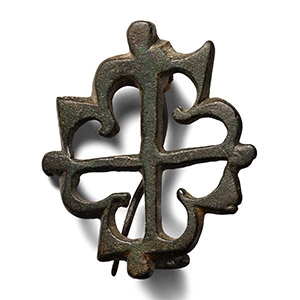
  • Roman Bronze Lunar Mount
    Roman Bronze Lunar Mount
    1st-4th century A.D.

    Sold for (Inc. bp): £52

    Crescentic mount with keeled body, underside with two pierced lugs. 15.8 grams, 46 mm


    Ex German art market, 2000s. Acquired from an EU collector living in London. From the collection of a Surrey, UK, gentleman.

    Lot Details

  • Roman Bronze Horse Crossbow Brooch
    Roman Bronze Horse Crossbow Brooch
    2nd-3rd century A.D.

    Sold for (Inc. bp): £195

    Bow brooch formed as a horse modelled in the round with halter to the neck, notched mane, punched pellet eyes; fore-legs forming the catch, rear legs with transverse bar and hinged pin beneath. 19 grams, 35 mm


    Ex David Miller, Hemel Hempstead, London, UK. From the private collection of a West London, UK, gentleman, formed since the early 2000s.

    Lot Details

  • Life-Size Roman Bronze Head of an Empress
    Life-Size Roman Bronze Head of an Empress
    Mid-3rd century A.D.

    Estimate: £40,000 - 60,000 (+bp*)

    Opening Bid: £16,000

    A member of the Imperial family, possibly an empress, depicted with an elaborate coiffure, the hair at the back of the head parted in the middle and the two strands folded over each other, then pulled to the front to form a looped horizontal layer parted in the middle of the smooth forehead and drawn back, individual curls represented as vertical lines along the forehead hairline up to the exposed ears, two locks hanging down the sides behind the ears, extending to the upper part of the neck; beautiful facial rendering with stoic expression, exquisite detailing to the eyebrows, eyelids and pupils; snub-nose, closed lips, thin and graceful neck; mounted on a custom-made display stand. 4.07 kg, 40.5 cm high including stand


    Acquired on the German art market, early 1970s. German private family collection; by gift to the owner's son in 2015. Private collection, London. Accompanied by an academic report by Dr Raffele D'Amato, and Dr Marina Mattei, former curator of the Capitoline Museums for over 40 years. This lot has been checked against the Interpol Database of stolen works of art and is accompanied by a search certificate number no.12607-234556.

    The mature age of the woman depicted in the portrait is revealed by the oval gaunt, deep-set eyes and the folds at the sides of the nose and mouth. The woman’s head shows the typical traits of the full and mature 3rd century A.D., executed in a Hellenistic style tradition. Our sculpture is well inserted in the imperial portrait type, bearing technical and aesthetical parallels to portraits in bronze. The hairstyle could be Scheitelzopf (or reverse plait), tightened by a hairnet, pinned to the top of the head. The same type of hairstyle, albeit with variations in the details (decorative curls and position of the hair loop), is found on a few other portraits of women that were dated to the Period of Gallienus by Marianne Bergmann. Some of the portraits in this typologically related group are likely to be private portraits. Hereby physiognomic features and especially imperial coin portraits need to be taken into account. In this context, it is important to compare the portrait with that of Trebonianus Gallus in the MET. Like the sculpture of Trebonianus Gallus, the head fits stylistically with Roman provincial bronzes from the Eastern Mediterranean or North Africa, possibly from workshops of Asia Minor or from the great metropolis of Alexandria, where bronze statuary was more common and Hellenistic influences remained strong.

    Lot Details

Stay up-to-date with the latest from TimeLine Auctions by joining our mailing list