
Loading, please wait...
LOT 0708
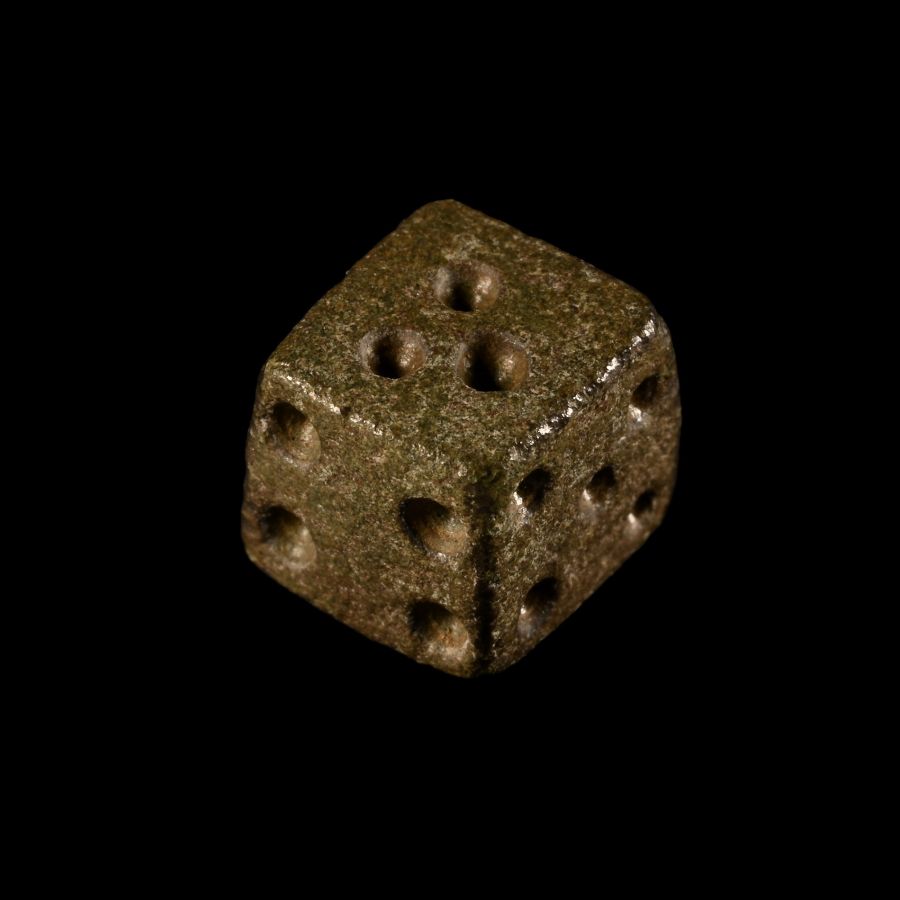
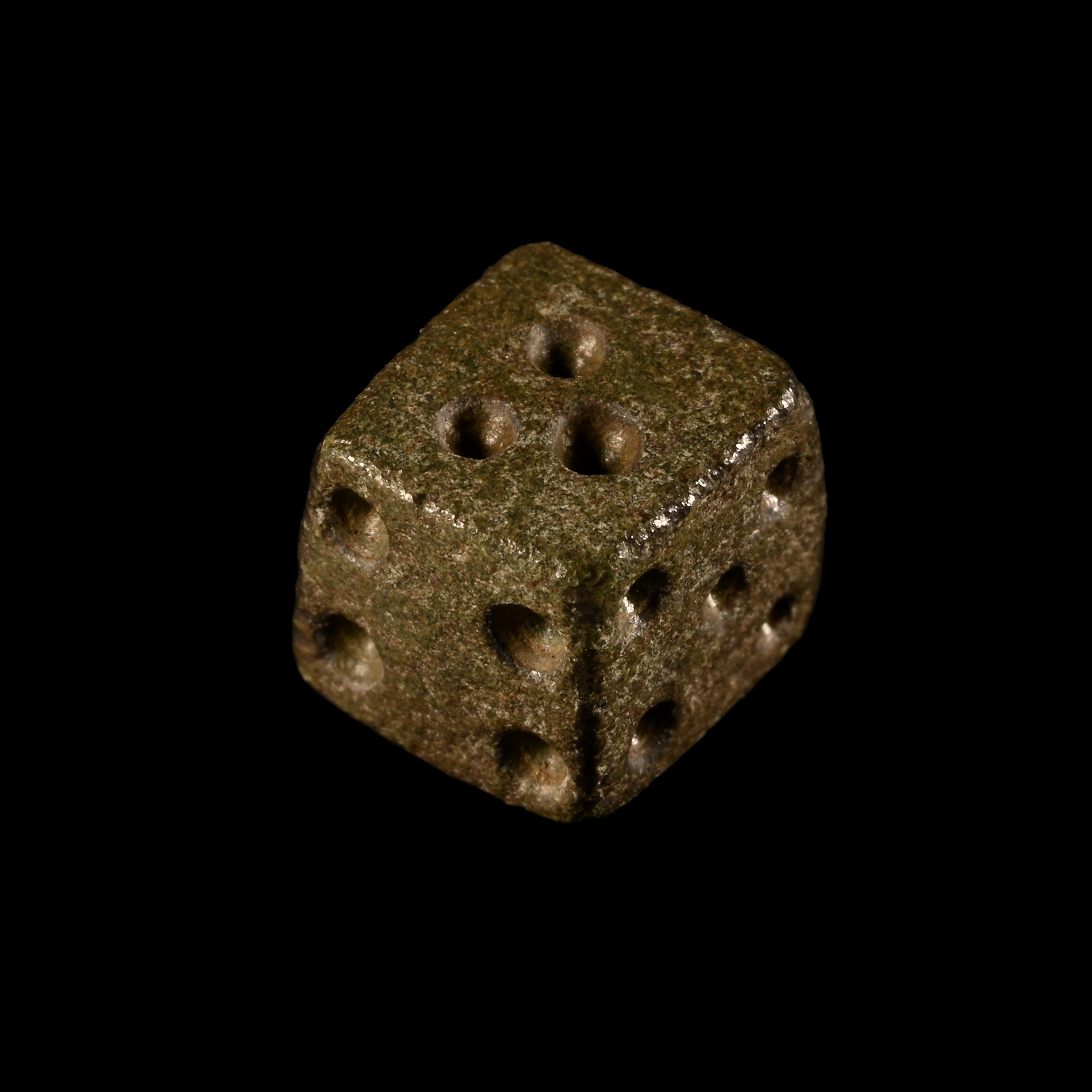
Romano-British 'Thetford' Bronze Gaming Die
CIRCA 2ND CENTURY A.D.
1/4 in. (3.4 grams, 7.95 mm).
Cuboid with impressed spots disposed 1:4, 2:5, 3:6. [No Reserve]
ProvenanceFound on a Roman site at Thetford, Essex, UK, in 1997.
From the important private collection of dice and gaming pieces of Colin Narbeth, London, UK, collection no.66.
Accompanied by a Colin Narbeth catalogue identification card.
TimeLine Auctions follows a vetting process to ensure the authenticity and legality of all items, reinforcing our commitment to integrity and responsible trading. Each antiquity, antique, and coin lot undergoes thorough examination by a vetting committee of at least ten external specialists, professional trade association members, scientists, and archaeologists: Our Vetting Process
AUCTIONS:
TimeLine is a leading auction house specialising in antiquities, ancient art, collectables, natural history, coins, medals, and books. Our auctions offer museums, collectors, historians, and enthusiasts the opportunity to acquire unique and historically significant pieces.
-
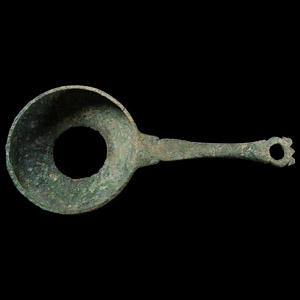
Graeco-Roman Bronze Patera with Duck-Head Handle
3rd century B.C.-3rd century A.D.Estimate: £300 - 400 (‡+bp*)
Opening Bid: £150
The bowl with a convex outer face and notched lip, decoratively waisted handle with addorsed duck heads to the apex of the suspension loop; base of bowl absent. 314 grams, 30 cm
Acquired in Europe before 1995. -
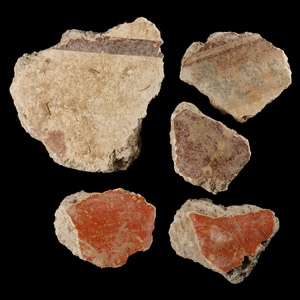
Roman Fresco Wall Plaster Collection
1st century B.C.Sold for (Inc. bp): £130
Second style painted in cream and red, some with decoration. 527 grams total, 6.7-11.8 cm
Acquired in the 19th century. Ex Jeger collection, Switzerland.
These small fragments, for analogies with the fragments of Pompeii, seems to belong to the second style of Roman painting, red panels representing highlight and shadow, decorated with vegetal interlaces. Some panels were probably framed by a red grenade fillet. A fragment shows alternate blue and red colour over a cream background, maybe pertinent to a socle. -
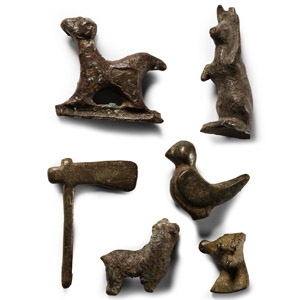
Roman Bronze Artefact Group
Mainly 1st-2nd century A.D.Sold for (Inc. bp): £130
Mixed group of votives including a hare, bull, axe and other items. 48 grams total, 15-33 mm
From a collection acquired on the UK art market from various auction houses and collections mostly before 2000. From an important Cambridgeshire estate; thence by descent.
