
Loading, please wait...
LOT 0867
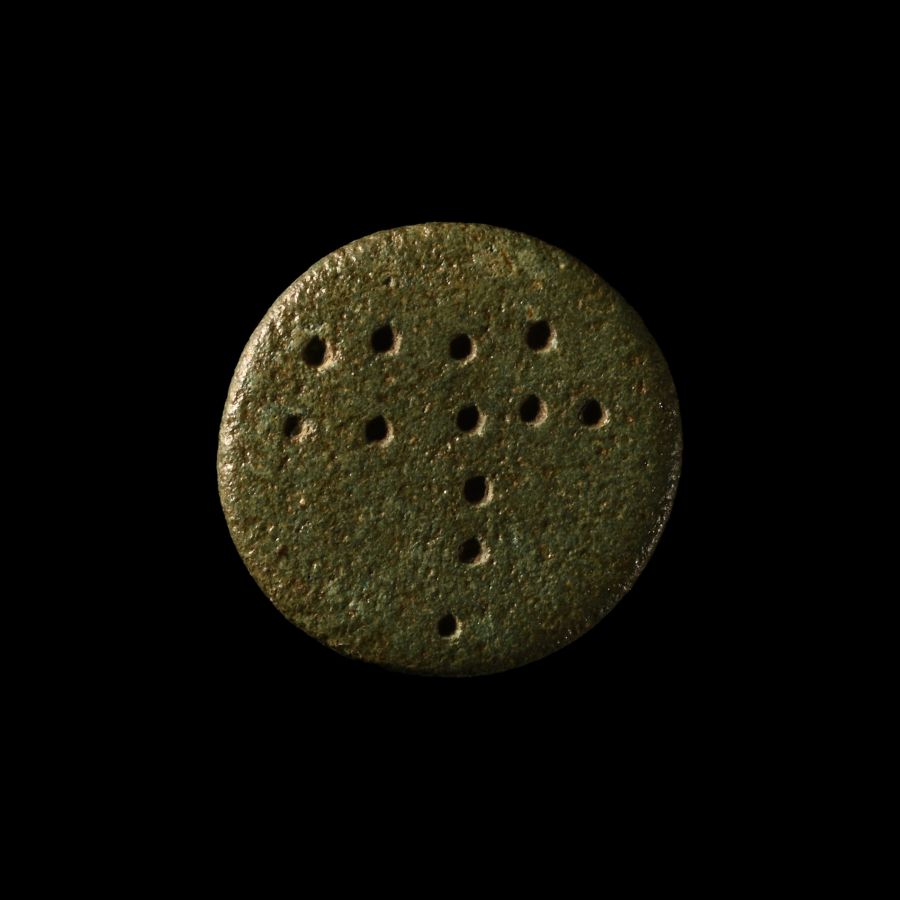
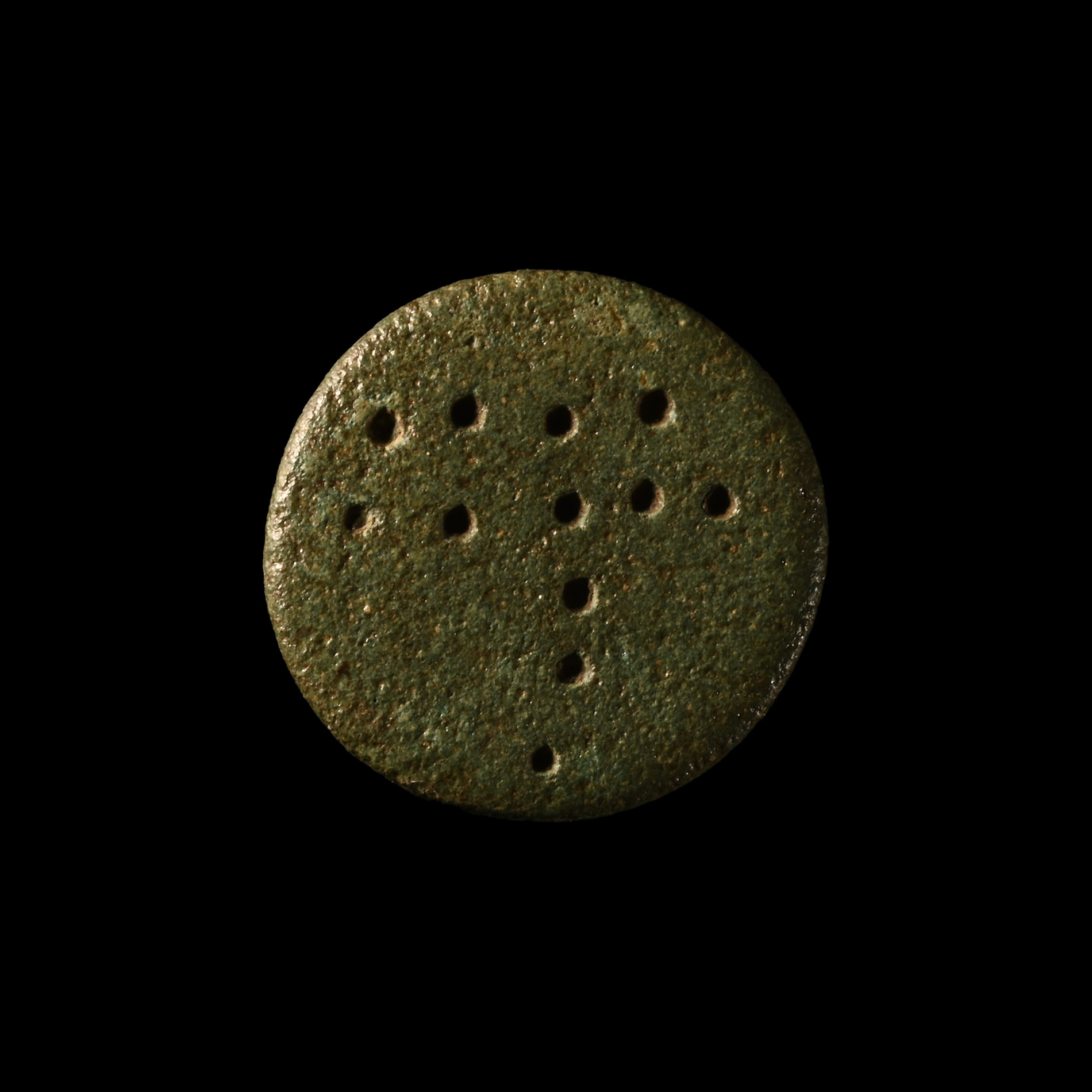
Romano-British 'Published' Bronze Gaming Counter
CIRCA 1ST CENTURY A.D. OR LATER
3/4 in. (4.5 grams, 18 mm).
Discoid in form with twelve impressed dots, two parallel lines and one perpendicular. [No Reserve]
ProvenanceFound Cirencester, UK, prior to 1999.
Acquired 4 February 1999.
From the important private collection of dice and gaming pieces of Colin Narbeth, London, UK, collection no.59.
Accompanied by a copy of the relevant Celtic & Roman Artefacts book pages where this object is published.
Mills, Nigel, Celtic & Roman Artefacts, Witham, 2000, p.114, item no.RB358.
CONDITIONTimeLine Auctions follows a vetting process to ensure the authenticity and legality of all items, reinforcing our commitment to integrity and responsible trading. Each antiquity, antique, and coin lot undergoes thorough examination by a vetting committee of at least ten external specialists, professional trade association members, scientists, and archaeologists: Our Vetting Process
AUCTIONS:
TimeLine is a leading auction house specialising in antiquities, ancient art, collectables, natural history, coins, medals, and books. Our auctions offer museums, collectors, historians, and enthusiasts the opportunity to acquire unique and historically significant pieces.
-
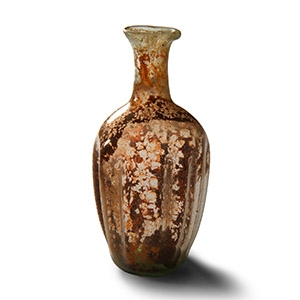
Roman Ribbed Glass Vessel
4th-5th century A.D.Sold for (Inc. bp): £130
With dimple base, radiating ribs to the bulb, gently tapering neck, flared rim with rolled edge. 20.11 grams, 95 mm
Acquired 1980-2015. Ex Abelita family collection. -
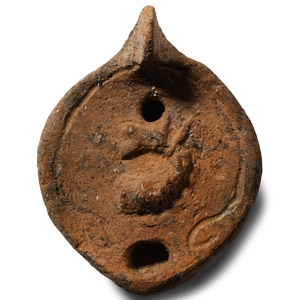
Roman Buffware Oil Lamp with Seahorse
Circa 3rd-4th century A.D.Sold for (Inc. bp): £104
Mould made with a solid round unpierced handle, broad horizontal shoulder separated from the discus by a shallow circular groove; upper filling-hole over the central part of the discus decorated by a seahorse leaping to the left, surrounded by volutes; slightly raised rounded nozzle, base-ring marked with two circular grooves. 57 grams, 76 mm
From a collection acquired on the UK art market from various auction houses and collections mostly before 2000. From an important Cambridgeshire estate; thence by descent.
The depiction of various animals is common on Roman lamps, appearing just as frequently as they do elsewhere in Roman art. Animals formed part of the decorative and symbolic schemes on monumental and funerary sculpture, frescoes and mosaics. The hippocampus symbolised water, power, bravery, and helpfulness. It was also defined as a symbol of hope, strength, and agility because of its ability to help people. This popular sea creature was connected with imagination and creativity and also associated with the god of the sea, Poseidon. -
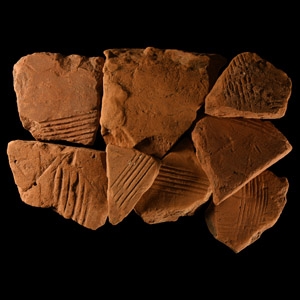
Roman 'Somerset and Devon' Terracotta Roof Tile Fragment Group
2nd-4th century A.D.Sold for (Inc. bp): £46
Irregular fragments of terracotta roof tile, some with ribbing. 1.4 kg total, 7.3-12.1 cm
Found whilst fieldwalking in Somerset and Devon, UK.
