
Loading, please wait...
LOT 0912
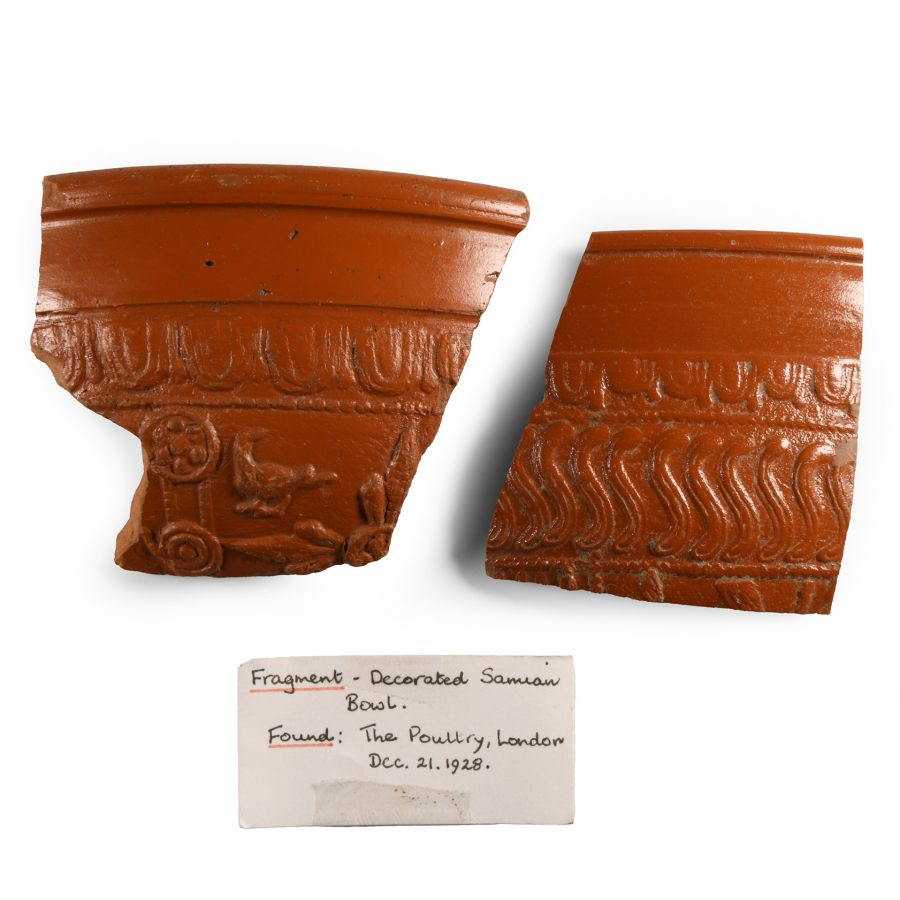
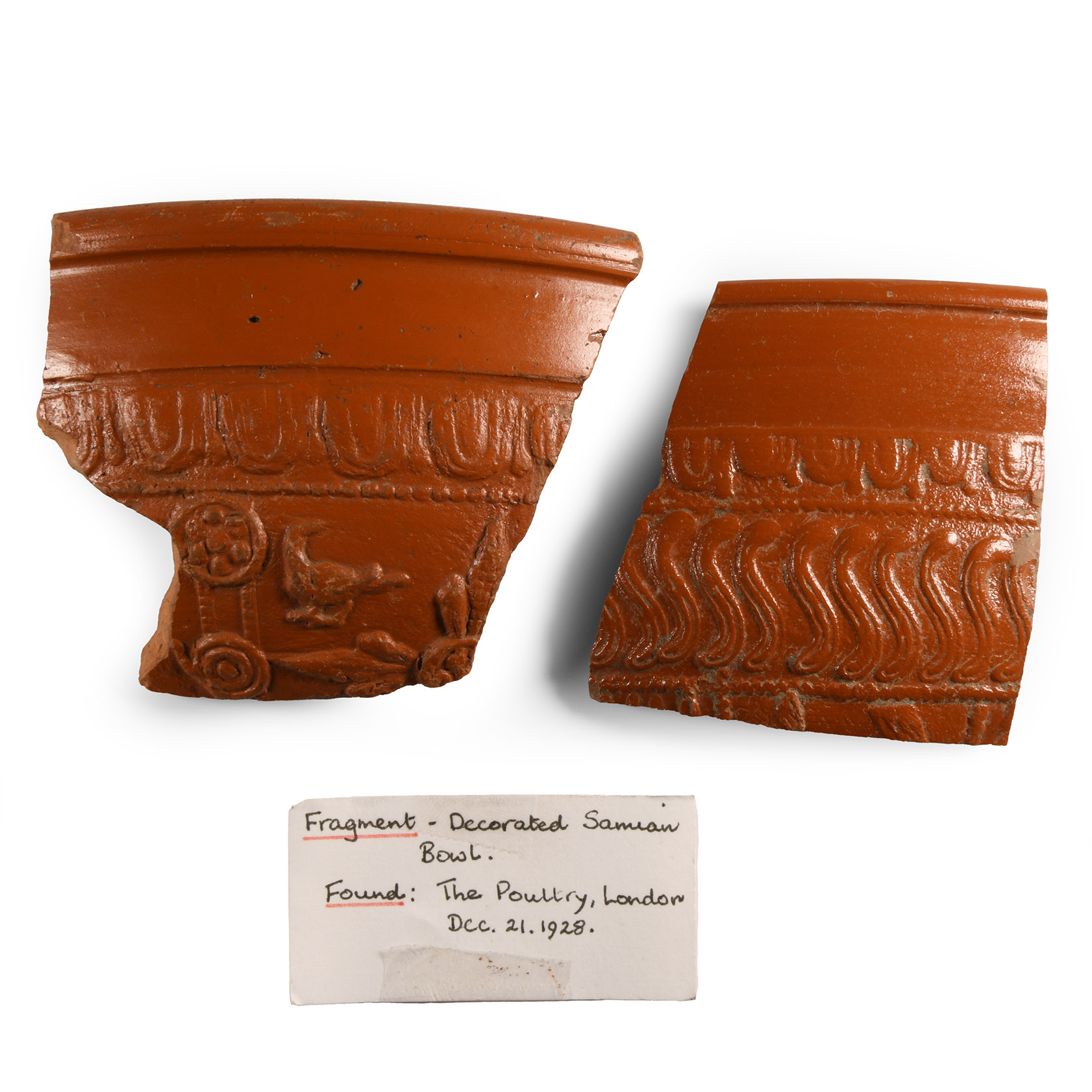
Romano-British 'Poultry' Samian Ware Sherd Group
1ST CENTURY A.D.
2 1/4 - 2 5/8 in. (60 grams total, 58-65 mm).
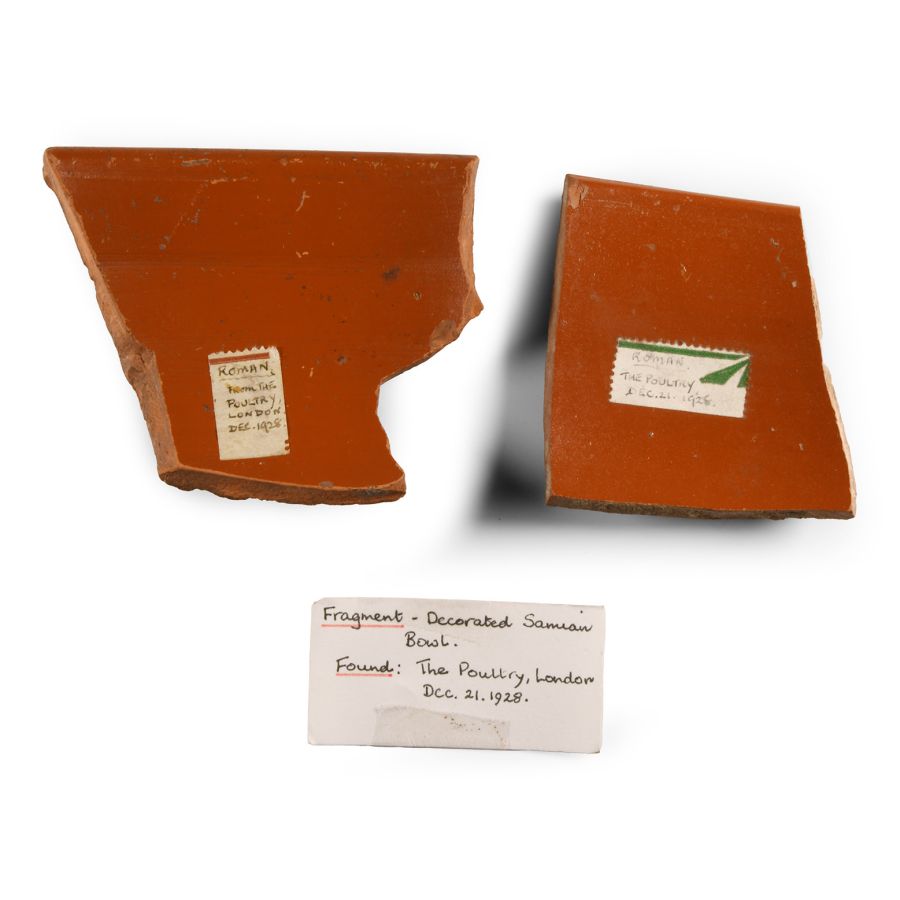
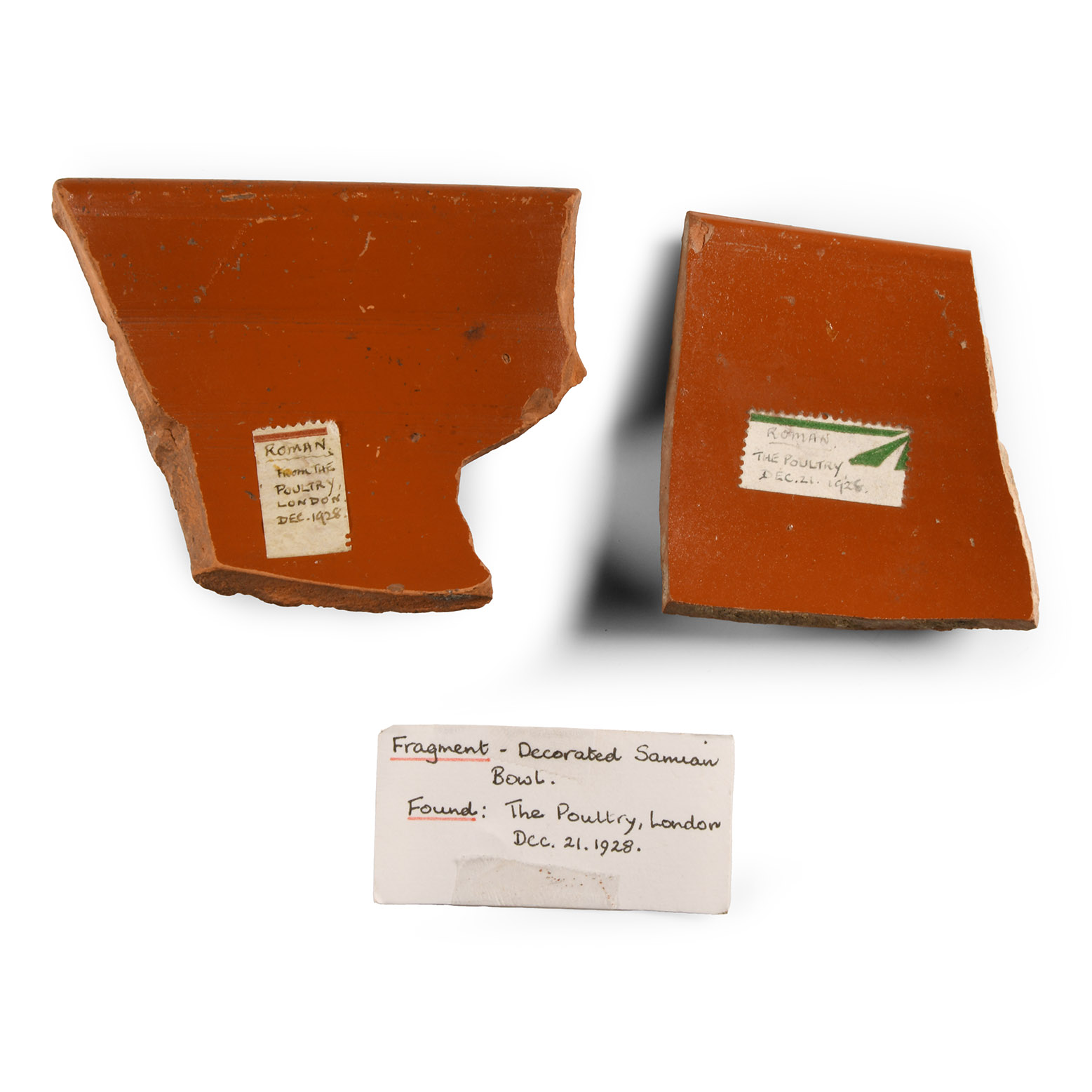
Two fragments of redware bowl rim, the larger with handwritten label 'Roman / from the Poultry, London Dec.1928' and record card 'Fragment Decorated Samian Bowl. Found: The Poultry, London, Dec. 21. 1928'; the smaller with handwritten label ''Roman / the Poultry / Dec.21.1928'. [2, No Reserve]
ProvenanceFound Poultry, London, UK, 1928.
From the collection of a late East Anglian teacher and antiquarian who retired to the Isle of Wight in Hampshire, UK.
He amassed a large collection of objects between the 1960s-1980s.
TimeLine Auctions follows a vetting process to ensure the authenticity and legality of all items, reinforcing our commitment to integrity and responsible trading. Each antiquity, antique, and coin lot undergoes thorough examination by a vetting committee of at least ten external specialists, professional trade association members, scientists, and archaeologists: Our Vetting Process
AUCTIONS:
TimeLine is a leading auction house specialising in antiquities, ancient art, collectables, natural history, coins, medals, and books. Our auctions offer museums, collectors, historians, and enthusiasts the opportunity to acquire unique and historically significant pieces.
-
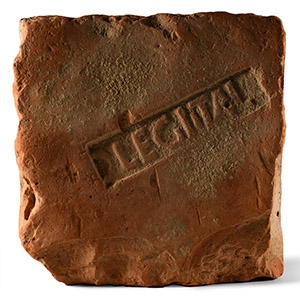
Roman Terracotta LEG I ITAL Legionary Stamped Tile
Late 1st century A.D.Sold for (Inc. bp): £572
A rectangular block with stamped mark 'LEGT I ITAL' (Legio I Italica) for 1st Legion 'Italic'; with collector's label 'Roman brick made by the Ist Italica Legion at Olpia Oescus on the lower Danube, one of Trajan's strategic bases prior to the invasion of Dacia in 106 AD. LEG I ITAL' 4.35 kg, 19 cm
From the collection of a late East Anglian teacher and antiquarian who retired to the Isle of Wight in Hampshire, UK. He amassed a large collection of objects between the 1960s-1980s. Accompanied by a previous catalogue identification card.
The Legio I Italica ("of Italy") was a Roman legion formed by Nero on September 20, 66 or 67 AD and active until the 5th century AD. Its emblems were the boar and sometimes the bull. There are many sources which name army officials employed in supervision of the construction and reconstruction of temples, baths, city walls, towers and gates. CIL VIII 2728, for example, is a letter by evocatus Augusti who was sent to solve engineering problems on a badly surveyed aqueduct at Saldae in the province of Numidia. Pliny (Epistulae X 17b, 39, 41, 61) repeatedly requested an army architect to be sent from Lower Moesia to help inspect some Bithynian building projects. Therefore it is not strange that tiles marked as belonging to a legion should be found all over the provinces. -
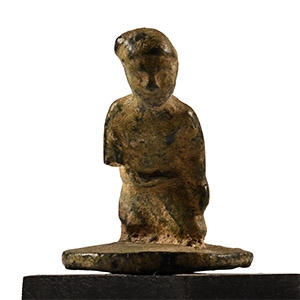
Roman Bronze Statuette of a Germanic Captive
Late 2nd century A.D.Sold for (Inc. bp): £208
Modelled in the round in kneeling pose with weight thrust forward, arms at the sides, bare-chested and wearing a short kilt with thick belt; the hair drawn up in the Swabian knot style above the right ear; mounted on a custom-made display stand. 80 grams total, 58 mm including stand
From a collection acquired on the UK art market from various auction houses and collections mostly before 2000. From an important Cambridgeshire estate; thence by descent.
Statuettes of foreign ‘barbarian’ prisoners of this type have been found along the Danube. Their spread coincides with the Marcomannic wars of the Emperor Marcus Aurelius. The Swabian knot in this warrior’s hair has parallels with the warrior depicted on the contemporary Sarcophagus of Portonaccio, which represents a battle between Romans and Germanic Gauls. -
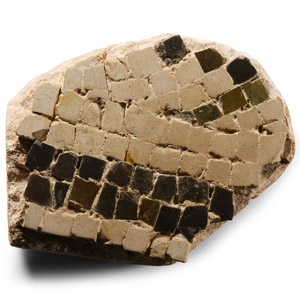
Roman Floor Mosaic Section
North Africa, 2nd century A.D.Sold for (Inc. bp): £143
Portion of original matrix with inset tesserae, parallel lines and arches; old inked inscription: 'SIDI BOU ALI' to verso. 399 grams, 11.6 cm
Acquired Tunisia, North Africa. From a pre World War II collection, thence by descent. Ian Wilkinson collection, Nottinghamshire, UK, formed since 1985.
In African mosaics, combinations of black and white and cream tessellated mosaics often form the borders of important mosaics, such as that of El Jem, representing a Dionysiac procession.
