
Loading, please wait...
LOT 0769
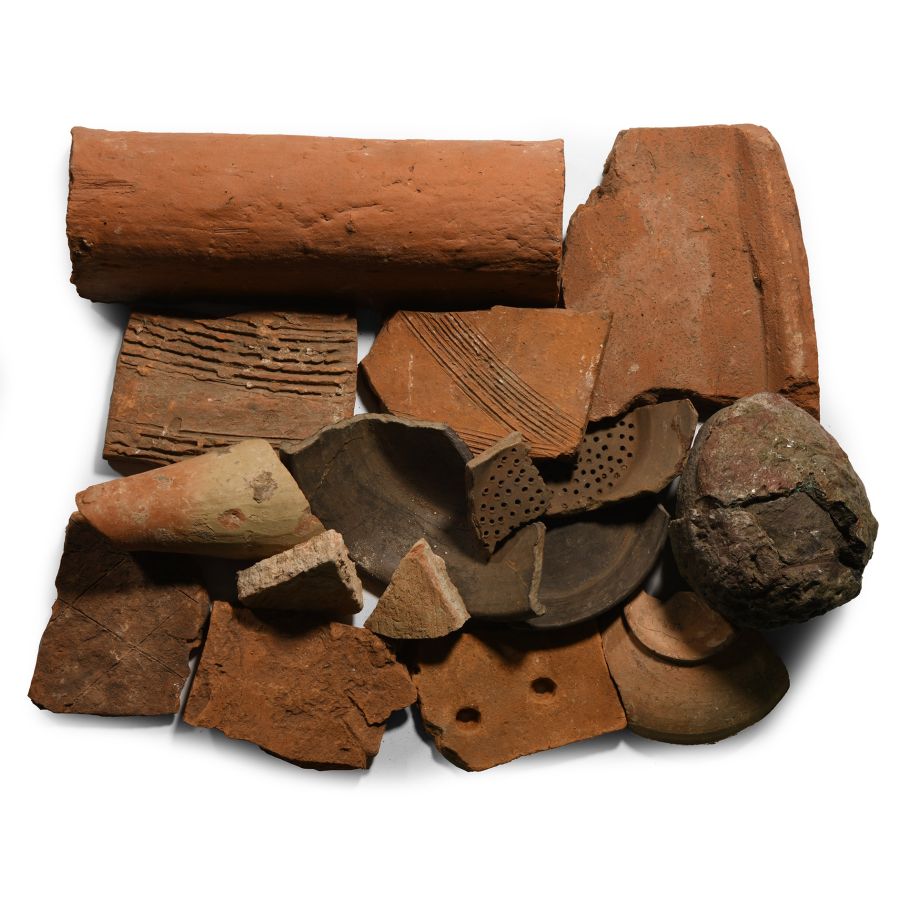
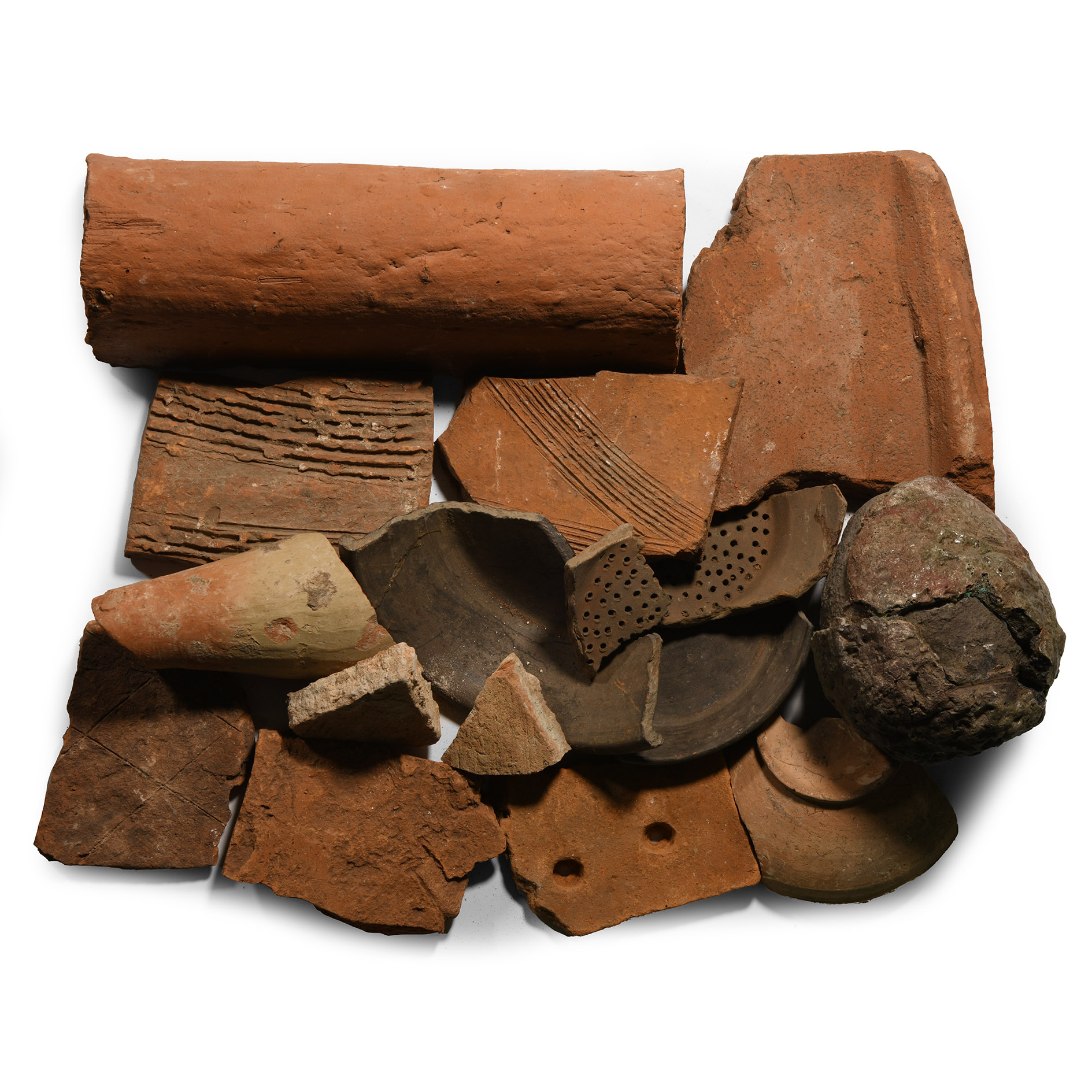
Romano-British Pottery Sherd Collection
1ST-4TH CENTURY A.D.
2 1/4 - 11 1/4 in. (6.4 kg total, 6-28.5 cm).
Including roof-ridge channel, floor tile, bowl rim and other items. [15, No Reserve]
ProvenanceFound UK.
From the collection of a late East Anglian teacher and antiquarian who retired to the Isle of Wight in Hampshire, UK.
He amassed a large collection of objects between the 1960s-1980s.
TimeLine Auctions follows a vetting process to ensure the authenticity and legality of all items, reinforcing our commitment to integrity and responsible trading. Each antiquity, antique, and coin lot undergoes thorough examination by a vetting committee of at least ten external specialists, professional trade association members, scientists, and archaeologists: Our Vetting Process
AUCTIONS:
TimeLine is a leading auction house specialising in antiquities, ancient art, collectables, natural history, coins, medals, and books. Our auctions offer museums, collectors, historians, and enthusiasts the opportunity to acquire unique and historically significant pieces.
-
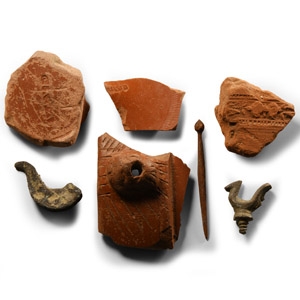
Roman 'Essex' Bronze and Other Artefact Group
1st-4th century A.D.Sold for (Inc. bp): £26
Including redware fragments, one stamped 'PALL[..]' and another with a lion-mask spout, bronze crest from a statuette of Mercury, bird finial, bone pin, and other items. 127 grams total, 30-68 mm
Found various sites in Essex, UK. Property of an Essex collector. -
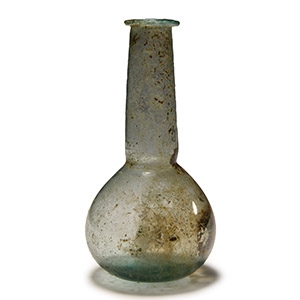
Roman Glass Unguentarium
1st-2nd century A.D. or laterSold for (Inc. bp): £117
With bulbous body and dimple base, narrow neck and mouth with fared and folded rim. 44 grams, 12.2 cm
Ex property of a late Japanese collector, 1970-2000s. -
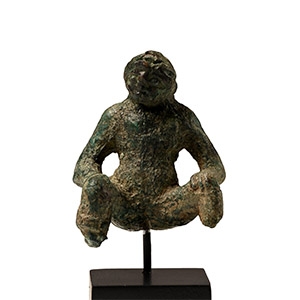
Roman Bronze Crouching Female Statuette
1st-2nd century A.D.Sold for (Inc. bp): £78
Modelled in the round female crouching with hands resting on her knees, hair drawn up in a chignon; mounted on a custom-made display stand. 80 grams total, 73 mm including stand
From a collection acquired on the UK art market from various auction houses and collections mostly before 2000. From an important Cambridgeshire estate; thence by descent.
