
Loading, please wait...
LOT 0677
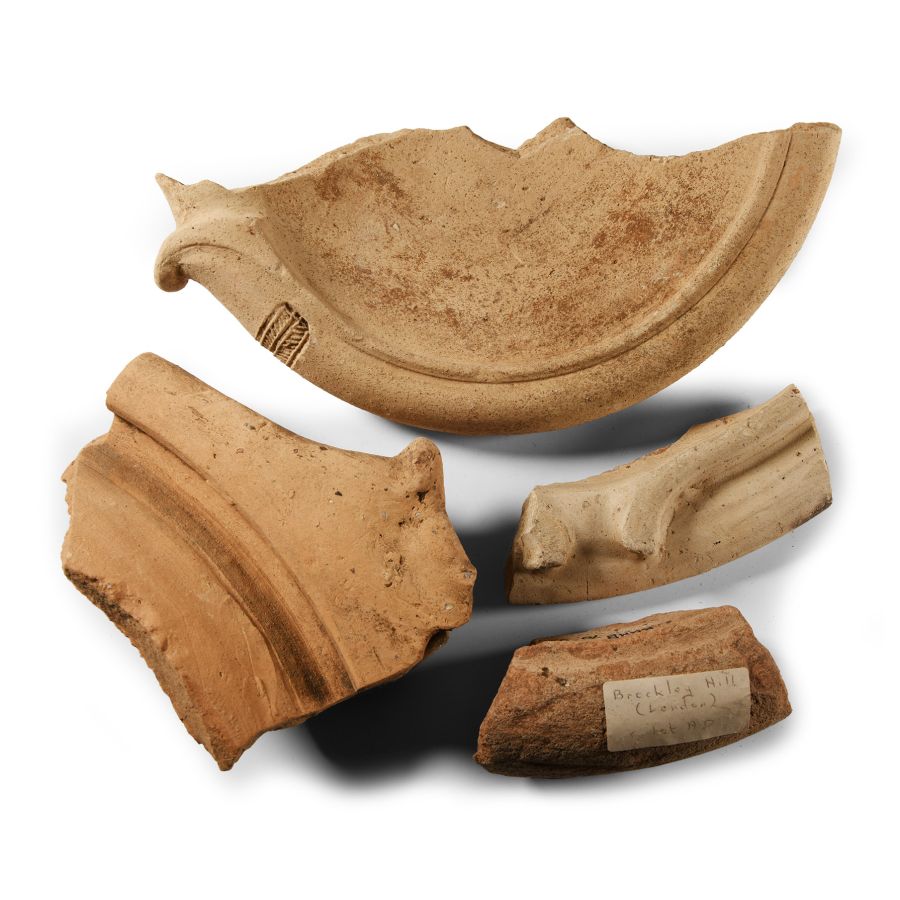
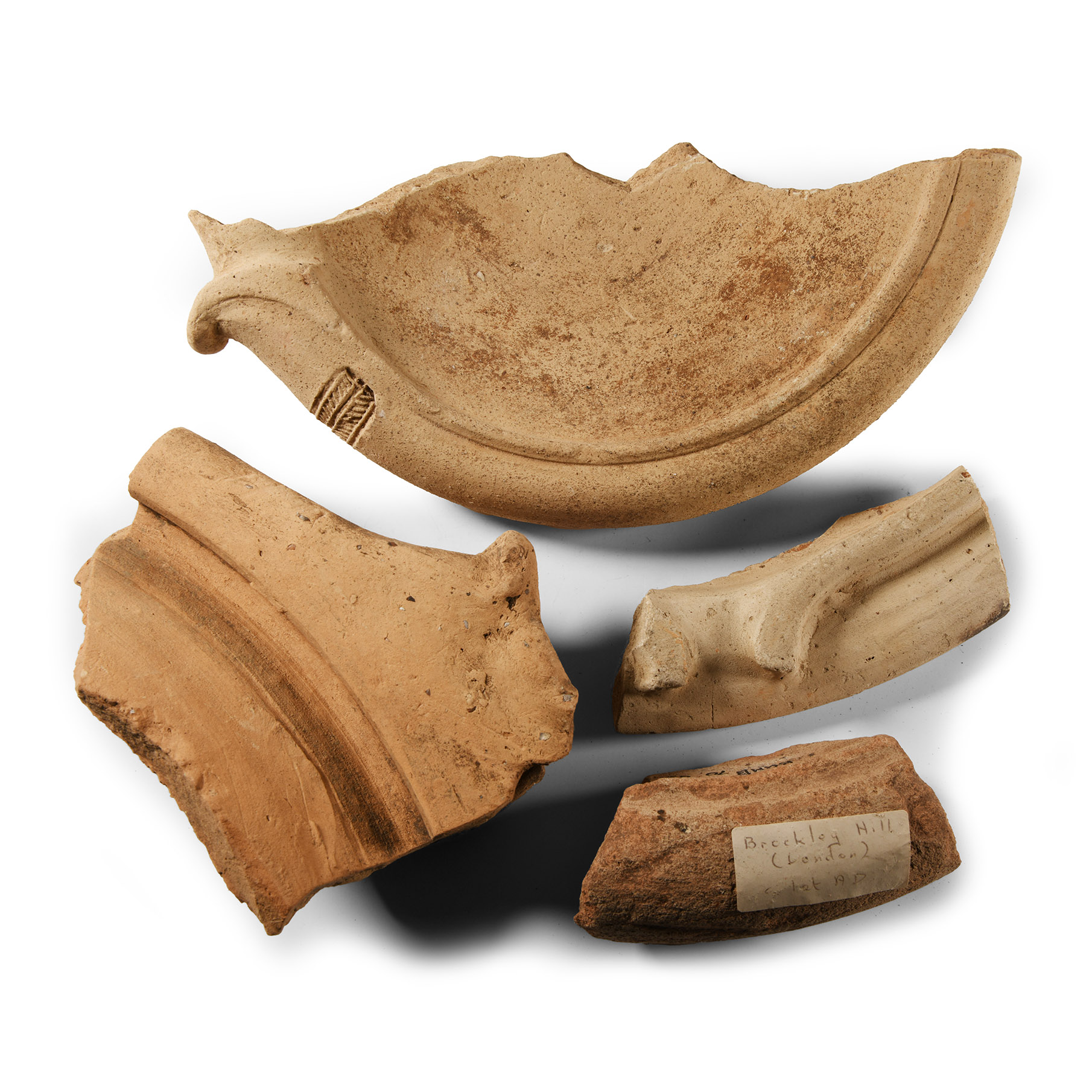
Romano-British Mortarium Sherd Group
1ST-4TH CENTURY A.D.
4 1/4 - 10 in. (1.6 kg total, 11.4-25.5 cm).
Including fragments of rim with pouring lip and other features, one with inked inscription: 'BHM/3 70. US'. [4, No Reserve]
ProvenanceFound UK.
From the collection of a late East Anglian teacher and antiquarian who retired to the Isle of Wight in Hampshire, UK.
He amassed a large collection of objects between the 1960s-1980s.
TimeLine Auctions follows a vetting process to ensure the authenticity and legality of all items, reinforcing our commitment to integrity and responsible trading. Each antiquity, antique, and coin lot undergoes thorough examination by a vetting committee of at least ten external specialists, professional trade association members, scientists, and archaeologists: Our Vetting Process
AUCTIONS:
TimeLine is a leading auction house specialising in antiquities, ancient art, collectables, natural history, coins, medals, and books. Our auctions offer museums, collectors, historians, and enthusiasts the opportunity to acquire unique and historically significant pieces.
-
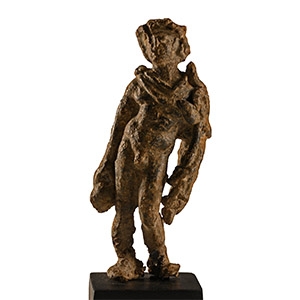
Roman Lead Statuette of Mercury
1st-2nd century A.D.Sold for (Inc. bp): £221
Standing in contrapposto pose, wearing a cloak draped from the right shoulder and tucked around the left arm supporting a caduceus with snake-head finials; broad-brimmed petasos with wings on the crown; the right arm held vertically at the side supporting the marsupium coin-purse; mounted on a custom-made display stand. 111 grams total, 88 mm including stand
From a collection acquired on the UK art market from various auction houses and collections mostly before 2000. From an important Cambridgeshire estate; thence by descent.
Mercury was the god of trade and industry, whose principle shrine in the city of Rome was at the Circus Maximus. The draped mantle is typical for statuary of Mercury from the 1st-2nd century A.D. (Boucher, pl.40, 43) as is the caduceus (Boucher, pl.46 (211)). -
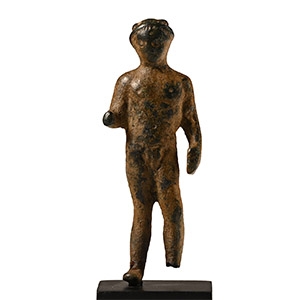
Roman Bronze Statuette of Mercury
2nd-3rd century A.D.Sold for (Inc. bp): £117
Standing nude with winged petasos to the head, in contrapposto pose; mounted on a custom-made display stand. 66 grams total, 85 mm including stand
From a collection acquired on the UK art market from various auction houses and collections mostly before 2000. From an important Cambridgeshire estate; thence by descent.
Mercury was the god of trade and industry, whose principle shrine in the city of Rome was at the Circus Maximus. Equated with the Greek Hermes he became the god of tradesmen and merchants. He was also the god of thieves and was associated with healing, mainly in Gaul, where he had a number of important temples connected to sacred springs, This statuette was probably a votive offering to one of this temples. -
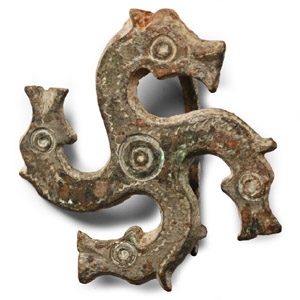
Roman Bronze Horse-Heads Plate Brooch
Circa 4th century A.D.Sold for (Inc. bp): £208
Formed as four profile horseheads emanating from a central roundel; each head with a ring-and-dot eye and chevron mouth, and incised borders to the neck; to the reverse, the pin and catchplate. 14.8 grams, 40 mm
Acquired in the early 1990s. Ex Property of a Cambridgeshire Gentleman. Property of a Kent lady collector.
