
Loading, please wait...
LOT 0807
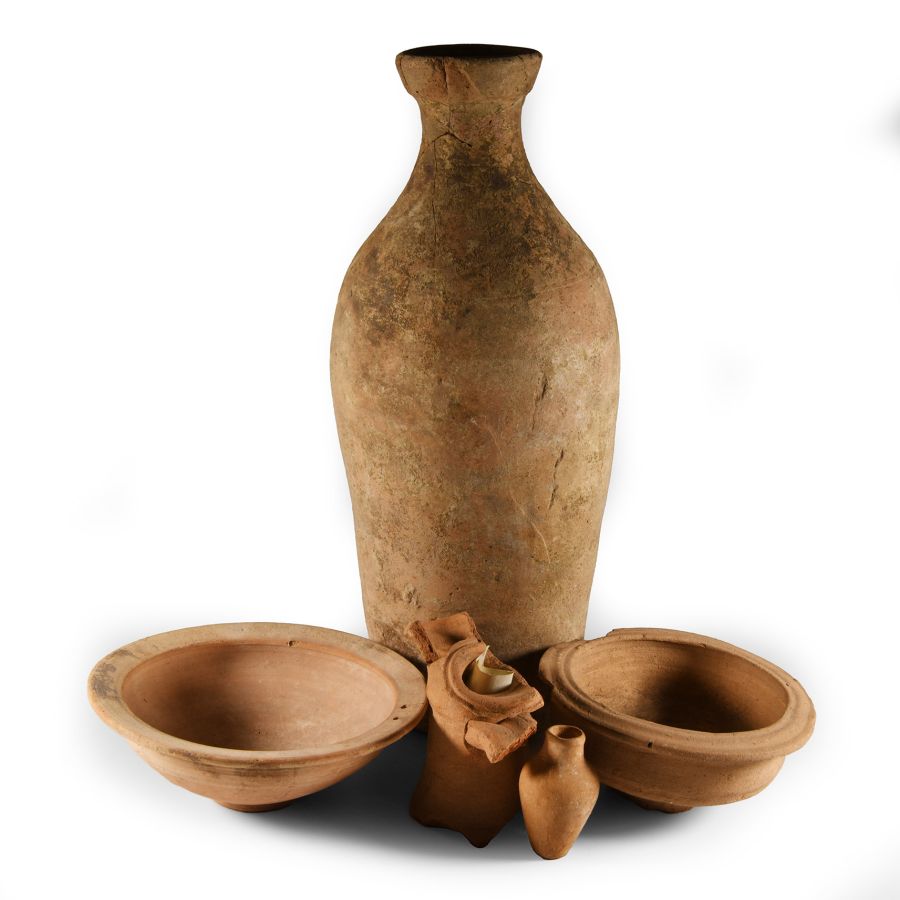
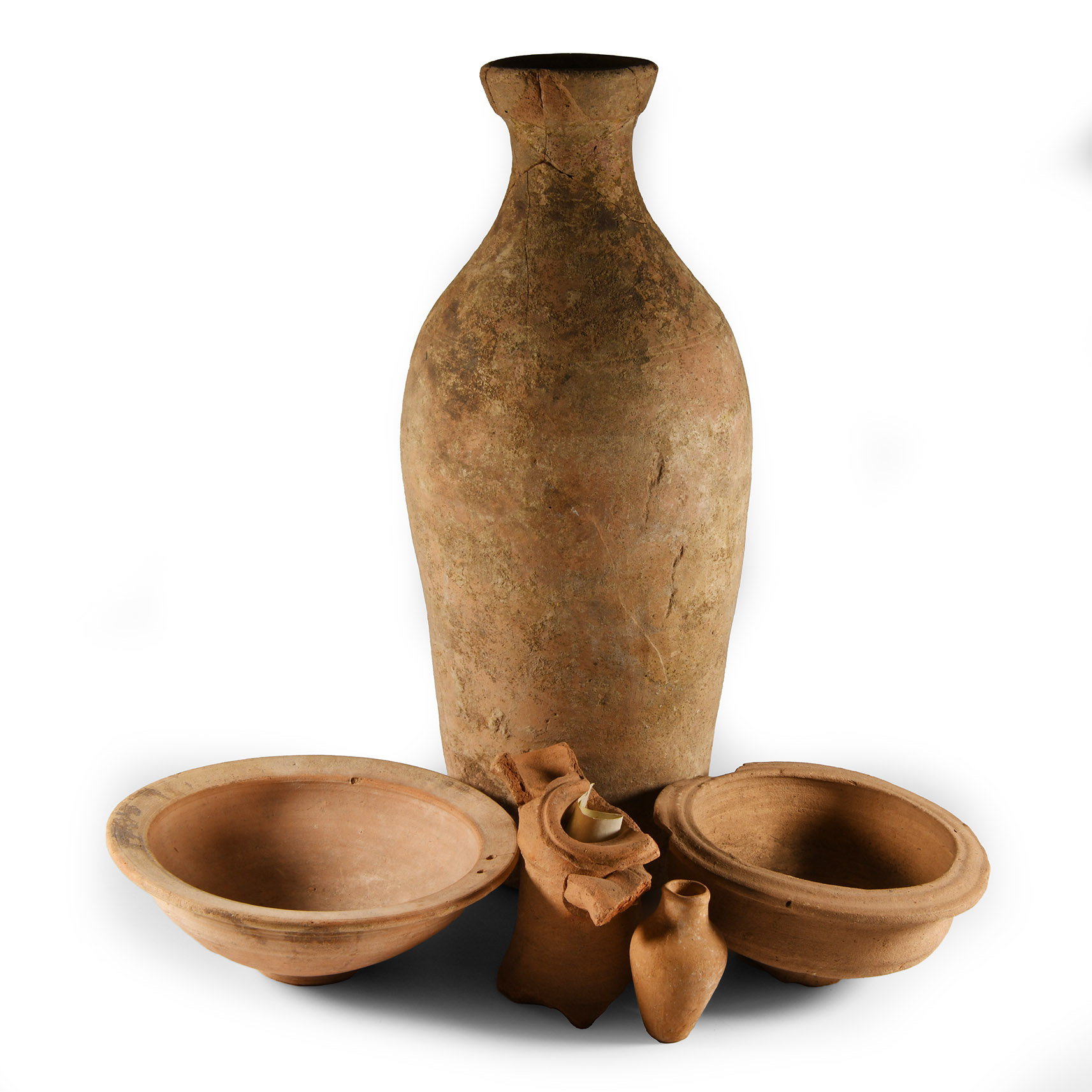
Romano-British Mixed Pottery Sherd Group
3RD CENTURY B.C.-1ST CENTURY A.D.
2 1/2 - 15 3/4 in. (4.6 kg total, 6.5-40 cm).
Including a bell-shaped amphora, bowl with carinated profile and other items. [5, No Reserve]
ProvenanceFound UK.
From the collection of a late East Anglian teacher and antiquarian who retired to the Isle of Wight in Hampshire, UK.
He amassed a large collection of objects between the 1960s-1980s.
TimeLine Auctions follows a vetting process to ensure the authenticity and legality of all items, reinforcing our commitment to integrity and responsible trading. Each antiquity, antique, and coin lot undergoes thorough examination by a vetting committee of at least ten external specialists, professional trade association members, scientists, and archaeologists: Our Vetting Process
AUCTIONS:
TimeLine is a leading auction house specialising in antiquities, ancient art, collectables, natural history, coins, medals, and books. Our auctions offer museums, collectors, historians, and enthusiasts the opportunity to acquire unique and historically significant pieces.
-
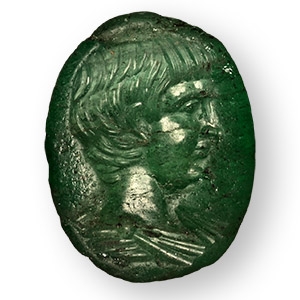
Roman Emerald Gemstone with Portrait of Young Nero
51-55 A.D.Sold for (Inc. bp): £6,500
Depicting Nero as a young boy, either as crown prince or within the first year of his reign in his first known portrait type, unequivocal with his long hair fringe. 2.17 grams, 17 mm
Ex Paul Munro Walker collection, Bournemouth, UK, 1970s. Private collection of Alexander Cotton, Hampshire, UK, sold October 1986. From a London gentleman's, UK, collection, in the 1990s. This lot has been checked against the Interpol Database of stolen works of art and is accompanied by a search certificate number no.12104-216215.
Dr Ittai Gradel writes: 'Date is AD 51-55. On most glyptic portraits from shortly after he became emperor, so 54-55, he is shown laurelled ... However, on the coins he is shown also bare-headed even as emperor in 54-55 (second coin, denarius). Again, on coins his bust is shown draped only before he became emperor in 54 (first coin, aureus), but cameos show him draped also as emperor (as e. g. the Marlborough one: but there are several known). It is therefore not possible to say if the emerald shows him as crown prince or as emperor, and I cannot date it more precisely than 51-55.' -
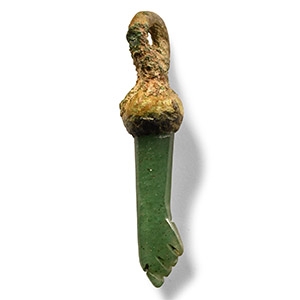
Roman Hardstone Hand Amulet
1st-2nd century A.D.Sold for (Inc. bp): £286
An amuletic arm with hand in the fica gesture, bulb and loop above. 2.49 grams, 35 mm
with Hotel des Ventes, Drouot, Paris, France. From the collection of Mr H. Naudy, Paris, France. Acquired at between 2004-2010. Property of a French collector.
Small amulets of hands were commonly included in bracelets. They served not only as decorative pieces but also as symbols of protection for the limbs and extremities of their wearers. Some believed these amulets could even confer abilities such as increased dexterity or heightened creativity. -
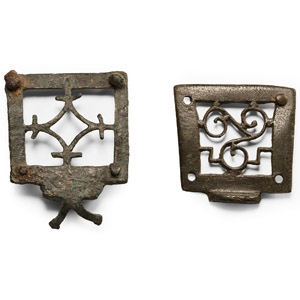
Roman Openwork Military Belt Mount Group
2nd century A.D.Sold for (Inc. bp): £98
Each with a trapezoidal frame and openwork design: one a coiled triskele, the other a lozenge with cruciform spurs; from a military belt. 13.2 grams total, 28-35 mm
Property of the vendor's grandfather, thence by family descent, circa 1985. From the private collection of a New York, USA gentleman
